The control room has partial information, the venue manager wants answers, and frontline staff are already making contact with the issue. In that moment, a mission command leadership example is not a military theory exercise. It is the difference between a team that freezes while waiting for permission and one that acts within intent, protects people, and keeps the wider operation stable.
For organisations carrying real security exposure, that distinction matters. Counter terrorism readiness, incident response and protective security delivery rarely fail because the plan had no headings. They fail because decision-making collapses under pressure, authority becomes confused, and people closest to the problem are not equipped to act. Mission command addresses that problem directly.
What mission command means in practice
At its core, mission command is a leadership approach built on clear intent, decentralised execution and trust. Senior leaders define the outcome, the constraints and the priority. Teams on the ground are then expected to apply judgement and take disciplined initiative when conditions change.
That sounds straightforward. In practice, many organisations still lead the opposite way. They centralise decisions, over-specify tasks and create approval chains that look tidy on paper but fail in live conditions. Modern threats expose old security thinking. If every decision has to travel upwards before action is taken, your response time is already compromised.
Mission command is not a licence for improvisation without control. It requires strong standards, competent people and a shared understanding of what success looks like. Without those foundations, decentralisation becomes drift. With them, it becomes operational agility.
A mission command leadership example from a live security context
Consider a large public-facing venue with an elevated threat profile during a high-footfall event. The security lead briefs supervisors before opening. The command intent is clear: protect life first, maintain calm, preserve access for emergency services, and avoid unnecessary mass movement unless the threat picture justifies it. The decision thresholds are set in advance. Supervisors understand what must be escalated immediately, what they can act on themselves, and what the wider business priorities are.
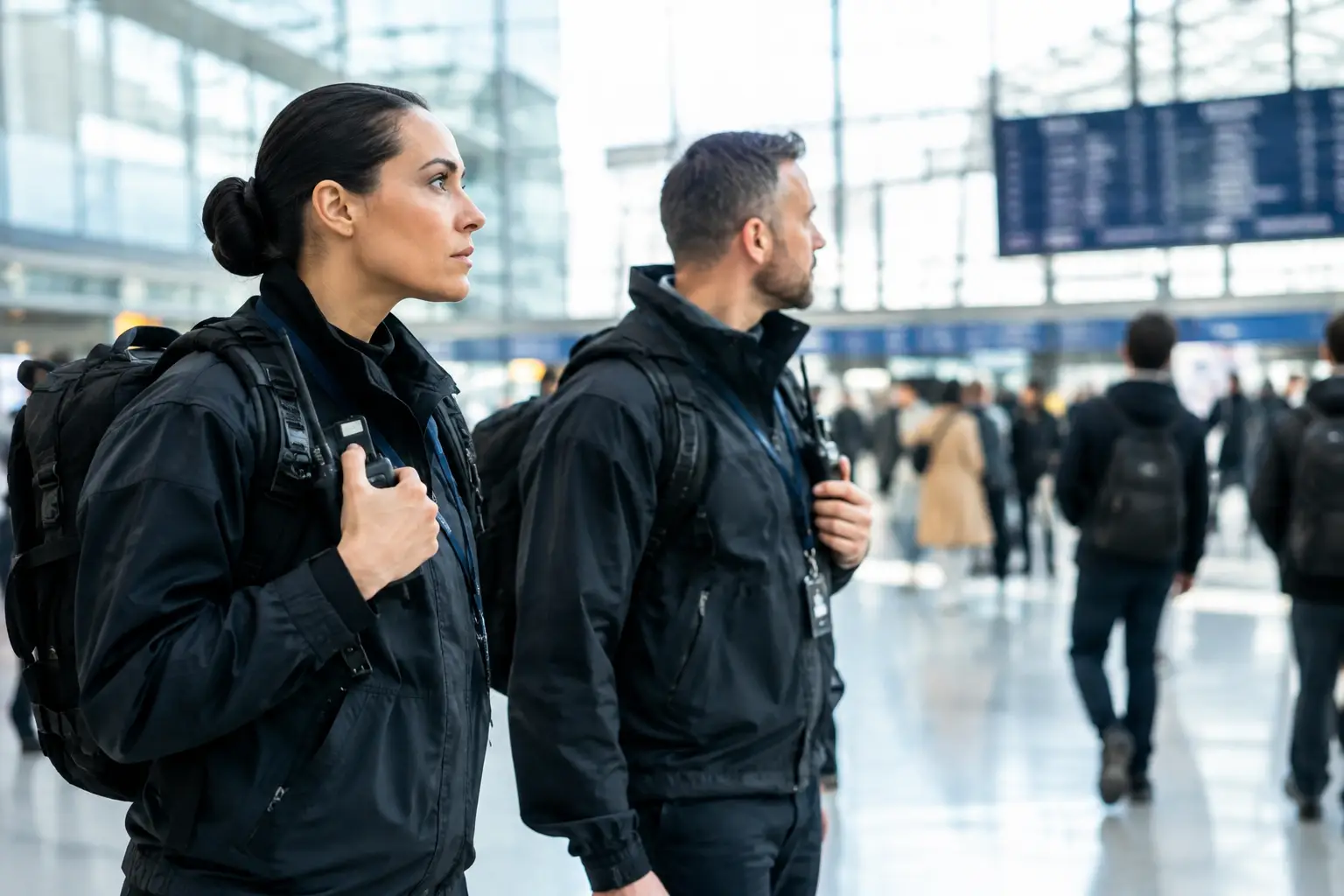
Mid-afternoon, a member of staff reports suspicious behaviour near a secondary entrance. CCTV gives only a partial view. Radio traffic becomes congested. The closest supervisor has enough information to believe there may be hostile reconnaissance or a developing pre-attack indicator, but not enough to confirm it.
In a command culture built around permission, that supervisor waits. They try to reach the duty manager, who is already dealing with another issue. Minutes are lost. Staff remain in place without a clear posture. The individual under suspicion is not managed effectively. Confusion spreads faster than information.
In a mission command culture, the supervisor acts within intent. They reposition staff, increase discreet observation, restrict that entrance without triggering public alarm, and direct a calm rerouting of footfall. At the same time, they pass a concise update upward: what they have seen, what they have done, what they need next. Senior leaders retain oversight, but they are not the bottleneck.
That is the mission command leadership example many organisations need to study. The value is not dramatic language or military borrowing for its own sake. The value is that the team closest to the developing risk can shape the first critical minutes without losing alignment with strategic objectives.
Why this approach works under pressure
Pressure punishes slow thinking and vague authority. In security environments, the first account is often incomplete, witnesses may be unreliable, and technology may not provide certainty quickly enough. A leader who insists on total clarity before local action is taken usually creates delay at exactly the wrong point.
Mission command reduces that friction because it replaces detailed dependency with shared understanding. If people know the intent, the operating boundaries and the non-negotiables, they can move earlier and more coherently. That improves tempo. It also improves resilience when communications are degraded or when multiple incidents compete for senior attention.
There is another benefit. Teams trusted to exercise judgement usually report better quality information. They are not merely passing problems upward. They are framing the situation, assessing risk and offering action already taken. That gives senior decision-makers a stronger basis for escalation, external liaison and strategic control.
Where organisations get it wrong
The most common error is adopting the language of mission command without changing behaviour. Leaders say they want initiative, but punish deviation from the script. They ask teams to think, then second-guess every local decision after the event. That destroys trust quickly.
The second error is assuming intent was clear because it was obvious to senior staff. It often is not. Telling a team to keep people safe is not intent. It is a general aspiration. Useful intent explains the desired outcome, the priority order, the limits of authority and the risks worth taking or avoiding.
The third error is capability mismatch. Mission command depends on competence. If supervisors do not understand threat indicators, crowd dynamics, communications discipline or escalation thresholds, decentralised decision-making becomes unsafe. This is why training and exercising matter. Documentation alone will not carry a team through a live problem.
Building mission command into a security operation
The starting point is not rewriting every procedure. It is identifying where delay currently sits. In many organisations, delay comes from uncertainty over authority, poor briefing quality and inconsistent operational standards between shifts or sites.
Senior leaders need to define intent in operational language. What are teams trying to achieve in an incident? What matters first? What actions are pre-authorised? What absolutely requires escalation? Those answers should be rehearsed, not just filed.
Supervisors then need practical development. They must be able to interpret intent, assess ambiguous information and communicate decisions clearly. This is where realistic scenario-based training is valuable. It reveals whether people can apply judgement when the facts are incomplete and time is short.
Finally, review processes need to support the model. After an incident or exercise, ask whether the team understood the intent, whether they acted early enough and whether command structures enabled action or delayed it. If every lesson learned points back to stronger central control, the organisation may be solving the wrong problem.
A second mission command leadership example – corporate security
The same approach applies outside public venues. Imagine a corporate security team managing a credible protest risk near a headquarters building with visiting executives on site. Intelligence is developing. The security manager cannot physically direct every movement across reception, perimeter control, executive travel and business continuity.
A mission command model allows each function to act within a common objective. Reception knows the posture for controlled access. The perimeter team understands what changes trigger lockdown of selected points. Executive support knows the threshold for route change or shelter-in-place. The manager remains in command, but local leaders are not waiting for instruction on every step.
This matters because most commercial incidents are dynamic but not identical. A rigid checklist may help with consistency, yet if it becomes the only acceptable route to action, it will eventually fail the team. Mission command creates disciplined flexibility. That is a better fit for complex, fast-moving security environments.
The trade-off leaders must accept
There is a trade-off here. Mission command can produce decisions at the edge that are not exactly how senior leaders would have done it themselves. Some variation is inevitable. If the outcome remains aligned with intent and legal or safety boundaries are respected, that variation is usually a strength rather than a weakness.
The alternative is neat central control paired with operational paralysis. For organisations facing terrorism risk, hostile reconnaissance, public disorder or fast-moving behavioural incidents, that is not a good bargain.
This is why capability should sit at the centre of preparedness. Compliance has a place. Plans have a place. But if your people cannot interpret intent and act with confidence under pressure, readiness is weaker than it looks.
For security leaders, the practical question is simple. When the next ambiguous incident starts to build, will your team wait to be told, or will they already know what the mission requires?
Useful LInks:
.