A crowded venue, a transport interchange, a shopping destination or a high-profile corporate site can all look well protected on paper and still be exposed in practice. That is the central problem behind emerging terrorism threat trends. The threat is shifting faster than many security models, and organisations that still rely on static plans, basic deterrence measures and annual reviews are leaving voids in capability.
For security leaders, operations directors and those responsible for compliance under Martyn’s Law, the issue is not whether the threat exists. It is whether the organisation can recognise change early enough to adapt. Modern threats expose old security thinking.
The answer is not more paperwork. It is sharper assessment, better decision-making and a stronger operational response = Capability.
Why emerging terrorism threat trends matter now
The most significant change is not simply that terrorism remains a risk. It is that attack planning, target selection and methods are becoming less predictable at the point where many organisations need predictability to run safely. A static threat picture once allowed some sectors to build around known patterns. That is less reliable now.
Attackers continue to favour methods that are low cost, accessible and difficult to detect in advance. They may also draw inspiration from events outside their own geography, adapt quickly to security measures, and exploit everyday environments where people are conditioned to normality. Retail, hospitality, events, education, transport and mixed-use public spaces all sit within that reality.
This has operational consequences. Security planning can no longer be treated as a stand-alone compliance exercise. It must sit alongside crowd management, incident command, hostile reconnaissance detection, staff confidence under pressure and recovery planning. The organisation that treats terrorism preparedness as a separate binder on a shelf is already behind.
The main emerging terrorism threat trends affecting organisations
Lower-complexity attacks with high impact potential
One of the clearest trends is the continuing relevance of simple attack methods. Vehicles, bladed weapons, improvised weapons and unsophisticated incendiary approaches remain attractive because they require less specialist preparation. That matters because many organisations still over-focus on rare, highly complex scenarios while under-preparing for fast-moving incidents that unfold in seconds.
The trade-off is uncomfortable. It is easier to design visible controls for a narrow threat set than to build flexible readiness for lower-complexity attacks. Yet flexibility is what counts. Staff need to recognise suspicious behaviour, report concern early and act decisively without waiting for perfect information.
Blurred lines between ideology, grievance and fixation
Threat actors do not always fit neat categories. Some individuals are driven by formal extremist ideology. Others are shaped by personal grievance, mental instability, obsessive fixation or a mixture of influences reinforced online. From a protective security perspective, labels matter less than indicators.
This creates a challenge for organisations that train teams to spot only conventional signs of extremism. Behavioural risk now sits much closer to terrorism prevention than many businesses assume. Leakage, abnormal interest in security arrangements, repeated boundary testing and unusual surveillance activity may be more useful indicators than trying to determine motivation too early.
Online acceleration and rapid radicalisation
Digital ecosystems continue to compress the pathway from interest to intent. Content is easier to find, communities can reinforce violent narratives quickly, and attack inspiration can spread globally within hours. The result is less warning time.
For the private sector, this means threat monitoring needs to be connected to real-world vulnerability. An incident overseas can alter domestic relevance very quickly, particularly where symbolism, publicity or soft target appeal are involved. Security leaders should avoid the trap of assuming local calm means local safety.
Hostile reconnaissance is becoming harder to distinguish from normal activity
Emerging terrorism threat trends also include subtler pre-attack behaviours. Hostile reconnaissance may present as photography, routine customer queries, delivery activity, contractor interest or repeated low-level visits. In busy commercial settings, these behaviours can be rationalised away.
That does not mean every unusual interaction is hostile. It does mean staff need a practical framework for escalation. Frontline teams should know what to notice, how to record it and who makes the next decision. Good reporting systems reduce noise and improve judgement. Poor systems do the opposite and teach teams not to bother.
Copycat and opportunistic attack behaviour
Publicity still matters. Attack methods that receive extensive coverage can be copied or adapted by others with different motives. That creates periods of elevated concern after major incidents, especially where the method appears accessible.
Organisations should respond with proportion, not panic. Knee-jerk measures often create theatre rather than capability. The better approach is to review access control, public realm vulnerabilities, evacuation and invacuation options, communications protocols and supervisory readiness in light of the latest attack pattern.
What these trends mean for protective security planning
The first implication is that threat assessments must be living documents supported by regular operational review. If the assessment is only refreshed when a tender requires it or a board asks for assurance, it is not driving resilience. It is serving administration.
The second is that capability must be tested, not assumed.
Many organisations have emergency plans that look credible until they are forced through a realistic scenario. Can the duty manager make sound decisions with incomplete information? Can teams distinguish between a medical emergency, disorder and a possible marauding attack? Can communications continue if the first channel fails? These are capability questions, not policy questions.
The third is that protective security cannot sit only with the security department. Operations, facilities, HR, events, communications and senior leadership all influence preparedness. Terrorism response is an organisational function. If one part of the business is making assumptions the others do not share, friction appears exactly when time matters most.
Where many organisations still get it wrong
A common failure is confusing visible security with effective security. High-visibility measures may reassure staff and visitors, but reassurance is not the same as risk reduction. If procedures are weak, reporting thresholds are unclear or leaders freeze under pressure, visible measures add limited value.
Another weakness is over-reliance on generic training. Teams are often given awareness inputs that explain the threat in broad terms but do little to improve decisions in their own environment. Training should be role-specific, scenario-based and tied to the organisation’s actual operating model.
There is also a persistent tendency to separate compliance from performance. Martyn’s Law is driving necessary focus, but legal compliance alone will not protect people.
The organisations that benefit most will be those that use the legislation as a baseline and build practical competence beyond it.
A more credible response to emerging terrorism threat trends
A stronger model starts with an honest assessment of vulnerability. Not a generic checklist, but a grounded review of site function, footfall, access points, peak periods, public interface, symbolic value and staff readiness. Different locations within the same estate may have very different exposure profiles.
From there, capability development should focus on what teams must actually do. Recognise suspicious behaviour. Escalate clearly. Lock down or move people as appropriate. Coordinate with emergency services. Protect life while preserving command clarity. This is where assessment, exercises and feedback matter.
Theory must turn into action.
Technology has a role, but it is not a substitute for competence. CCTV, access control, analytics and mass notification tools can strengthen awareness and speed response. They can also create false confidence if they are poorly integrated or operators are not trained to use them under stress. The value of technology depends on the people and process around it.
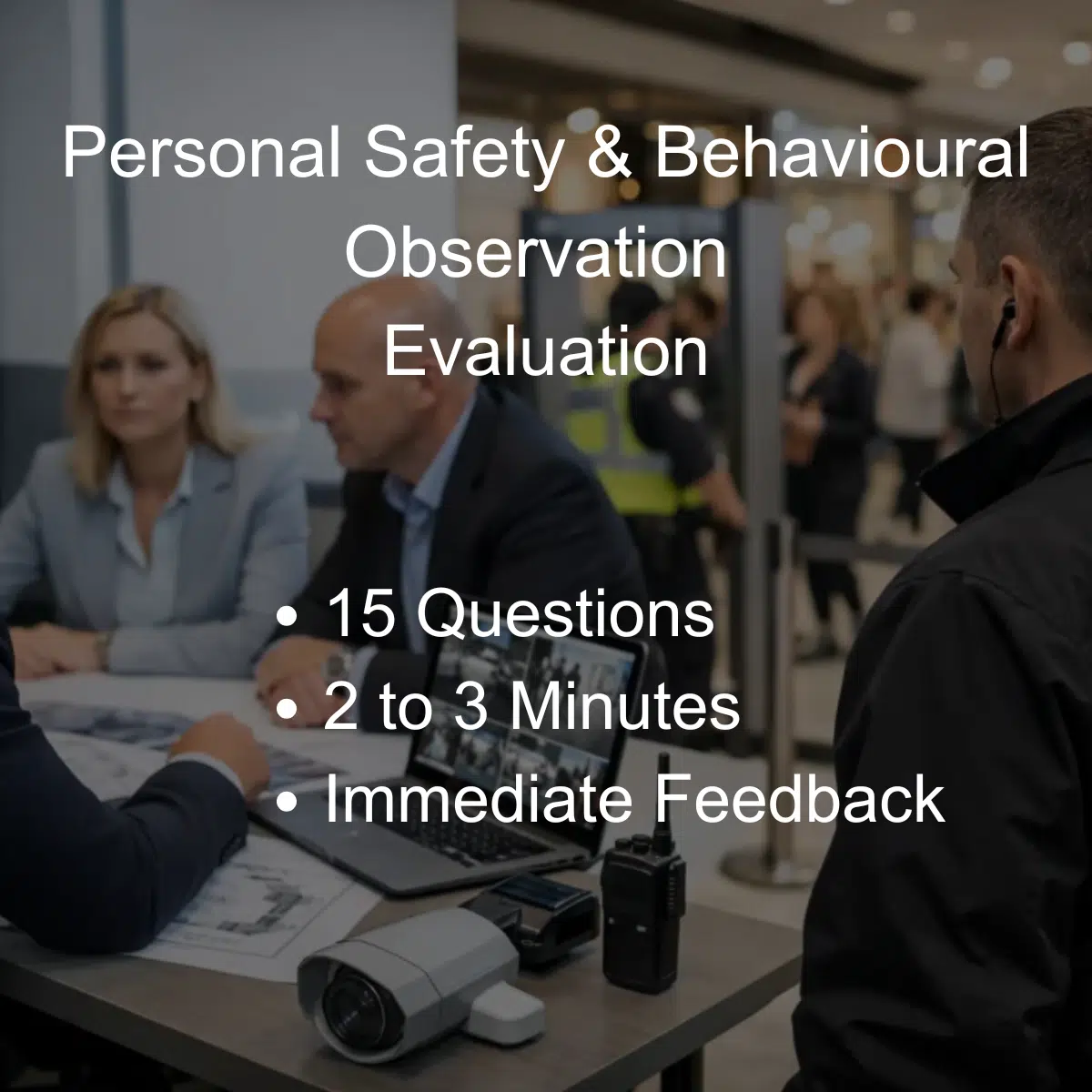
For larger organisations, the answer may include formal capability diagnostics across sites or teams to identify where confidence is justified and where it is assumed. For individual practitioners, structured development in counter terrorism and protective security is increasingly important because the threat environment is becoming more complex, not less.
This is also where a specialist partner can add value, particularly when advice is operationally credible and not trapped in theory. Mildot Group’s approach is built around improving real-world performance, because resilience is measured by how people respond when the pressure is on.
What security leaders should do next
The right next step depends on the maturity of the organisation. Some need to establish a proper baseline because no one has tested their plans against current threat patterns. Others already have a framework but need sharper behavioural detection, better exercising or stronger leadership decision-making.
Either way, three questions cut through the noise. Are we assessing the threat as it is now, not as it was? Can our people recognise and escalate warning signs confidently? And if an incident starts today, can we make fast, defensible decisions that protect life?
If the answer to any of those questions is uncertain, that uncertainty is useful. It gives you a starting point. In this area, honesty is an advantage. Terrorism preparedness does not need inflated language or cosmetic complexity. It needs clarity, pressure testing and consistent improvement.
Threat trends will keep shifting. Methods will adapt, motivations will blur and warning time may shrink further. Organisations that stay credible will be the ones that treat preparedness as a live capability – trained, tested and ready to work when normality breaks.
.
Useful Links:
.