A security plan can satisfy a requirement and still leave people unprepared.
That void becomes clear when a suspicious item is found, an evacuation route is blocked, a hostile incident unfolds nearby, or a team has to make fast decisions with incomplete information.
Effective counter terrorism consultancy closes the space between written policy and capable action.
For organisations with public facing sites, complex operations or high-value assets, terrorism preparedness is not a standalone document.
It is a working discipline.
It must shape how leaders assess risk, how teams report concerns, how sites operate, and how people respond when normal conditions fail.
What Counter Terrorism Consultancy Should Deliver
Good consultancy does not begin with a generic checklist.
It begins with the organisation itself, its people, locations, operating model, public profile, existing controls and credible threat picture.
A city centre hospitality venue has different exposures from a retail estate, a critical infrastructure site or an international corporate operation.
The principles may be similar, but the protective measures must fit the environment.
The first task is to establish what matters most.
This includes likely threats, vulnerable points, critical functions and the consequences of disruption.
Threat, vulnerability and risk assessments should identify not merely what could happen, but where current arrangements are likely to break down under pressure.
This is where many programmes lose value.
They record risks accurately but do not translate findings into clear ownership, practical controls and tested behaviours.
A consultant should help leaders make decisions, which risks require investment, which can be managed operationally, what must be improved first, and how success will be measured.
The output should be proportionate.
Not every site needs the same level of technical security, staffing, training or planning. Over engineering controls wastes resource and can create friction for customers and staff.
Underestimating exposure creates false confidence.
The right balance depends on the threat, the site, the organisation’s risk appetite and its ability to sustain the measures selected.
From risk assessment to operational readiness
A strong assessment is only the starting point.
Its findings need to be built into the way the organisation works. That may mean revising security procedures, clarifying escalation routes, improving access control arrangements, reviewing CCTV coverage, strengthening incident communications or establishing clear command responsibilities.
It also means testing whether those arrangements work in reality.
If a control depends on a busy manager spotting a concern, knowing whom to call and acting decisively during a peak trading period, that person needs more than a policy.
They need knowledge, confidence and a practised route to action.
Counter terrorism readiness should therefore connect strategy with frontline delivery. Senior leaders need assurance that investment is targeted.
Security and operations teams need clear standards and workable plans.
Frontline staff need to understand what good reporting looks like, how to protect themselves and others, and when to seek support.
Each group has a different role, but the system only works when those roles align.
Why Capability Matters More Than Compliance
Martyn’s Law has sharpened attention on protective security and preparedness across publicly accessible locations. Compliance matters, but compliance alone is not the end state.
A completed assessment, a training register and an emergency plan are evidence of activity.
They are not proof that an organisation can respond effectively.
Capability is demonstrated through performance. Can staff recognise and report behaviour that does not fit the environment? Do managers understand their authority during an incident? Can teams communicate clearly across shifts, tenants, contractors and venues? Are evacuation, invacuation, lockdown and business continuity arrangements understood well enough to be used under stress?
These questions are uncomfortable because they expose the difference between assumed readiness and verified readiness.
They are also the questions that reduce real world risk.
For this reason, credible counter terrorism consultancy should include practical evaluation.
Tabletop exercises, scenario based discussions, site reviews and capability diagnostics can reveal weaknesses that paperwork will not show.
They allow teams to test decision making without waiting for a real incident to expose a flaw.
Assessment should not be treated as a pass or fail event.
Its purpose is to create an honest baseline, give immediate feedback and direct improvement. Individuals may need focused learning.
A team may need clearer leadership arrangements. An organisation may need a better security strategy or stronger oversight of contracted security functions.
The response should follow the evidence.
Training that changes behaviour
Training is often purchased as a compliance product, delivered once and then forgotten. That approach rarely changes behaviour.
For training to improve readiness, it must be relevant to the learner’s role, concise enough to complete, and specific about the decisions people may face.
Accredited eLearning can provide an efficient foundation across dispersed workforces.
It gives organisations a consistent standard, supports records of completion and enables staff to learn at a manageable pace.
Yet digital learning is most effective when it sits within a wider programme of leadership engagement, local procedures and practical reinforcement.
Security managers should also be able to see where knowledge is strong and where it is weak.
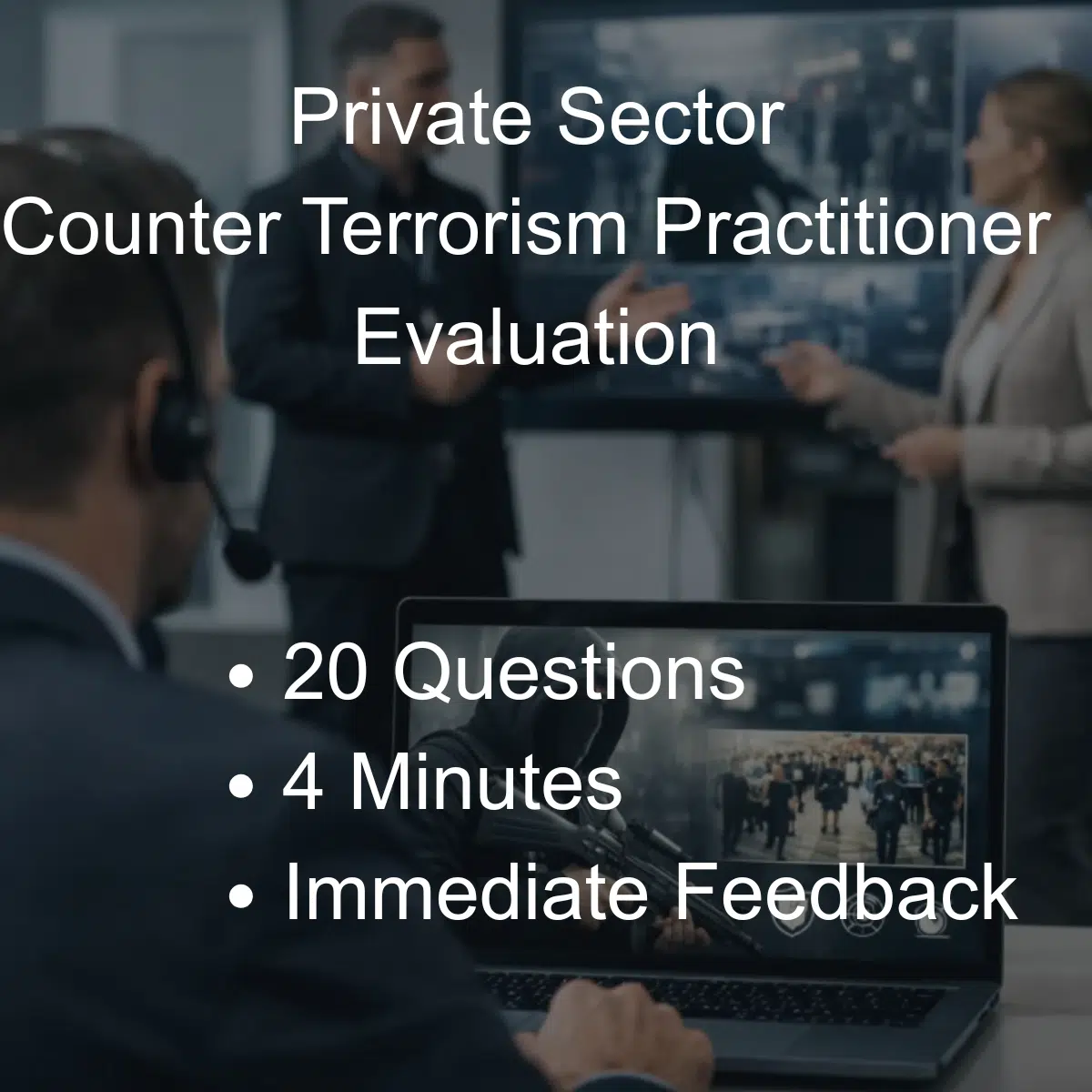
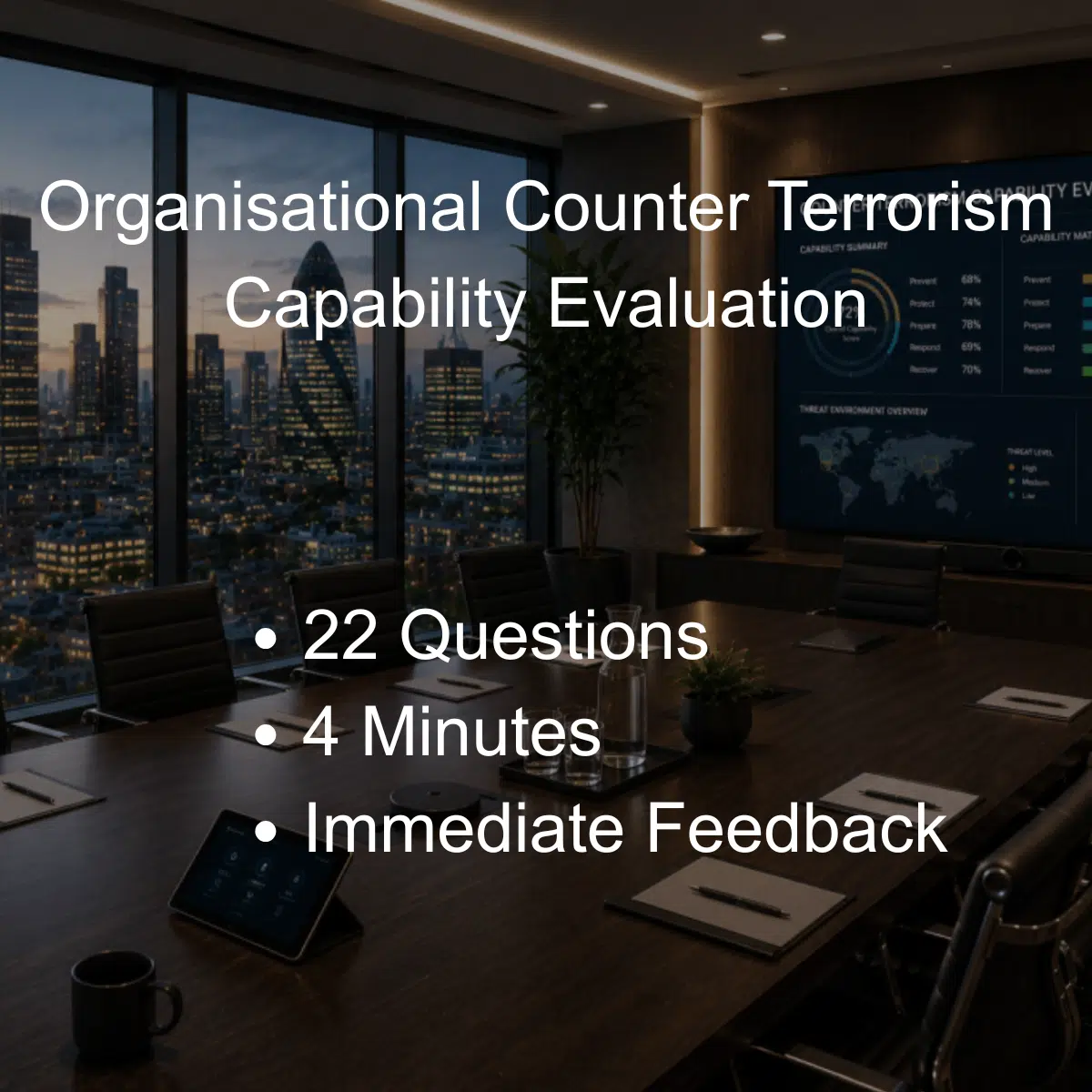
Capability evaluation platforms can provide a useful diagnostic, particularly for protective security practitioners, project teams and operational managers. Used properly, the data directs development rather than simply recording participation.
There is a trade off to manage.
Highly detailed training can overwhelm people who only need to know their immediate actions.
Training that is too basic may leave supervisors and specialist practitioners unable to manage complex decisions.
A tiered approach is usually more effective, broad awareness for all relevant staff, role specific instruction for those with operational responsibilities, and deeper professional development for security practitioners.
The Value of an Independent Security Perspective
Internal teams know their sites and culture better than anyone.
An external specialist brings a different advantage, the ability to challenge assumptions, compare arrangements against credible practice and focus attention on risks that may have become normalised.
This independence is particularly valuable after organisational change, a significant incident, a new site opening, increased public exposure or changing threat conditions.
It can also help when security responsibilities sit across several functions, such as property, operations, health and safety, human resources and corporate risk.
Without clear coordination, controls may exist but fail to connect.
An experienced consultancy partner should be comfortable working at both levels.
At board level, the discussion is about risk appetite, investment, assurance and resilience.
At site level, it is about physical layouts, reporting routes, procedures, systems and the practical realities of a demanding shift. Neither level can be ignored.
Mildot Group applies this operational perspective to turn security theory into action.
The aim is not to create more documentation.
It is to help organisations establish controls that people understand, leaders can govern and teams can use when pressure is high.
Choosing Support That Fits the Risk
When selecting a consultancy partner, look beyond broad claims of expertise.
Ask how the provider will assess your operational environment, what evidence will support its recommendations, and how it will help move from findings to implementation.
The quality of the questions asked at the outset often indicates the quality of the work that follows.
You should also expect clarity on scope.
A focused review may be the right answer for a single venue or defined concern. A wider programme may be required where multiple sites, complex stakeholder arrangements or strategic gaps are involved.
The best approach is not always the largest one. It is the one that addresses the most significant risks and creates a realistic path to improvement.
Recommendations should be prioritised, commercially aware and linked to accountable owners.
They should explain what needs to change, why it matters, what good looks like and how progress can be checked.
If every recommendation is marked urgent, none of them is useful.
The real test comes afterwards.
Staff should know what has changed. Leaders should be able to see whether the change is embedded.
Teams should be better able to recognise concerns, communicate quickly and act with discipline. That is resilience in practical terms.
A useful next step is to take one high consequence scenario from your own operation and ask a simple question:
If it happened during your busiest hour, would every person involved know their role?
The answer will show where to start.
.
Useful Links:
.