A security plan can look credible on paper and still fail at the first point of stress.
The difference is not usually the plan itself. It is whether the people expected to act understand the threat, recognise their role and can make sound decisions when information is incomplete.
Counter terrorism capability development closes that space between documented intent and operational performance.
For organisations responsible for public facing sites, events, critical operations or high risk commercial activity, this is no longer a peripheral training matter.
Modern threats expose old security thinking.
A policy reviewed once a year, a briefing delivered to a small group, or a generic online module cannot by itself show that an organisation is ready.
Capability is more than compliance
Compliance establishes a baseline.
It can define responsibilities, prompt risk assessment and demonstrate that leaders have considered their legal and ethical duties.
That matters, particularly as Martyn’s Law strengthens expectations around proportionate preparedness at publicly accessible locations.
But compliance is not capability.
A compliant organisation may still have unclear reporting routes, uncertain command arrangements, poorly briefed staff or managers who have never tested a difficult decision.
Those weaknesses become visible quickly in a live incident, a suspicious activity report or a period of heightened threat.
Capability means people can apply their knowledge in context.
It means a duty manager knows what must be escalated, a reception colleague can report concerns without hesitation, and a senior leader can balance safety, business continuity and communication under pressure.
It also means that the systems supporting them are usable, current and understood.
The aim is not to turn every employee into a counter terrorism specialist.
It is to give each person the level of awareness, judgement and confidence appropriate to their role.
A venue team, corporate office, energy facility and major event will each require a different operating model.
The common requirement is practical readiness.
What effective counter terrorism capability development measures
Too many programmes measure attendance rather than competence.
Completion rates may satisfy an internal target, but they do not show whether learning has changed decisions or behaviour.
A stronger approach assesses the organisation as a working system.
That assessment should examine four connected areas:
- Threat understanding – whether people recognise relevant indicators, understand the local risk picture and know how to raise concerns.
- People and decision making – whether staff, supervisors and leaders have clear roles, escalation thresholds and confidence to act.
- Plans and procedures – whether procedures are proportionate, accessible and capable of being used during disruption.
- Physical and technical measures – whether security design, access control, communications and monitoring support the operating plan rather than complicate it.
A weakness in one area often degrades the others.
For example, a well designed reporting process has little value if frontline teams do not know what good reporting looks like.
Equally, highly capable staff are placed at a disadvantage when their communications system, site information or emergency procedures are unreliable.
This is why a capability diagnostic is so useful.
It gives leaders a clearer starting point than assumptions, isolated audit findings or a folder of completed certificates.
It identifies what is working, where exposure sits and which improvements will have the greatest operational effect.
Start with the risk that the organisation actually carries
Generic counter terrorism training has a place as a foundation, but it should not be the end point. Development must reflect the organisation’s environment, people and operating pressures.
A hospitality business may need to focus on crowded-space awareness, staff reporting, incident communication and the management of contractors.
A retail estate may need to consider dispersed teams, changing footfall, delivery activity and the challenge of maintaining awareness during long opening hours.
A corporate headquarters may place greater emphasis on visitor management, insider risk, executive protection interfaces and crisis leadership.
Risk assessment should therefore look beyond a headline threat rating.
It should consider site layout, public access, critical dependencies, operating hours, events, supply chains, workforce turnover and the organisation’s ability to recover from disruption.
It should also account for behavioural risk. Fatigue, poor supervision, rushed decisions and a culture that discourages challenge can undermine otherwise sound controls.
The question for leadership is direct: where would our people struggle first? The answer is often more valuable than a long list of theoretical scenarios.
Build role-based competence
One size fits all content creates false assurance.
A better model gives all staff a common understanding of vigilance, reporting and personal safety, then develops further competence where responsibility increases.
Frontline colleagues need clear, memorable actions. They should know how to identify and report concerns, preserve their own safety and follow instructions during an incident. Supervisors need to manage information, support staff and maintain control of their area.
Security and risk practitioners need deeper knowledge of threat assessment, protective security principles, operational planning and the coordination of response measures.
Senior leaders need something different again.
Their role is not to memorise every procedure. They must understand risk appetite, governance, escalation, decision authority and the consequences of delay.
They should be able to challenge whether assurance evidence reflects real readiness or simply demonstrates activity.
This tiered approach is more efficient than delivering advanced material to everyone.
It also respects the reality of busy operations.
Training should be relevant enough that people can use it on the next shift, not merely recall it in an annual quiz.
Test decisions, not just documents
A plan becomes credible when it is tested against realistic settings.
That does not always require a large scale exercise.
Short, structured discussions can expose serious gaps if they ask the right questions.
What happens when a member of staff reports suspicious behaviour during a peak trading period? Who receives the report? What information is needed? Who decides whether to alter access, pause an activity or contact emergency services? How are staff, visitors and senior leaders informed? What happens if the normal decision maker is unavailable?
Tabletop exercises, scenario based learning and post incident reviews are valuable because they reveal the friction between written process and real operations.
They also help people practise calm communication.
In many incidents, confusion grows when staff receive vague, conflicting or delayed instructions.
Testing should be proportionate.
A small organisation may benefit most from focused leadership scenarios and clear staff briefings.
A complex estate or high profile event programme may require multi-team exercises, technical system checks and coordinated work with relevant partners.
The purpose is the same, find failure points before an adversary, accident or crisis finds them first.
Turn assessment results into a managed improvement plan
Assessment without follow through is simply observation.
Once gaps are identified, leaders need a prioritised improvement plan with named owners, realistic timescales and evidence of completion.
Prioritisation matters.
Not every void carries the same consequence, and not every improvement has the same cost or operational impact.
A clear escalation route, updated contact list or targeted supervisor briefing may reduce risk quickly.
More complex measures, such as redesigning access arrangements or replacing technical systems, may require investment and phased delivery.
The strongest plans distinguish between immediate actions, medium term development and strategic change.
They also avoid the temptation to chase every possible control. Security measures should support the business, its people and its service environment.
Excessively burdensome controls can lead to workarounds, poor compliance and reduced vigilance.
Leaders should revisit capability after meaningful change.
A new site, major event, revised operating model, increased threat level or high staff turnover can all alter the risk picture.
Readiness is not a one off project.
It is a discipline of assessment, learning, testing and improvement.
Counter terrorism capability development needs evidence
Board members, regulators, clients and insurers increasingly expect more than assurance statements.
They want to know what has been assessed, how people have been developed and whether the organisation can demonstrate improvement.
Useful evidence includes role based learning records, capability evaluation results, exercise findings, action logs, updated procedures and leadership reviews.
The quality of that evidence matters more than its volume.
A concise record showing that a gap was identified, owned, addressed and retested is more valuable than a large archive that nobody uses.
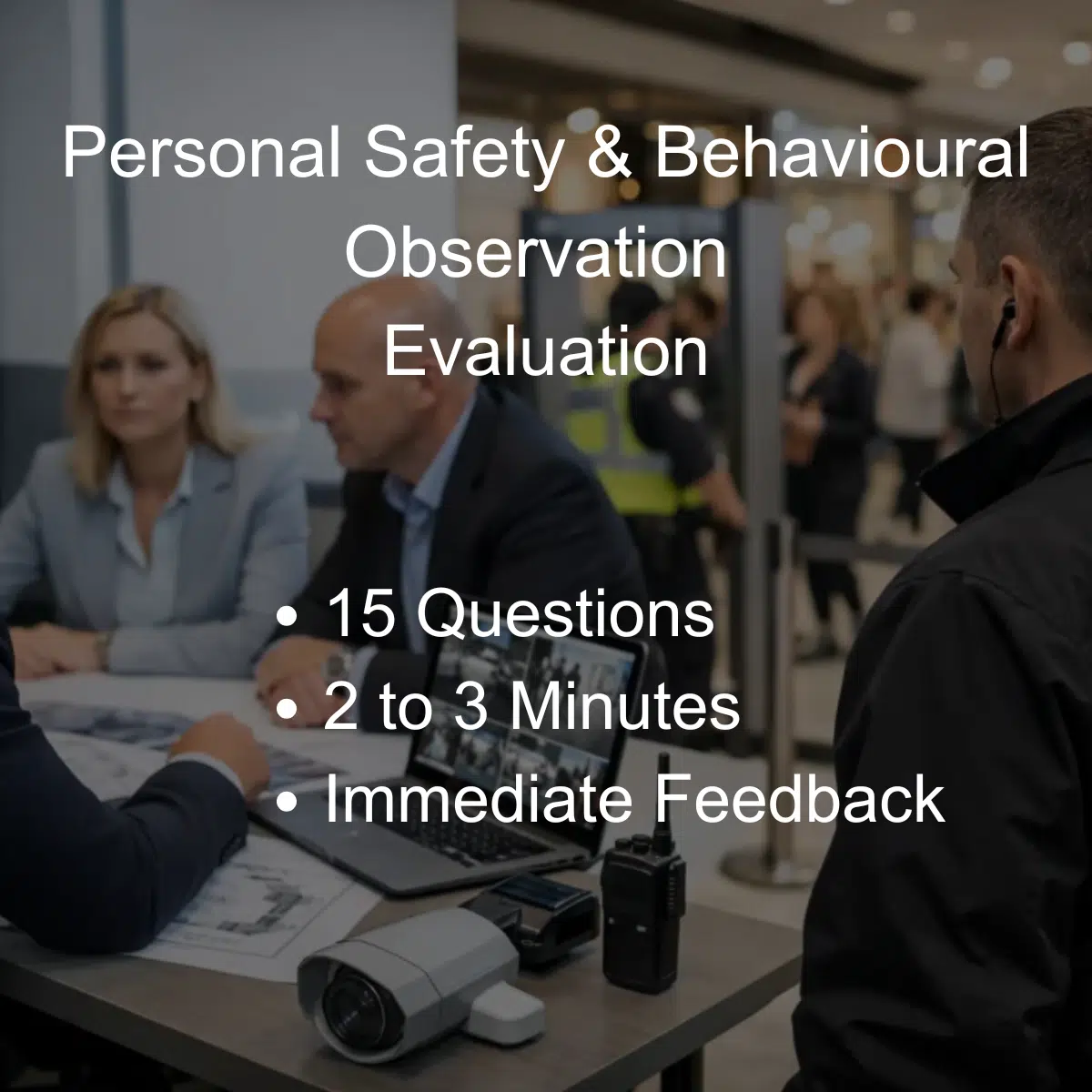
Digital evaluation platforms can support this work by giving individuals and teams immediate feedback on their current understanding.
For practitioners, that provides a practical development baseline.
For organisations, it creates a clearer view of capability across functions, locations and levels of responsibility. It should inform professional development, not be treated as a pass or fail substitute for operational judgement.
Mildot Group approaches development in this way, by connecting assessment, practical learning and operational improvement.
The objective is not more security paperwork.
It is people who can recognise risk, make decisions and perform when the situation is uncertain.
The useful question to take into the next leadership meeting is not, Do we have a counter terrorism plan?
It is, Can our people make that plan work at the point it matters?
.
Useful Links:
.