A queue forms early, a contractor arrives without the expected pass, and a steward reports a concern near an entrance. None of these issues is unusual. What matters is whether the people involved understand their event security responsibilities, have the authority to act, and can make sensible decisions before a minor problem becomes an operational distraction.
Security at an event is often reduced to visible personnel, bag checks and a written plan. Those elements may be necessary, but they are not the operation. Effective security depends on clear ownership across the organiser, venue, security provider, contractors and staff. If responsibility is vague, decisions slow down at precisely the point when pace and judgement matter most.
Event security responsibilities begin before doors open
The organiser carries the central duty to ensure security has been properly considered within the event design. That means understanding the nature of the event, likely attendance, audience profile, venue layout, timings, local context and foreseeable disruptions. It also means appointing competent people, giving them sufficient authority and ensuring security is not treated as a late procurement task.
A security plan should reflect the actual operation rather than an idealised version of it. A daytime community event, a high-profile corporate function and a sold-out music venue may occupy similar spaces, but their pressures are different. Arrival patterns, crowd behaviour, alcohol, public interest, contractors, restricted areas and emergency access all alter the security requirement.
The venue has responsibilities too. It must provide accurate operational information, maintain relevant systems and communicate site constraints honestly. A venue team that knows a delivery gate is routinely left unsecured during changeovers, or that a particular corridor becomes congested during egress, should not leave that knowledge in an informal handover. Local knowledge is a security control only when it reaches those making the plan.
Where a security supplier is engaged, its role must be defined beyond providing a headcount. The provider should confirm that personnel are appropriately deployed, briefed, supervised and able to communicate concerns effectively. The organiser cannot simply transfer accountability by issuing a contract, and the supplier should not accept an unclear brief then fill the gaps with assumptions.
Turn responsibilities into decisions
The most useful plans answer a practical question: who decides what, and on what information? This is more valuable than a long document that lists generic threats without changing how anyone works.
For example, who can delay opening if an entrance is not ready? Who authorises a search escalation, a partial evacuation or a change to access arrangements? Who speaks to police or emergency services? Who records a significant concern and ensures it is carried into the next shift? If the answer is “someone in control”, the responsibility has not been allocated.
A clear command structure does not mean every decision must travel upwards. It means staff know their boundaries. Front-line personnel need permission to challenge, report, pause entry or request support when something does not look right. Supervisors need defined escalation thresholds. The event security lead needs the authority to make proportionate operational changes without waiting for commercial approval while conditions deteriorate.
This is particularly relevant where multiple organisations share the site. Venue management may control building systems and emergency procedures. The organiser may control the programme, guest list and public communications. A contracted security team may control screening and patrols. Catering, production and transport teams may have access needs that create pressure to bypass agreed arrangements. These interfaces are where security arrangements most often fail.
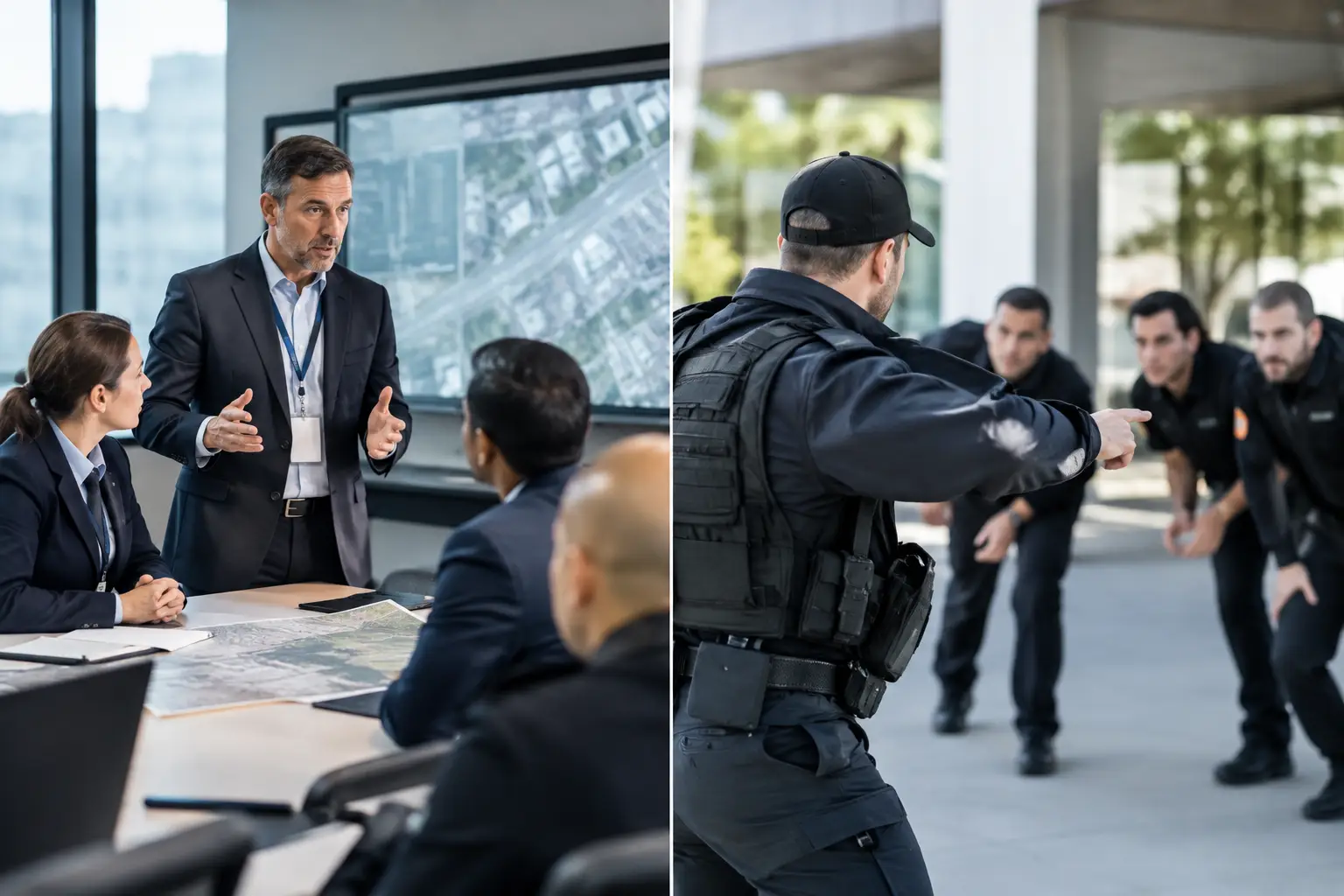
A short joint briefing before the event can expose problems that a document will not. Ask each lead what they need from the others to carry out their role. Ask what would cause them to stop, alter or delay their work. Then test whether the communication routes, contacts and decision rights match those answers.
The operational roles that cannot be assumed
The event security lead
The security lead turns risk information into an operating posture. This includes deployment, briefing priorities, supervisor oversight, incident escalation and liaison with the wider event command. They should understand the commercial and audience pressures around the event, but not be captured by them. A full venue is not evidence that a venue is under control.
The role requires judgement. A concern may be ambiguous, an attendee may be frustrated, or a queue may be creating pressure at an entrance. The right response is not always more restrictive action. It may be to redeploy staff, change the way information is communicated or separate competing flows of people. Good security leadership balances safety, service and security without allowing convenience to dictate risk decisions.
Supervisors and front-line teams
Supervisors convert the plan into consistent practice. They check that posts are covered, standards remain credible as fatigue develops, communications are working and staff understand changes. They also need to recognise when an individual is struggling with conflict, uncertainty or information overload. Leaving a poorly supported officer in place because the roster is tight can create a wider problem.
Front-line personnel have responsibilities that go beyond access control. They observe behaviour, protect sensitive areas, communicate concerns accurately, support crowd management and provide calm, professional engagement with attendees. They need enough context to distinguish routine inconvenience from something that requires action.
That does not require every member of staff to become a counter terrorism specialist. It does require relevant behavioural awareness, confidence in reporting and a shared understanding of what happens after a report is made. If staff believe that raising concerns causes delay, criticism or unnecessary paperwork, they will stop reporting the early indicators that give a team options.
The control point
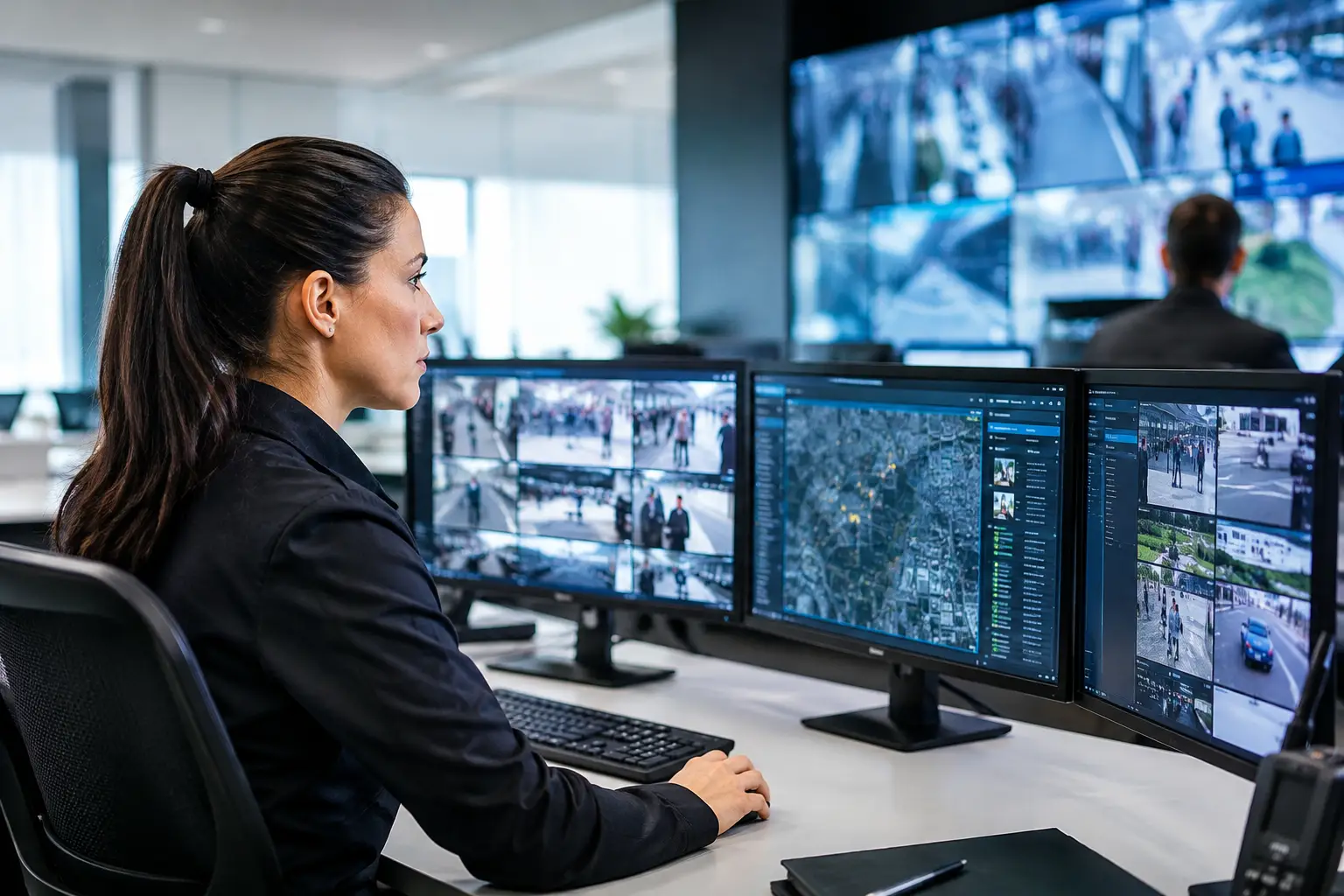
Whether it is a dedicated control room or a nominated operations desk, the control function needs a defined purpose. It should maintain situational awareness, receive and assess information, log significant decisions, coordinate communications and support the incident lead. It should not become a passive location where messages accumulate.
The quality of information matters. “Issue at Gate B” is not enough. A useful report identifies what has been observed, where it is occurring, when it began, who is involved if relevant, and what action has already been taken. Staff should be trained to report facts before interpretations. This reduces confusion and helps decision makers identify patterns.
Contractors, temporary staff and the weak edges of the event
Many event vulnerabilities sit outside the formal security deployment. Temporary staff may not know which areas are restricted. Contractors may arrive at a different time from the agreed schedule. Production changes can create new access routes, obscure sightlines or block emergency paths. Volunteers may be well intentioned but uncertain about who to contact.
These are not reasons to impose disproportionate restrictions. They are reasons to manage access deliberately. Identification, induction, escort arrangements, delivery procedures and a clear challenge culture should fit the event. At a small event, a concise face-to-face briefing may be more reliable than an elaborate credential system. At a complex venue with multiple workstreams, stronger access controls and documented handovers may be justified.
The test is whether the arrangement works when people are busy. A procedure that depends on every contractor reading a lengthy email, or every manager being available by phone, is fragile. Build controls around the real operating environment.
Prepare for disruption, not just the planned schedule
A security operation is judged by how it handles change. Severe weather, a late-running programme, an unexpected crowd surge, a medical incident or a concerning report can alter priorities quickly. The plan should allow the team to adapt without abandoning control.
Briefing should therefore cover likely decisions, not merely post instructions. Teams should understand how they will receive updates, where they will report, who can authorise changes and how they will manage conflicting demands. Short scenario discussions are useful here. Ask what the team would do if one entrance became unavailable, if key communications failed, or if an incident drew attention away from a busy public area. The purpose is not to rehearse a perfect answer. It is to reveal uncertainty before it matters.
For UK organisations considering duties under Martyn’s Law, this distinction is significant. Reasonable procedures, risk assessment and training have value only if people can apply them under pressure. The focus should be on proportionate preparedness, clear roles and the ability to act on credible information.
Review performance while the detail is still fresh
The end of the event is not the end of the security task. A short, disciplined review should capture what actually happened: delays, access exceptions, communication failures, staff welfare concerns, recurring points of friction and decisions that worked well. This is operational learning, not an exercise in assigning blame.
Look for patterns rather than isolated complaints. If staff repeatedly needed to seek permission for basic decisions, authority was probably too centralised. If reports were inconsistent, the briefing or reporting method may have been inadequate. If the plan only worked because experienced individuals improvised, the organisation has identified a capability risk.
Event security is not secured by a document, a uniform or a pre-event meeting alone. It is secured when people understand their responsibilities well enough to make proportionate decisions in real conditions. That is the standard worth testing before the next set of doors opens.