A security capability platform review should answer one hard question, can your people make sound decisions when an incident develops faster than the plan?
For organisations with public facing sites, complex operations or heightened threat exposure, a training record is not proof of readiness.
It shows attendance.
Capability shows whether people can recognise risk, apply judgement and act within their role under stress.
That difference matters.
Modern threats expose old security thinking, particularly where security programmes rely on policies, annual briefings and compliance evidence without testing whether learning has been retained.
A well designed capability platform turns theory into action by showing leaders where knowledge is strong, where it is incomplete and where operational risk may be sitting unnoticed.
What a security capability platform should do
A capability evaluation platform is not simply an eLearning library or a multiple choice test placed behind a login.
At its best, it provides a structured diagnostic of individual and organisational preparedness.
It assesses what a practitioner, supervisor or wider team knows about protective security, counter terrorism principles, planning and response.
It then provides immediate, useful feedback that explains the result and directs further development.
This is particularly valuable for retail, hospitality, events, critical infrastructure and corporate environments. These sectors often have dispersed teams, high staff turnover, changing operating conditions and limited time for classroom delivery.
Leaders need a reliable view of capability without removing staff from the operation for days at a time.
The platform must therefore do more than identify a pass or fail outcome. A high score can be reassuring, but it is only useful if the assessment reflects credible decisions and current risk.
A lower score should not become a compliance problem to conceal. It should reveal a training need early enough to correct it.
For individual practitioners, the value is equally clear.
A meaningful evaluation can expose blind spots in threat recognition, protective security planning or incident management.
The right feedback gives context, not just a mark. It supports professional development and better judgement in future roles.
Security capability platform review – the criteria that matter
The best review starts with the operational problem, not the software features.
Ask what decisions the organisation needs people to make, who is expected to make them and what the consequences are if they get them wrong.
A platform built for general awareness may be sufficient for a large employee population.
It will not be enough for security managers or counter terrorism practitioners responsible for assessment, planning and advice.
Assessment quality must come before presentation
A clean dashboard and simple user journey are worthwhile. They remove friction and improve completion. However, the quality of the assessment is the central issue.
Look for questions based on practical judgement rather than trivia.
Capability is not proven by recalling a definition in isolation. A credible evaluation tests whether someone can identify indicators, prioritise information, understand escalation routes and select proportionate controls.
It should account for the reality that security decisions are rarely made with perfect information.
The content also needs a clear professional foundation.
Counter terrorism and protective security material should reflect recognised principles, current operating realities and the responsibilities of the intended role.
Generic content may suit broad awareness training, but specialist roles need a higher standard.
If the platform cannot explain the purpose behind an answer, it is unlikely to develop capability.
Feedback should improve performance immediately
Delayed reports have a place in governance, but immediate feedback has operational value.
It lets the learner understand the error while the question and reasoning are still clear. This creates a direct learning loop, assess, explain, correct and apply.
Useful feedback is specific.
It identifies the knowledge area involved, explains why the chosen response was weak or incomplete, and points towards the principle that should guide future action.
Feedback that merely states an answer is wrong wastes a valuable moment of attention.
There is a trade-off. Highly detailed feedback can make a platform feel slower, while short feedback can lack depth.
The right balance depends on the audience. A general workforce needs concise, clear instruction.
Experienced security personnel may need more detailed educational information that challenges their assumptions and strengthens their decision-making framework.
Reporting must create a defensible picture of risk
Senior leaders do not need pages of completion data. They need to know whether the organisation can fulfil critical security responsibilities.
Reporting should show participation, performance by topic, trends over time and meaningful differences between locations, functions or teams.
This allows a security leader to distinguish between a local gap and a wider weakness. If several teams underperform in suspicious activity reporting, for example, the answer may be a targeted briefing, clearer local procedures or supervisor led reinforcement.
If performance is weak across threat assessment principles, the organisation may need a more substantial development programme.
The platform should support proportionate governance.
It must be possible to demonstrate that capability was assessed, findings were reviewed and improvement activity followed.
That evidence is increasingly relevant to organisations building counter terrorism readiness in line with evolving UK expectations, including the practical demands associated with Martyn’s Law.
Yet data alone is not the outcome.
A red or amber dashboard does not reduce risk.
Leaders must assign ownership, set timescales and check whether improvement has actually occurred.
Administration should support the operation, not burden it
A platform has to work for the people managing it.
Corporate account controls, group reporting, clear learner access and straightforward assignment of assessments all matter. If administration is awkward, use will decline and the data will become incomplete.
Consider how the platform fits the workforce. Can new starters be assessed quickly? Can different learning routes be assigned to front-of-house staff, managers and specialist personnel? Can the organisation assess overseas teams while retaining consistent standards?
These are practical questions, but they determine whether a platform delivers a useful organisational view or becomes another underused system.
Accessibility matters as well.
Clear language, logical pacing and a sensible user interface improve completion without lowering standards. Capability evaluation should be demanding in its thinking, not difficult because the system is poorly designed.
Avoid the common purchasing mistakes
The first mistake is buying a content library when the real need is diagnosis.
Learning resources are valuable, but they do not show what people already know or where risk is concentrated. Establish the baseline first, then use learning to close identified gaps.
The second is treating a platform score as a competence certificate.
Online evaluation is a strong tool for measuring knowledge and judgement within its scope. It does not replace live exercising, leadership observation, site-specific briefings or professional experience.
A competent security programme uses each method for the job it can genuinely perform.
The third mistake is assessing everyone in the same way.
A receptionist, a venue manager and a protective security adviser need different levels of knowledge.
One universal assessment may provide broad assurance, but role-based evaluation gives more useful insight where responsibilities differ.
Finally, do not purchase a platform because it produces attractive reports.
Ask to see the standard of questions, the feedback provided after each response and the depth of reporting available to a security lead.
These are the elements that determine whether the system strengthens readiness or simply records activity.
Turning diagnostic results into capability
The strongest approach is cyclical.
Establish a baseline, identify the priority gaps, provide focused development, then reassess.
This gives leaders evidence of progress and prevents learning from becoming a one off event.
For a large organisation, the first assessment may reveal that general awareness is sound but incident escalation is inconsistent.
That finding should lead to clear action, refine the reporting route, brief supervisors, reinforce expectations through short learning modules and test the result again.
The response must be visible in operations, not just recorded in a training register.
For specialist personnel, a capability diagnostic can inform professional development plans, recruitment decisions and the allocation of project responsibilities. It can also help managers avoid a common error: assuming time served is the same as current competence.
Experience matters, but threats, standards and operating environments change.
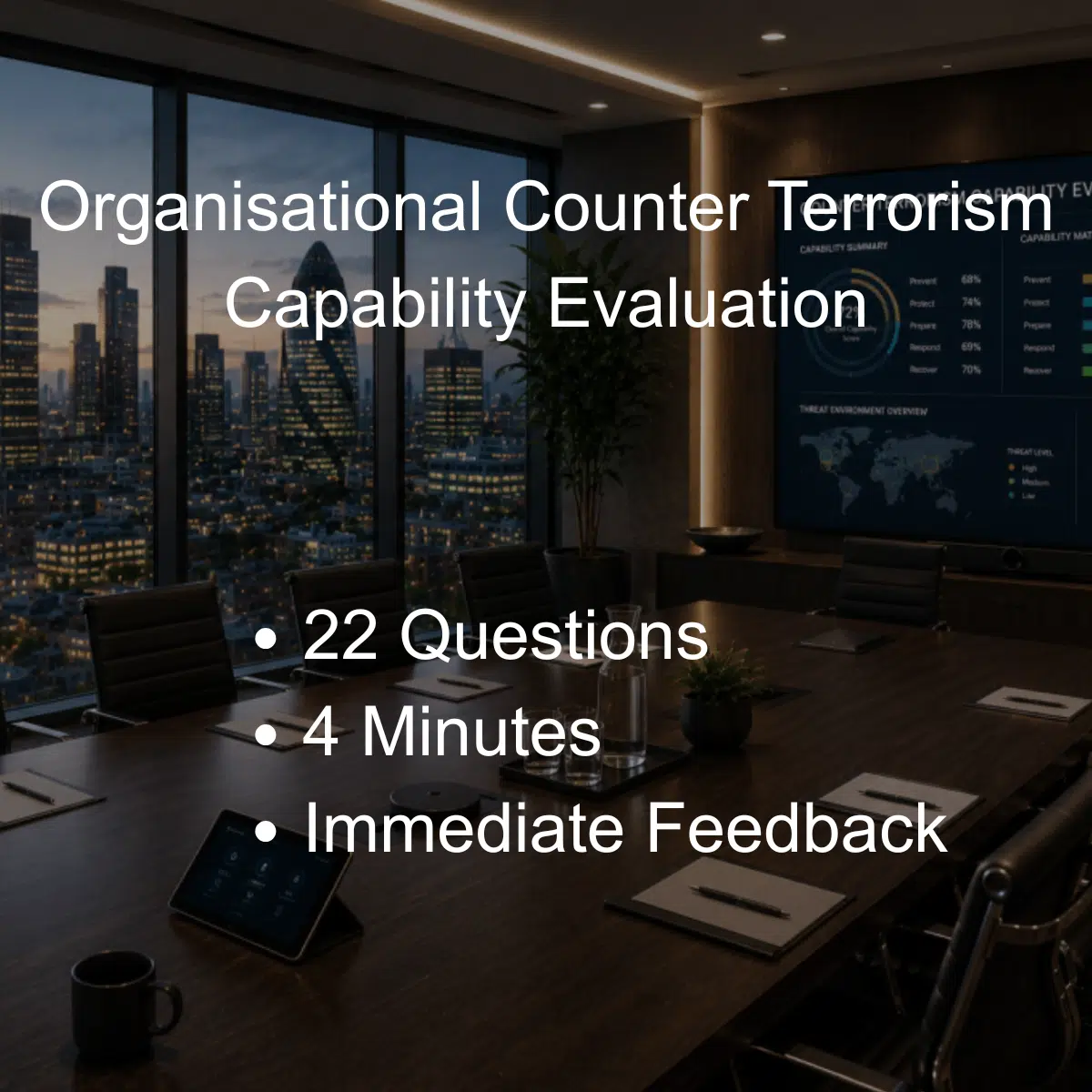
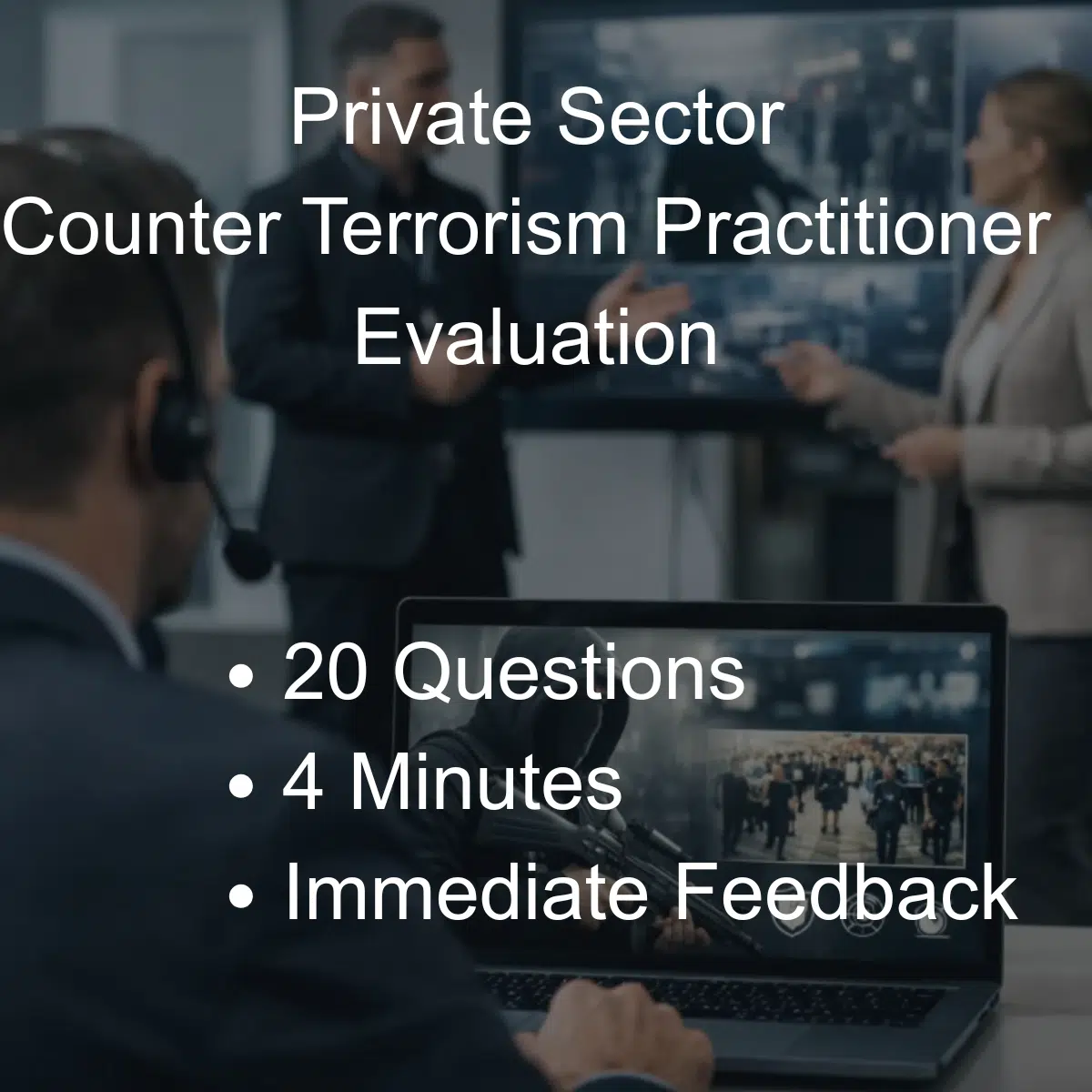
Mildot Group’s approach to online counter terrorism capability evaluation is built around this principle.
The objective is not to create more paperwork. It is to give organisations and practitioners immediate, high level feedback that informs credible improvement.
A platform is worth its place when it creates a clearer line between risk, learning and action.
The useful question is not whether everyone completed the assessment.
It is whether the organisation is now better prepared to recognise danger, make decisions and protect people when it counts.
.
Useful Links:
.