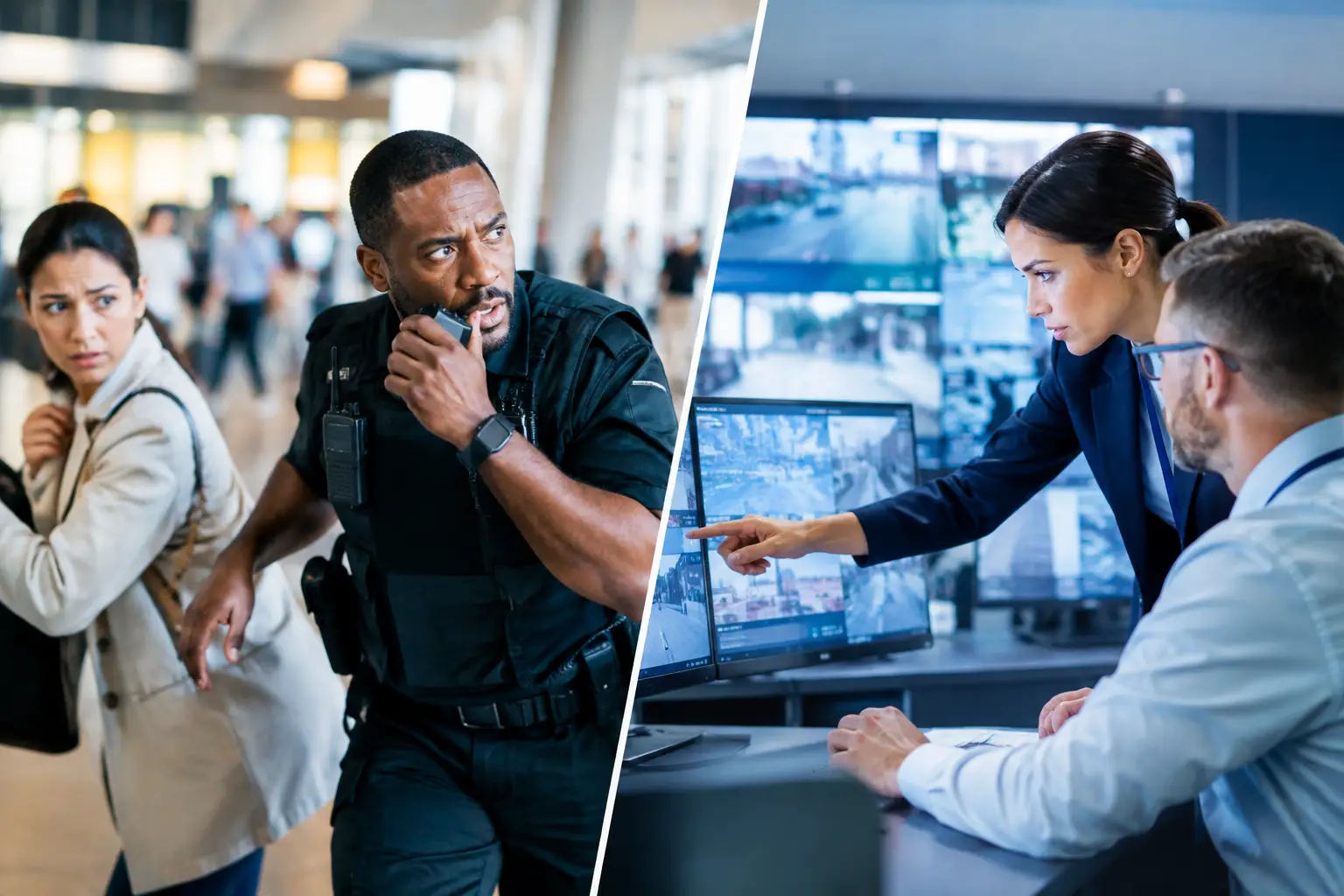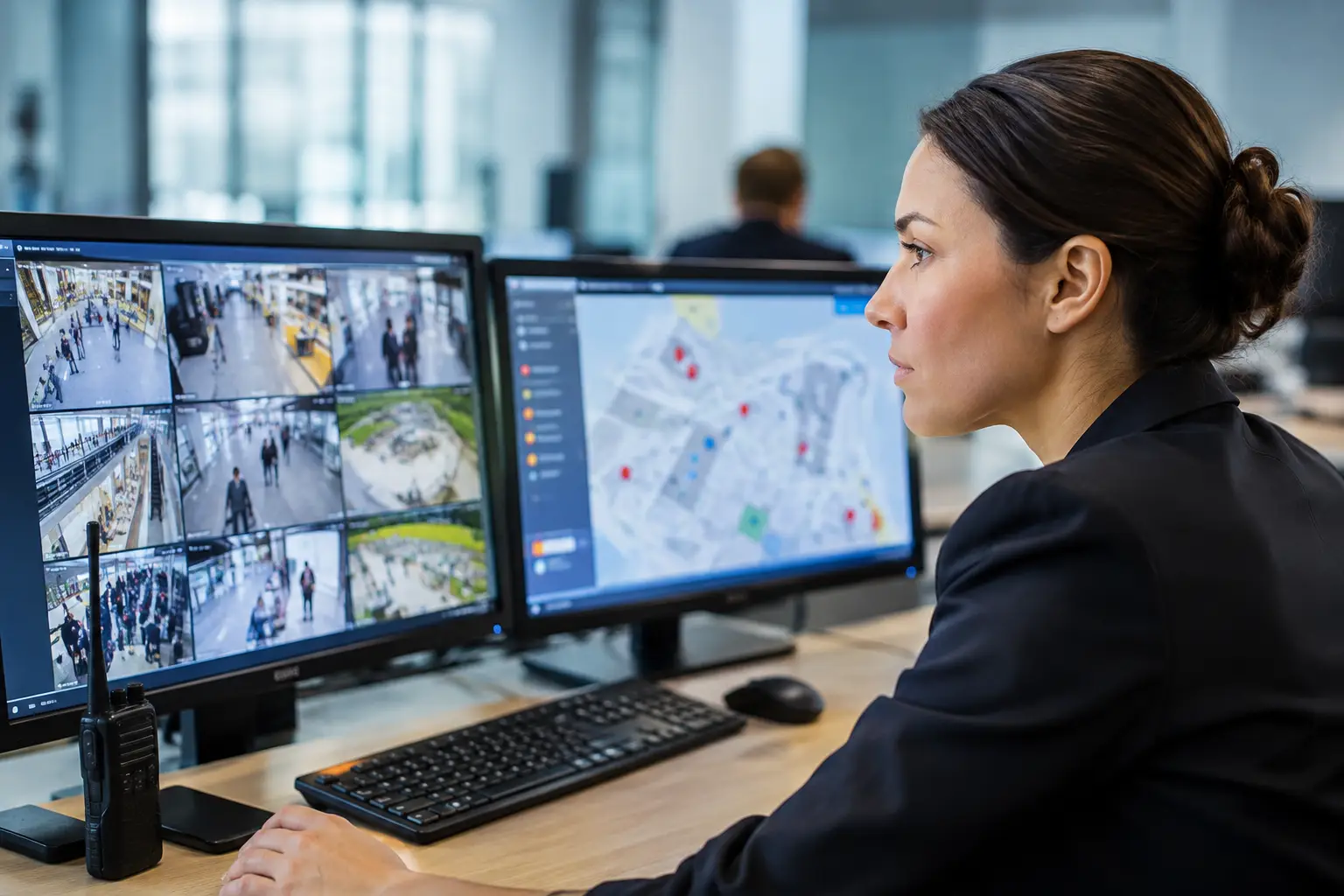
A security risk assessment should change what people do on a difficult day.
If it only produces a report, a traffic light chart and a set of actions nobody owns, it has not reduced risk.
It has recorded it.
For organisations operating public facing sites, high value assets, critical operations or busy venues, the question is not whether a threat exists.
The question is whether people, procedures and physical measures can recognise it early, make sound decisions and recover control under stress.
Modern threats expose old security thinking.
A fixed checklist may identify obvious voids, but it rarely tests the reality of an operating environment, changing footfall, temporary staff, competing commercial pressures, supply chain dependencies, public access and the behaviour of people when an incident unfolds.
What a security risk assessment is meant to achieve
A credible assessment establishes a clear picture of exposure, then turns that picture into proportionate action.
It considers the threats an organisation may reasonably face, the vulnerabilities that make those threats more likely to succeed, and the consequences if controls fail.
This is not an exercise in predicting every possible event.
It is a disciplined way to prioritise the risks that matter most. The outcome should be a practical basis for investment, planning, training and assurance.
For a retail portfolio, this may mean looking beyond theft and disorder to assess hostile reconnaissance, unattended items, lone working, evacuation routes, suspicious behaviour and communication between stores.
For an event operator, crowd movement, contractor access, queue management and command arrangements may carry greater weight.
A critical infrastructure site may need to focus on perimeter integrity, insider risk, dependencies and the continuity of essential operations.
The context changes. The method should remain sound.
Start with the reality of the operation
An assessment cannot be credible if it is conducted from a desk alone. Documents, incident data and site plans are useful, but they do not reveal how a location actually functions at peak periods, during a shift change or when a key member of staff is absent.
Effective work begins by understanding the operation.
Who enters the site? What do they need access to? Where are the stress points? Which activities are routine, and which only happen occasionally? How are contractors managed? What is the response when normal procedures are disrupted?
Site observation and structured conversations often expose the difference between policy and practice.
A door may be designated as secure but held open for deliveries.
A reporting process may exist but be poorly understood by frontline teams.
CCTV may provide coverage, yet nobody may be clearly responsible for monitoring an alert or escalating it quickly.
These details matter because security failures usually develop through small, tolerated weaknesses rather than one dramatic mistake.
Assess threats without chasing headlines
Threat assessment needs judgement.
Organisations should consider national and local threat information, previous incidents, their profile, location, operating model and any features that make them attractive or vulnerable targets.
High consequence does not always mean high likelihood, but neither should low probability be used to dismiss serious exposure.
A balanced assessment avoids two common errors.
The first is copying generic threat statements that could apply to any business.
The second is allowing the latest headline to dictate every priority.
Both lead to wasted effort.
The strongest approach identifies credible threat scenarios and asks what they would mean in this particular environment.
It also considers hostile intent alongside more routine risks such as crime, disorder, fire, protest activity, malicious damage, information loss and behavioural factors.
Threats can overlap.
A weak access process, for example, may create opportunities for theft, unauthorised entry and more serious hostile activity.
Find vulnerabilities that affect outcomes
A vulnerability is not simply a missing camera or an ageing fence.
It is any weakness that could be exploited or that would prevent an effective response.
Physical security, technical systems and procedures should be considered together.
So should people. Teams may have equipment and written instructions, but lack confidence to challenge unusual behaviour, report concerns or take decisive action when conditions change.
Look closely at access control, visitor management, key and pass control, delivery processes, alarm response, lighting, surveillance, incident reporting, communications and emergency arrangements.
Then test the human component, supervision, staffing levels, training, role clarity, fatigue, turnover and the ability to work across organisational boundaries.
This is where a capability led assessment adds value. It asks not just, Is there a control? but, Will it work when it is needed?
Turn findings into proportionate controls
Risk scoring can help leaders compare priorities, but a score is not a decision.
It should support professional judgement, not replace it.
A low cost procedural change may reduce a material risk quickly.
A high cost technical measure may be justified where consequence is severe, but only if it can be operated, maintained and integrated into a wider response plan.
Controls are strongest when they work in layers.
Good design may reduce opportunity. Clear procedures guide staff. Competent people identify and report concerns.
Technology supports detection and evidence.
Leaders provide ownership, resources and assurance.
A useful action plan states what must change, who owns the action, what resources are required, how success will be tested and by when.
Avoid vague recommendations such as improve awareness or review security.
Specify the required outcome. For example, a team may need a defined process for escalating suspicious activity, supported by brief training, tested communications and manager oversight.
Not every weakness needs an immediate capital project.
Some can be reduced through changes to routines, supervision, layout or training.
Equally, organisations should not rely on training to compensate for poor design or inadequate staffing.
The right balance depends on the site, threat picture and consequences of failure.
Test readiness, not just compliance
The Terrorism (Protection of Premises) Act in the UK has sharpened attention on protective security and preparedness for many UK premises and events.
Compliance matters, but compliance alone is not a measure of readiness.
A plan that has never been exercised is an assumption.
Testing should be proportionate and realistic.
Tabletop discussions can reveal gaps in decision making, roles and escalation.
Short practical exercises can test communication, reporting and response. Larger exercises may be appropriate for complex sites, multiple agencies or high consequence operations.
The purpose is not to catch people out.
It is to build the confidence to act, identify where procedures break down and improve the system before an incident forces the lesson.
Frontline staff should understand what normal looks like in their environment, what may be unusual, how to report it and what they are expected to do next.
Managers need to know when to take control, when to escalate and how to support teams during disruption.
Senior leaders need assurance that the organisation can make informed decisions under stress, not merely demonstrate that a document exists.
Keep the assessment live
A security risk assessment has a limited shelf life.
It should be reviewed when there is a significant incident, a change in threat level, a new site or service, a major refurbishment, altered operating hours, a change in occupancy, or a material change to staffing or technology.
Regular review also prevents risk ownership from drifting.
New vulnerabilities emerge and operating practices evolve.
A live assessment records these changes and keeps decision makers focused on the controls that protect people and operations now.
For multi site organisations, consistency is valuable, but it should not erase local judgement.
A common framework can provide clear reporting and oversight while allowing individual sites to address their particular exposure.
This is especially important where teams operate across retail, hospitality, events, corporate premises or internationally.
Mildot Group approaches assessment as an operational tool, not a compliance product.
The aim is to turn security theory into action, clearer priorities, capable people and controls that work when the operating picture becomes difficult.
The most useful closing question is simple, if the incident happened during your busiest hour, would your people know what to do, have the means to do it and be supported to make the right call?
If the answer is uncertain, the assessment has shown you where to begin.
.
Useful Links:
.