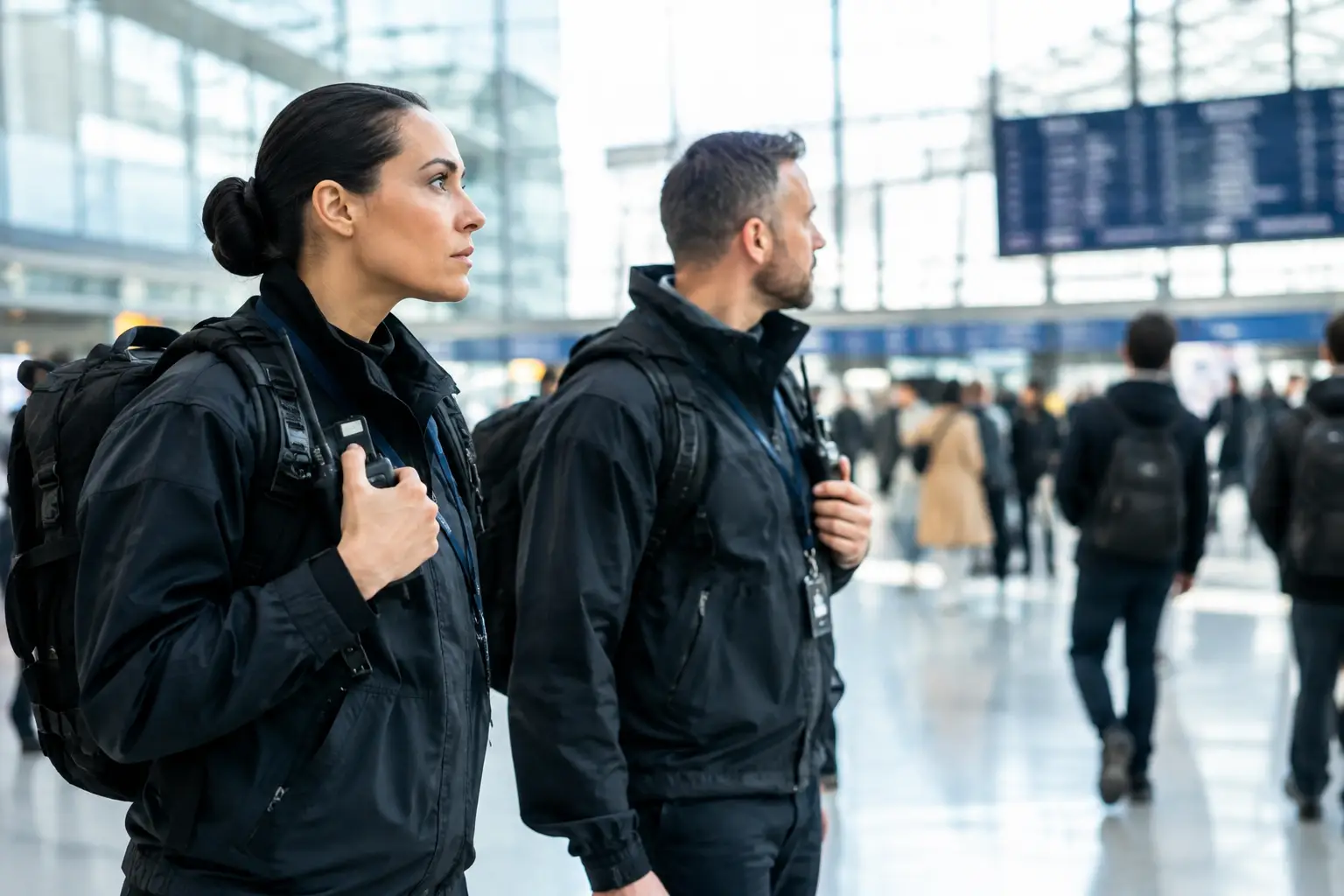
A busy venue does not become a security risk only when an incident occurs.
Risk is already present in the decisions made before doors open, who notices unusual behaviour, who challenges it, who escalates concerns, and who can keep people moving safely when information is incomplete.
That is why the question of who needs counter terrorism training should not be answered with a single job title.
Counter terrorism capability is not solely the concern of specialist security teams.
It is a shared operational requirement for organisations where people, public access, critical assets, high-profile activity or complex sites create exposure.
The depth of training should match the risk, the role and the decisions a person may need to make under stress.
Counter terrorism training is for those with a role in safety
Every organisation does not need the same programme.
A small, low footfall office with controlled access has different needs from a shopping centre, hotel, stadium, transport hub or energy facility.
But where terrorism could affect people, operations, reputation or continuity, leaders need to establish a credible baseline of awareness and response.
Training is most effective when it turns theory into action.
Staff should understand what concerning activity can look like in their environment, how to report it properly, what information matters, and what they must not do.
Managers need a broader view, how to assess exposure, set proportionate controls, test plans and make sound decisions when events develop quickly.
The objective is not to turn every employee into a counter terrorism practitioner.
It is to give each person the confidence and competence required for their position.
Note: Adding CT knowledge is just bringing any security system into the 21st century. Its been brushed off and ignored in some sections for decades.
Who needs counter terrorism training in practice?
The answer usually falls into three groups, frontline personnel, operational leaders and protective security specialists.
Each group needs a different level of knowledge and practice.
Frontline teams in publicly accessible places
Retail, hospitality, leisure, events and visitor facing organisations rely on people who see the site as it really is.
Reception staff, customer service teams, facilities personnel, event stewards, cleaners, maintenance teams and loading bay staff may all notice something before a control room or manager does.
They need concise, relevant training that helps them recognise suspicious behaviour, unattended items, hostile reconnaissance and unusual approaches without encouraging guesswork or discrimination.
They should know their reporting routes, emergency actions and the importance of accurate observations.
A member of staff does not need to diagnose intent. They do need to recognise when behaviour, circumstances or information do not feel right for the setting, and report it promptly through established procedures.
This is particularly valuable in large sites where security teams cannot be everywhere at once.
Security, facilities and operations personnel
Security managers, facilities managers, duty managers, control-room operators and operations teams carry greater responsibility.
They make decisions that affect access, movement, communications and business continuity. Their training must go beyond general awareness.
These roles need to understand threat, vulnerability and risk in operational terms.
They should be able to identify weaknesses in physical security arrangements, manage suspicious incidents, preserve useful information, coordinate escalation and support emergency services without creating further confusion.
For a venue manager, this may mean knowing when a bag report requires local action, how to manage a partial evacuation, and how to communicate clearly with tenants, contractors and visitors.
For a corporate security lead, it may mean assessing a changing threat picture, reviewing protective measures around a VIP visit, or testing whether site procedures work outside a written plan.
Directors and senior decision-makers
Board members, directors and senior leaders do not need to perform frontline security tasks.
They do, however, need sufficient counter terrorism understanding to govern risk properly.
Their responsibilities include setting the organisation’s risk appetite, allocating resources, appointing competent advisers, challenging weak assurance and ensuring security plans are tested rather than filed away.
When an incident occurs, senior leaders may also face difficult decisions on closure, communications, welfare, recovery and liaison with stakeholders.
Counter terrorism training for this group should focus on accountability, decision making and resilience.
A well written policy is not proof of capability.
Leaders need evidence that their people understand their roles and can carry them out when normal operations are disrupted.
Organisations within scope of Martyn’s Law
For UK venues and premises affected by the Terrorism (Protection of Premises) Act 2025, commonly known as Martyn’s Law, training is a practical part of meeting preparedness duties.
The legislation reinforces a point that experienced security professionals already understand, terrorism preparedness cannot sit only with one person or one department.
Premises and event organisers will need arrangements that are proportionate to their capacity and the activities taking place.
The exact requirements depend on the type, size and use of the premises, so a generic course alone will not resolve every obligation.
Training must be connected to site specific procedures, roles, reporting lines and emergency plans.
This matters for qualifying retail locations, entertainment sites, hotels, visitor attractions, places of worship, education settings and event operations.
It also matters for organisations that may not fall directly within a legal threshold but still host substantial numbers of people or operate in an attractive target environment.
Critical infrastructure and high risk commercial sites
Oil and gas operations, utilities, transport, logistics, data centres, government linked programmes and major corporate sites face a different mix of risks.
Public access may be limited, but the consequences of disruption can be significant.
Teams at these sites require training aligned to their operating environment.
That may include hostile reconnaissance, insider risk, access control failures, suspicious deliveries, vehicle threats, communications during disruption and coordination across dispersed locations.
The right approach brings protective security, operational resilience and behavioural risk together.
VIP protection teams and those responsible for high profile visitors also require role-specific capability.
High visibility, predictable routines and public attention can alter the threat picture quickly.
Effective preparation covers advance planning, venue liaison, movement, contingencies and calm decision making, not just physical measures.
Training should be proportionate, current and tested
There is a trade off between broad awareness and specialist depth.
Training every employee to an advanced level wastes time and can create false confidence.
Offering only a short awareness briefing to those responsible for response planning leaves a serious capability gap.
A proportionate programme starts with a clear assessment of the organisation’s threat, vulnerabilities and operational realities.
It then defines what each role must know, what it must be able to do, and how that capability will be checked.
For many organisations, this creates a layered model. General staff receive focused awareness and reporting guidance.
Managers receive scenario based learning and decision support. Security and resilience personnel develop deeper practitioner knowledge. Senior leaders receive assurance and crisis decision-making input.
Knowledge also degrades if it is not refreshed.
Staff change, premises evolve, suppliers come and go, and threat methods adapt.
Short, regular learning supported by exercises, briefings and capability assessments is more useful than a one off course completed years earlier.
Signs your organisation needs stronger capability
Most organisations do not begin by saying they lack counter terrorism readiness.
The warning signs tend to appear elsewhere, staff are unsure whom to call; incident plans have not been exercised; contractors do not understand site procedures; reporting is inconsistent; or managers rely on documents they have never used under pressure.
Other signs include rapid expansion, a new site, increased footfall, high-profile events, a change in operating hours, public controversy, overseas activity or a recent security concern.
Any of these can justify a review of whether existing training still reflects the real risk.
A capability diagnostic can be especially useful before commissioning wider learning.
It identifies where knowledge is weak, where confidence exceeds competence and which teams need further development.
This allows investment to be directed at genuine operational gaps rather than generic compliance activity.
What good counter terrorism training achieves
Good training changes behaviour.
It makes staff more observant without making them fearful.
It gives managers a clear basis for action.
It helps security teams explain risk in language that operational colleagues can use.
It should also improve the quality of information reaching decision makers. Early, accurate reporting gives an organisation more options.
Poor observations, delayed escalation or unclear responsibilities narrow those options at the moment they matter most.
Mildot Group approaches counter terrorism development as a capability issue, not a box ticking exercise.
The standard to aim for is straightforward, people understand the risk, know their role and can act decisively within their authority.
The most useful question is not whether your organisation has completed training.
Ask whether the right people would recognise a concern, communicate it clearly and respond in a controlled way before uncertainty becomes harm.
.
Useful Links:
.