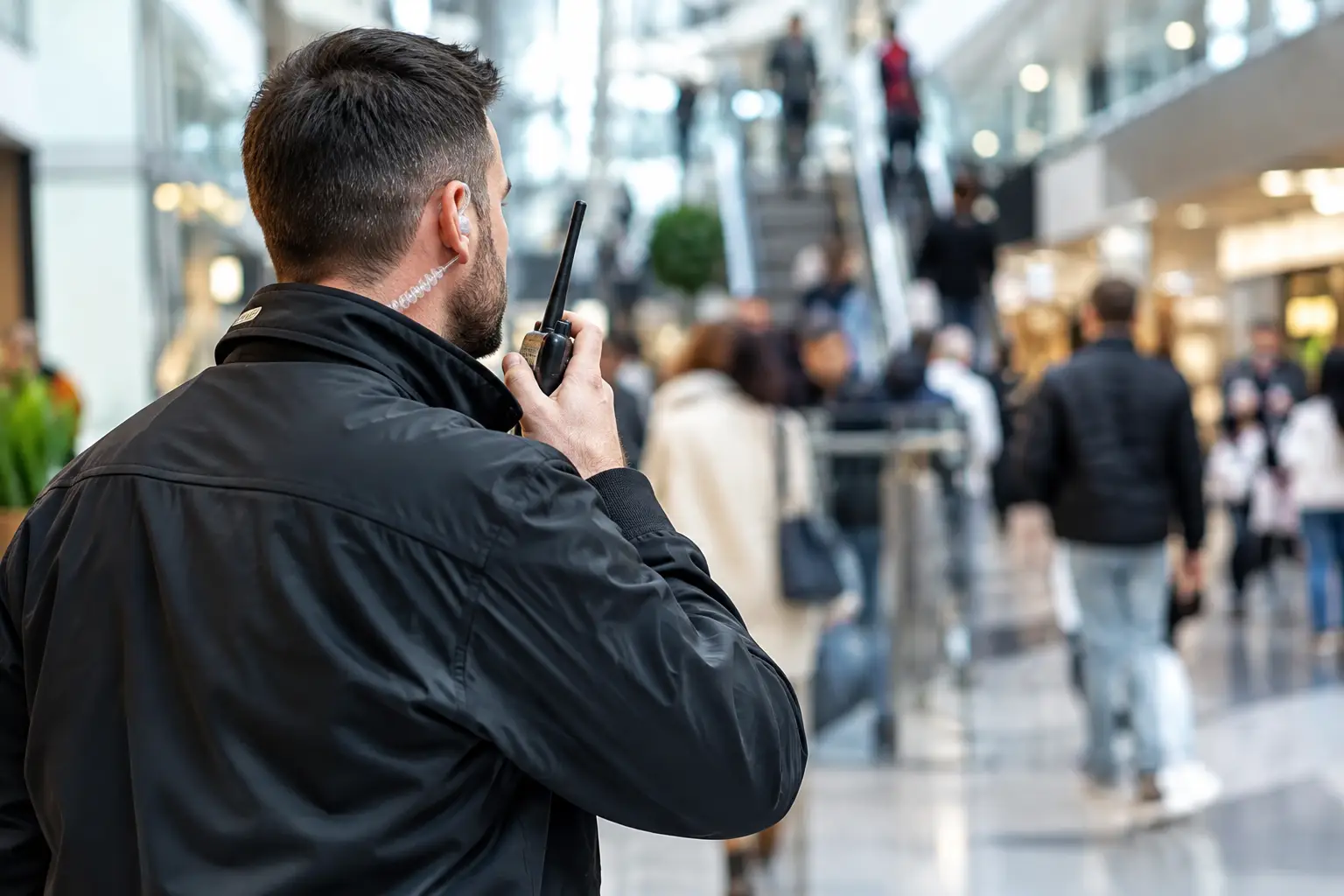
A member of staff notices a person forcing a door behind them. A colleague receives unwanted attention after a late shift. A customer becomes agitated and starts testing boundaries.
These moments rarely arrive with a clear label saying security incident.
Personal safety skills for employees close the space between noticing something wrong and taking safe, proportionate action.
For organisations with public facing, dispersed or higher-risk operations, this is not a wellbeing add on.
It is a capability issue.
People need the judgement to recognise change, the confidence to report it, and the practical habits to avoid making an uncertain situation worse.
Personal safety skills for employees are operational skills
Personal safety is sometimes reduced to advice about parking areas, lone working devices or avoiding poorly lit routes.
Those controls have a place, but they do not replace human decision making.
A device cannot assess tone of voice. A procedure cannot tell a receptionist whether a visitor’s explanation makes sense.
A policy does not help a team member choose the safest exit when a confrontation develops quickly.
The core skill is situational awareness.
This means paying attention to the normal environment – who should be present, how people usually behave, where access points sit, and what a safe route away looks like.
It also means identifying anomalies without jumping to conclusions.
An unusual vehicle near a loading bay is not automatically a threat. A person who seems nervous is not automatically dangerous.
The objective is to observe, assess and report facts.
Employees should be able to describe what they saw, where and when it occurred, what changed, and why it caused concern.
Facts give managers and security teams something they can act on.
This approach matters in counter terrorism readiness as much as it does in workplace violence, theft, harassment or disorder.
Modern threats often exploit distraction, routine and uncertainty.
A prepared workforce is harder to exploit because it understands that early reporting is part of normal work, not an overreaction.
Teach decisions, not just rules
A laminated procedure may say that staff must challenge unauthorised access.
That instruction is incomplete unless people know when a challenge is appropriate, how to deliver it safely, and when to step back.
Good training gives employees a decision framework.
In many situations, the safest order is to create space, move towards support, communicate calmly, and report or escalate through the agreed route.
Direct intervention may be necessary in limited roles and circumstances, but it should never be the default response for an untrained employee.
Language matters.
A calm, professional question such as, Hello, can I help you find the reception point? can establish purpose without creating immediate confrontation. If the person becomes hostile, refuses to engage or moves into a restricted area, the employee should not argue to prove a point.
They should withdraw, alert support and maintain observation only if it is safe to do so.
This is where generic awareness sessions often fail. They tell staff to be vigilant, then leave them without a practical response when a person ignores a boundary.
Capability is built through realistic choices, what to say, where to stand, who to call, and when to stop engaging.
Recognise behaviour, not stereotypes
Training must focus on behaviours and indicators, never assumptions about appearance, background or identity. Staff should look for actions that do not fit the context, repeated attempts to enter, unusual interest in security arrangements, unexplained packages, aggressive persistence, surveillance of routines, or a person trying to isolate a colleague.
One indicator may have an innocent explanation.
Several indicators, or a pattern over time, justify reporting.
This protects both safety and fairness. Employees are not being asked to investigate or make accusations.
They are being asked to notice, record and pass information to those responsible for assessment.
Build confidence around boundaries and conflict
Many incidents develop because an employee feels obliged to be helpful, polite or accommodating long after their instincts tell them something is wrong.
Hospitality, retail and event teams are especially exposed to this pressure. Service remains important, but it must not override personal safety.
Employees need permission to set clear boundaries.
They should know that it is acceptable to end a conversation, refuse to enter an isolated area alone, ask a colleague to remain nearby, or call a supervisor when conduct becomes inappropriate.
This should apply equally to customers, contractors, visitors and colleagues.
Conflict management training should not encourage staff to win an argument.
Its purpose is to lower temperature and create options. A measured voice, open stance, appropriate distance and simple language can reduce escalation.
So can avoiding sudden movements, accusations and attempts to block someone’s path unless there is an immediate, role specific reason to do so.
However, de-escalation is not a guarantee.
If aggression rises, the priority changes from communication to safety.
Staff need to know their escape routes, alarms, safe rooms or nominated support points.
They also need to understand how to summon assistance without relying on memory during a stressful moment.
Make reporting easy, trusted and useful
People do not report concerns when they expect to be dismissed, blamed or buried in paperwork.
They also hesitate when the reporting route is unclear. A credible reporting culture therefore requires more than a form on an intranet.
Employees should know exactly who receives a concern during a shift, what to do if that person is unavailable, and when to call emergency services.
Reporting channels must work across locations, out-of-hours operations and lone working arrangements. For urgent situations, there should be no ambiguity about the immediate action.
The quality of leadership response is decisive. When managers acknowledge reports, ask sensible questions and explain outcomes where appropriate, staff learn that speaking up has value. When concerns disappear without feedback, vigilance fades.
A useful report captures the essentials, the person, object or behaviour observed; the location; the time; the direction of travel where relevant; and any immediate risk.
It should separate observation from interpretation. Visitor tried three access doors and photographed the loading area is more useful than suspicious person near the building.
Train for the environment people actually work in
Personal safety training should reflect the operating reality.
A head office, a stadium, a hotel, a remote energy site and a busy shop face different pressures.
The common principles remain, but the scenarios, communication methods and response arrangements cannot be copied blindly from one setting to another.
For example, a lone employee closing a retail premises may need clear controls for cash handling, departure routes and check in arrangements.
Event staff may need to recognise crowd tension, queue conflict and prohibited item concerns. A corporate workplace may need stronger awareness of hostile visitors, insider risk and inappropriate behaviour towards staff.
Teams working with VIPs or sensitive information may need travel awareness and careful control of personal details.
Digital behaviour belongs in the same conversation.
Posting a live location, displaying an access pass on social media, discussing routines in public, or sharing photographs of restricted areas can create avoidable exposure.
Employees do not need to become security specialists, but they should understand how small pieces of information can be combined by someone with harmful intent.
Organisations preparing for Martyn’s Law should view staff capability as a central part of protective security, not simply evidence of compliance.
Plans and physical measures only perform when people understand their role within them.
Turn learning into a repeatable habit
A one off briefing creates familiarity.
It does not reliably create performance under pressure. Retention improves when employees revisit key decisions, practise reporting and discuss credible scenarios with their teams.
Managers can reinforce capability through short, focused conversations, What would you do if a visitor refused to leave? Which exit would you use if the main reception became unsafe? Who is the escalation point on this shift?
These questions expose uncertainty early, before an incident does.
A practical personal safety routine can be remembered as four actions:
- Notice what is normal and what has changed
- Communicate calmly and set clear boundaries
- Withdraw rather than escalate when risk increases
- Report facts promptly through the correct route
Exercises should test more than whether staff remember a policy.
They should test whether a person can make a safe choice when information is incomplete.
Short scenario assessments, debriefs after incidents and recurring capability checks provide a clearer picture than attendance records alone.
Mildot Group’s approach is built around that distinction, turning security theory into actions people can apply in real conditions.
The measure of success is not how many employees completed a module.
It is whether the organisation can recognise risk early, coordinate its response and protect its people when pressure rises.
Personal safety becomes credible when employees are trusted with clear information, practical choices and permission to act.
Give people those foundations, then keep them current.
The safest team is not the one that expects every threat – it is the one that can respond calmly when something does not look right.
.
Useful Links:
.