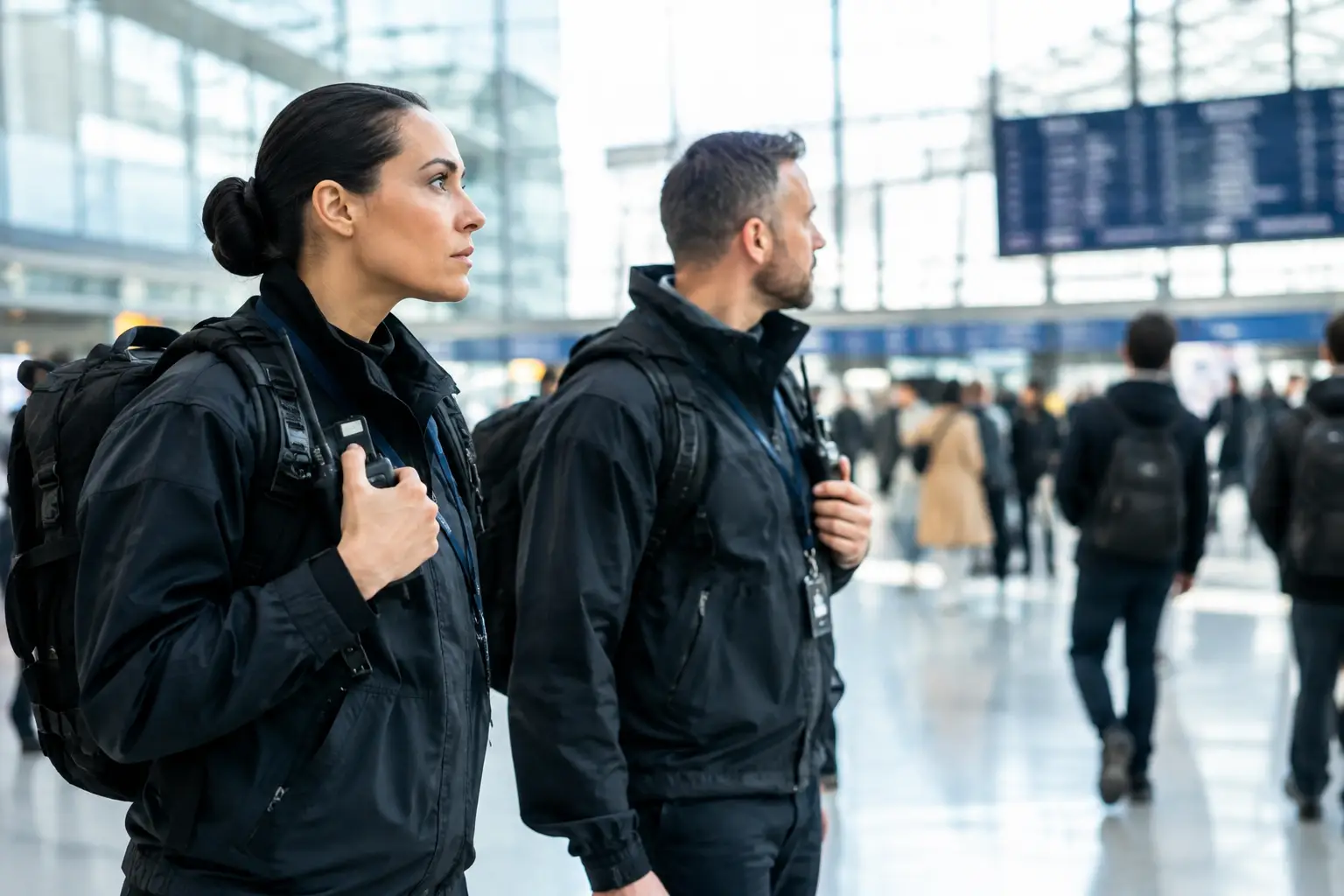
A reception team member notices an unfamiliar person repeatedly testing access points. A venue supervisor receives a vague report of an unattended item. An operations manager must decide whether to pause an event when information is incomplete. Corporate counter terrorism briefings prepare people for these moments before uncertainty and consequence arrive together.
For organisations with public facing premises, high footfall, valuable assets or high-profile people, the briefing is not a compliance exercise. It is a practical intervention that shapes what people notice, what they report and how they act. Done well, it turns security policy into confident frontline behaviour.
Done badly, it becomes another slide deck that staff cannot recall when it matters.
Why corporate counter terrorism briefings matter
Terrorist methodology changes. So do the environments in which organisations operate. Crowded places, transport links, hospitality sites, retail estates, corporate offices, energy facilities and major events can all present different exposure profiles.
The most effective attack may not rely on sophisticated tactics. It may exploit an unlocked door, a weak reporting culture, unclear roles or hesitation at the point of decision.
Modern threats expose old security thinking. A plan held by a small security team is not enough if the wider workforce does not understand its role. Staff do not need to become counter terrorism specialists.
They do need the judgement to identify behaviour or circumstances that are out of place, report concerns quickly and follow proportionate instructions.
This is particularly relevant as Martyn’s Law develops expectations around preparedness in publicly accessible locations. Legal duties, thresholds and applicable requirements will depend on the nature of a premises or event and current legislation. Yet the operational principle is straightforward: organisations must be able to demonstrate more than written intent.
They need people who can recognise risk, communicate effectively and support a managed response.
A briefing should therefore build capability at three levels. Individuals need clear actions. Teams need shared language and escalation routes.
Leaders need confidence that their arrangements can work during a fast moving incident, not merely read well in a document.
What an effective counter terrorism briefing covers
The purpose of a briefing is not to overwhelm people with threat terminology or historic case studies. Any briefing thats covers terrorism studies topics as the main elements is using those elements as fillers and lack of experience.
The goal is to give the audience relevant information, realistic decision points and a clear understanding of their own responsibilities and what can be achieved with no extra costs.
Start with the operating environment
Generic training has limits. A hotel, a shopping centre, a corporate headquarters and a major event may face common threat themes, but their vulnerabilities are different. Briefing content should reflect the actual operating environment, site layout, visitor flows, delivery arrangements, access control, vulnerable areas, peak periods and local emergency procedures.
A useful briefing explains why a particular control exists. If staff understand that a delivery check protects against unauthorised access or hostile reconnaissance, they are more likely to apply it consistently.
Rules without context are easily bypassed when the site is busy.
Threat information should be proportionate and carefully handled. The aim is to improve awareness, not create unnecessary anxiety or circulate sensitive detail.
Focus on observable indicators, credible reporting and disciplined action.
Make suspicious activity meaningful
Telling staff to be vigilant is not enough. It is vague, subjective and difficult to apply. People need practical examples of behaviour and circumstances that may justify attention, such as unusual interest in security arrangements, repeated attempts to gain access, photography of sensitive areas, attempts to avoid routine checks, or items left in unusual locations.
No single sign proves hostile intent. Context matters. An unfamiliar visitor may be legitimate; an unattended bag may have an innocent explanation. The required standard is not certainty. It is timely reporting through the agreed route, without confrontation or assumption.
This distinction protects both people and decision-making. Staff should be encouraged to report what they have seen, heard or observed, rather than label a person or draw unsupported conclusions.
Good reporting captures facts, who, what, where, when and why it caused concern.
Clarify actions under pressure
A briefing must answer the questions people will ask internally during an incident; Who do I contact? What information should I provide? Do I challenge the person? Should I move people away? Who has authority to close an area or stop an activity?
The answer will vary by organisation and role. A receptionist may need to preserve distance, alert a manager and prevent further access. A duty manager may need to initiate an incident procedure, coordinate communications and liaise with emergency services.
Senior leaders may need to make decisions on business continuity, welfare and public messaging.
Clear role boundaries are essential. People should know when to act, when to report and when not to intervene. Heroic improvisation is not a security strategy.
Controlled, rehearsed action reduces the chance of escalation and helps emergency responders work with accurate information.
Design briefings for different audiences
One briefing rarely suits every role. All personnel need a baseline awareness of threat indicators, reporting routes and emergency instructions. Staff working at access points, reception desks, loading bays and customer-facing areas may require additional material because they encounter unknown people, vehicles and packages more often.
Managers need a different level of detail. They should understand escalation thresholds, decision authority, incident logging, welfare responsibilities and how security measures affect operational continuity. Executive leaders need assurance that counter terrorism arrangements are aligned with risk, governance and investment decisions.
Specialist security practitioners need deeper development still. Their briefings may include protective security design, threat and vulnerability assessment, security planning, exercises and performance evaluation. Treating every audience as if it has the same needs wastes time and leaves critical gaps.
Delivery also matters. A short, site specific session before a major event can be more useful than a lengthy annual presentation with little operational relevance. Digital learning can establish a consistent baseline across dispersed teams, while facilitated workshops and exercises test how people apply the knowledge together.
The strongest programmes use both.
Test understanding, not attendance
A register proves that people attended. It does not prove that they understood what to do. Organisations should use scenario-led questions, discussion and capability evaluation to identify where confidence is weak or assumptions differ.
For example, ask a team how they would respond to a person attempting to enter through a restricted door behind an authorised colleague. Then test the answer against actual procedures.
If staff are unsure who to call, if managers disagree on who can make a decision, or if a reporting channel is impractical outside office hours, the briefing has exposed a useful weakness.
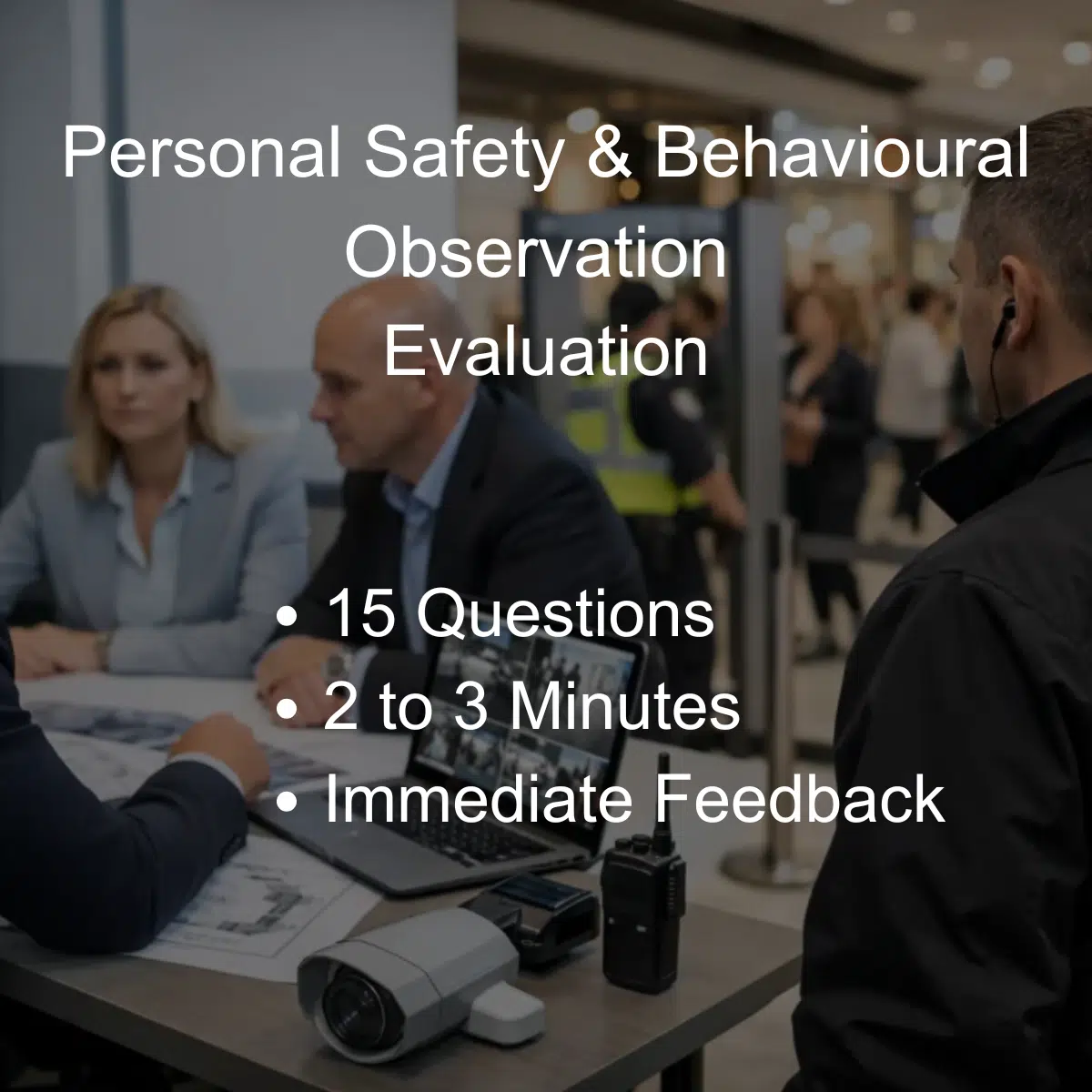
This is where assessment has real value. Immediate feedback helps individuals understand the correct course of action, while organisational results show leaders where further training, clearer procedures or physical improvements are needed. It turns learning into a diagnostic tool rather than a tick-box exercise.
Exercises should be proportionate to the risk and the maturity of the organisation. A tabletop discussion may be appropriate for a small office. A complex venue or critical site may need structured incident simulations involving operations, communications, facilities and senior decision-makers.
The point is not to create drama. It is to reveal friction before a real incident does.
Common failures that reduce readiness
The first failure is treating counter terrorism awareness as a once a year requirement. Knowledge fades, staff move roles and procedures change. Briefings need planned refreshment, particularly before high profile events, seasonal peaks, site changes or periods of elevated risk.
The second is focusing solely on evacuation. Evacuation may be necessary, but it is not the only protective action. Depending on the threat and location, people may need to move away from a hazard, restrict access, shelter, communicate discreetly or await direction.
Briefings should reflect the organisation’s planned procedures and avoid simplistic, one size fits all instructions.
The third is leaving the frontline out of the conversation. Teams often know where procedures fail in practice, a door that does not close properly, a visitor process that is routinely bypassed, a radio channel that is not monitored, or a reporting process that feels too cumbersome.
Their insight is operational intelligence. Use it.
Finally, avoid measuring success by the number of slides delivered.
The meaningful measure is whether people can identify concerns, communicate them accurately and carry out their role under pressure. Documentation supports readiness.
Capability delivers it.
Turning briefing content into sustained capability
Corporate counter terrorism briefings work best as part of a wider protective security cycle. Assess the threat and vulnerabilities, brief the relevant people, test their understanding, review what the results show and improve the controls.
Repeat the process as operations, threats and staffing change.
For many organisations, the immediate priority is establishing a credible baseline: clear reporting arrangements, role-specific awareness, practical emergency procedures and management oversight. Others may need a deeper review of physical security, governance, technical systems or preparedness for a particular event.
The correct response depends on exposure, consequence and existing maturity.
Mildot Group approaches this work with a simple standard, training must improve decisions where risk is encountered. A briefing should leave a receptionist, supervisor, operations lead or security practitioner more able to act with purpose, not merely more familiar with terminology.
The next time a team gathers for a counter terrorism briefing, give them more than information. Give them realistic scenarios, clear authority, usable reporting routes and the confidence to act early.
That is how awareness becomes protective capability.
.
Useful Links:
.