A hostile act rarely starts at the point of attack. It usually starts earlier – with watching, testing, questioning and quiet pattern-building around your people, site and routines. That is why hostile reconnaissance detection methods matter. They give security and operations teams a chance to spot intent before a threat turns into action.
For organisations with public access, high footfall, valuable assets or symbolic profile, this is not a specialist extra. It is a core protective security function. Retail estates, venues, hotels, transport-linked environments, critical infrastructure sites and corporate locations all present opportunities for adversaries to collect information in plain sight. The issue is not whether someone can look at your site. The issue is whether your team can recognise when observation has crossed from curiosity into targeting.
What hostile reconnaissance really looks like
Too many organisations still imagine reconnaissance as someone standing outside a perimeter fence with binoculars. Real-world hostile reconnaissance is usually more ordinary than that. It can look like a customer asking detailed questions about shift handovers, a delivery driver taking unusual interest in access control, or a visitor who appears repeatedly without a clear reason.
The behaviour may be legal in isolation. It may also be subtle, inconsistent or spread across multiple visits. That is what makes detection difficult. Teams often dismiss indicators because each one seems minor on its own. Adversaries rely on that hesitation.
In practice, reconnaissance often seeks answers to simple operational questions. Where are the entry and exit points? When are peak crowd periods? Which doors are alarmed? How quickly does staff intervention happen? Where are security cameras focused, and where are the gaps? Which member of staff is most likely to provide information under pressure, distraction or false authority?
A sound detection posture starts by accepting a basic reality – hostile reconnaissance is often behavioural before it is technical. If your staff only look for equipment, vehicles or obvious surveillance tools, they will miss a large share of the threat picture.
The most effective hostile reconnaissance detection methods start with behaviour
The strongest hostile reconnaissance detection methods are built around disciplined observation, reporting and escalation. Technology can assist, but it does not replace alert people who understand context.
Behavioural detection works because hostile reconnaissance creates friction. A person conducting it often has to spend time where they do not belong, ask questions they do not need answered, or revisit the same point of interest more than once. They may loiter, take an unusual interest in security measures, photograph infrastructure rather than personal memories, or attempt to normalise their presence through low-level engagement with staff.
What matters is not one behaviour in isolation. What matters is clusters, repetition and context. A guest photographing a hotel lobby at Christmas is normal. The same individual making repeated visits over two weeks, paying close attention to staff doors, CCTV positions and peak check-in periods is not normal. Detection depends on staff understanding that difference.
This is where many compliance-led programmes fail. They teach indicators as a memorised list rather than a judgement process. Frontline teams do not need abstract awareness. They need to know what normal looks like in their environment, what deviation looks like, and what action is expected when they spot it.
Why detection fails in otherwise well-run organisations
The common weakness is not lack of effort. It is weak translation from policy into practice. Security plans may refer to vigilance, suspicious behaviour and reporting protocols, but the workforce often receives little scenario-based training on what that means at ground level.
There are also organisational barriers. Staff may fear getting it wrong, appearing rude, disrupting a customer experience or escalating something that turns out to be innocent. Managers may unintentionally reinforce this by treating reporting as paperwork rather than operational intelligence. The result is predictable – observations stay unreported, small signals remain disconnected, and early intervention opportunities are lost.
Another problem is fragmentation. Operations, security, facilities and customer-facing teams may each see a different part of the picture, but no one is joining it together. Hostile reconnaissance detection methods only work if information moves quickly and is assessed by someone who can recognise patterns across time and across functions.
Building a detection model that works under pressure
The practical answer is to create a reporting culture that is simple, fast and credible. Staff should know exactly what to report, how to report it, and who will act on it. If the process is slow, unclear or buried in generic incident forms, reporting rates will fall.
Good reporting captures observable facts first. Who was seen, where, when, doing what, for how long, and with what apparent focus? What questions were asked? Was there any attempt to avoid staff contact, conceal activity or test response times? Factual reporting matters because it gives supervisors and security leads something they can analyse rather than vague impressions.
Supervisors then need an assessment process. Not every unusual act is hostile, and overreaction creates its own problems. But under-reaction is just as damaging. The right approach is structured professional judgement. Compare the behaviour against site norms, known threat concerns, recent incidents, and whether similar reporting has been received from elsewhere in the organisation.
This is also where exercises and capability evaluations add value. Teams are far more likely to detect hostile reconnaissance when they have practised identifying it in realistic settings. Pressure, distraction and ambiguity change performance. Training has to reflect that.
Training staff to spot intent, not just anomaly
Frontline awareness should not be built around fear. It should be built around confidence. Staff need permission to notice, question and report without feeling they must prove hostile intent themselves.
The best programmes train people to recognise intent indicators. These include repeated unexplained presence, unusual focus on security arrangements, attempts to gain information through pretext, interest in routines and vulnerabilities, and efforts to test whether staff challenge, record or ignore suspicious activity. Staff should also understand hostile elicitation – the use of casual conversation to extract useful information.
For managers and security leads, the training requirement is broader. They need to be able to review reports, identify linked behaviours, decide proportionate action and feed learning back into the operation. That might include adjusting patrol patterns, tightening visitor management, changing predictable routines or escalating concerns through established protective security channels.
For organisations preparing for stronger counter terrorism duties under Martyn’s Law, this matters even more. Detection is not a theoretical compliance issue. It is part of showing that people are trained to identify and respond to indicators associated with attack planning.
Where technology helps – and where it does not
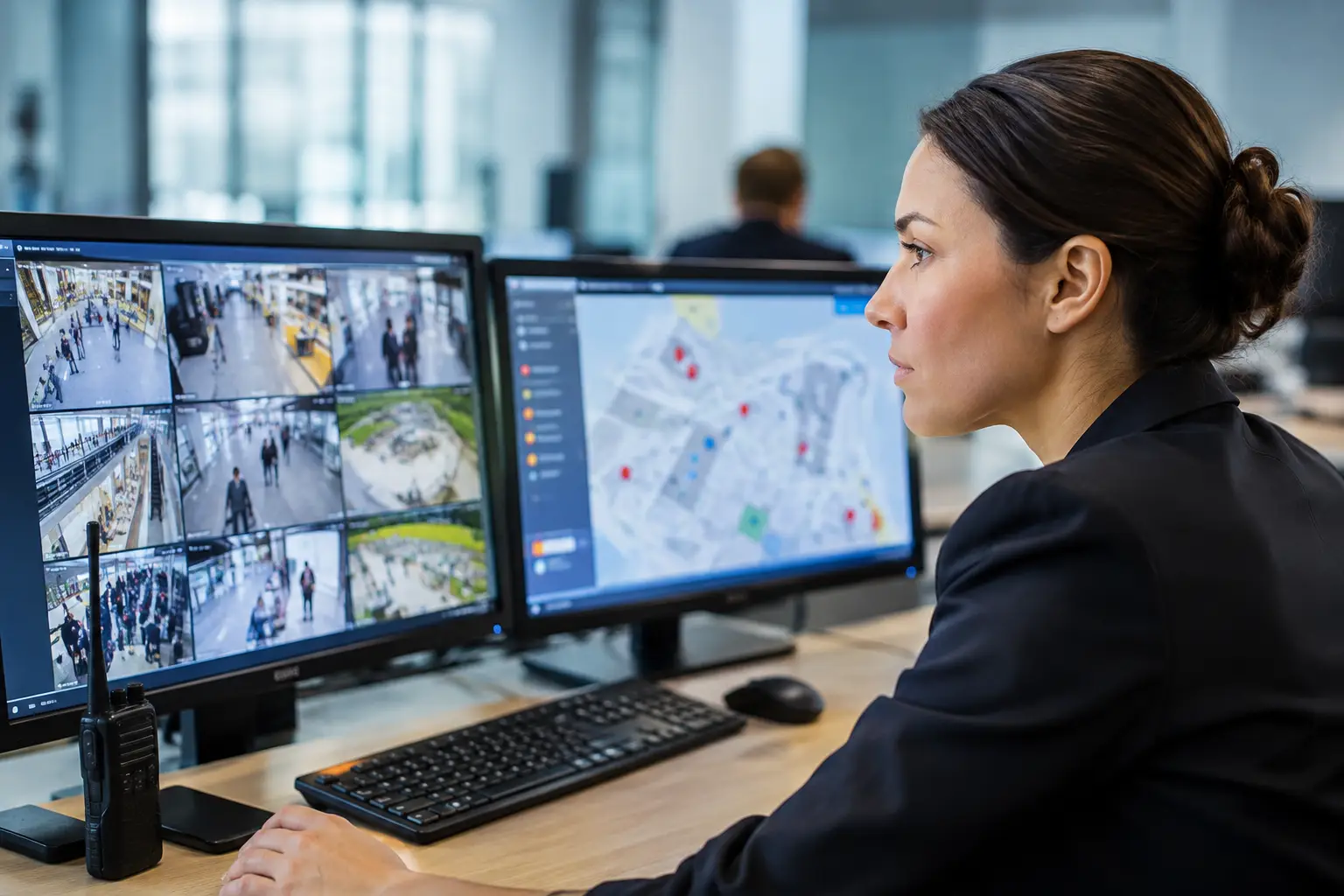
CCTV analytics, access control records, visitor data and incident management systems can all support detection. They help establish timelines, confirm repeat visits and identify patterns that staff may only partly observe.
But technology is not a substitute for alert human judgement. Cameras do not always capture motive. Analytics can flag movement, but not the meaning behind a conversation, a pretext enquiry or a subtle test of staff confidence. If teams start to believe the system will spot everything, standards slip.
The better approach is integration. Use technology to support human reporting and human review. For example, a staff member reports a visitor repeatedly appearing near a service corridor. CCTV can then confirm frequency, route and dwell time. That combination is far stronger than either source alone.
Hostile reconnaissance detection methods need local context
There is no universal threshold for concern. A high-end hotel, a football stadium, an office campus and an energy facility each have different baselines. Photography may be common in one environment and highly unusual in another. Repeated visits may be harmless in retail but more significant at a restricted industrial site.
That is why generic checklists have limits. They can support awareness, but they do not replace local risk understanding. Effective detection methods are tailored to the environment, operating model, threat profile and public interface of the site.
This is also why leadership matters. If senior teams treat hostile reconnaissance as a live operational risk, staff take it seriously. If they treat it as an annual training topic, the culture will never mature.
What good looks like in practice
A capable organisation is not one that claims perfect prevention. It is one that notices earlier, reports better and responds faster. Staff understand their environment and challenge appropriately. Supervisors know how to assess reports without paralysis or theatre. Information is shared across functions. Training is refreshed, relevant and tested against realistic scenarios.
That operating picture is more valuable than a stack of static documents. It turns theory into action and reduces real-world risks before they crystallise.
For many organisations, the biggest improvement does not come from buying more systems. It comes from sharpening awareness, simplifying reporting and building the confidence to act on incomplete but credible indicators. Hostile reconnaissance is designed to exploit routine and hesitation. Detection works when your people are trained to break both.
The useful question is not whether your site could be watched. It is whether your team would recognise the watch, trust their judgement, and act early enough to matter.
Useful Links:
.