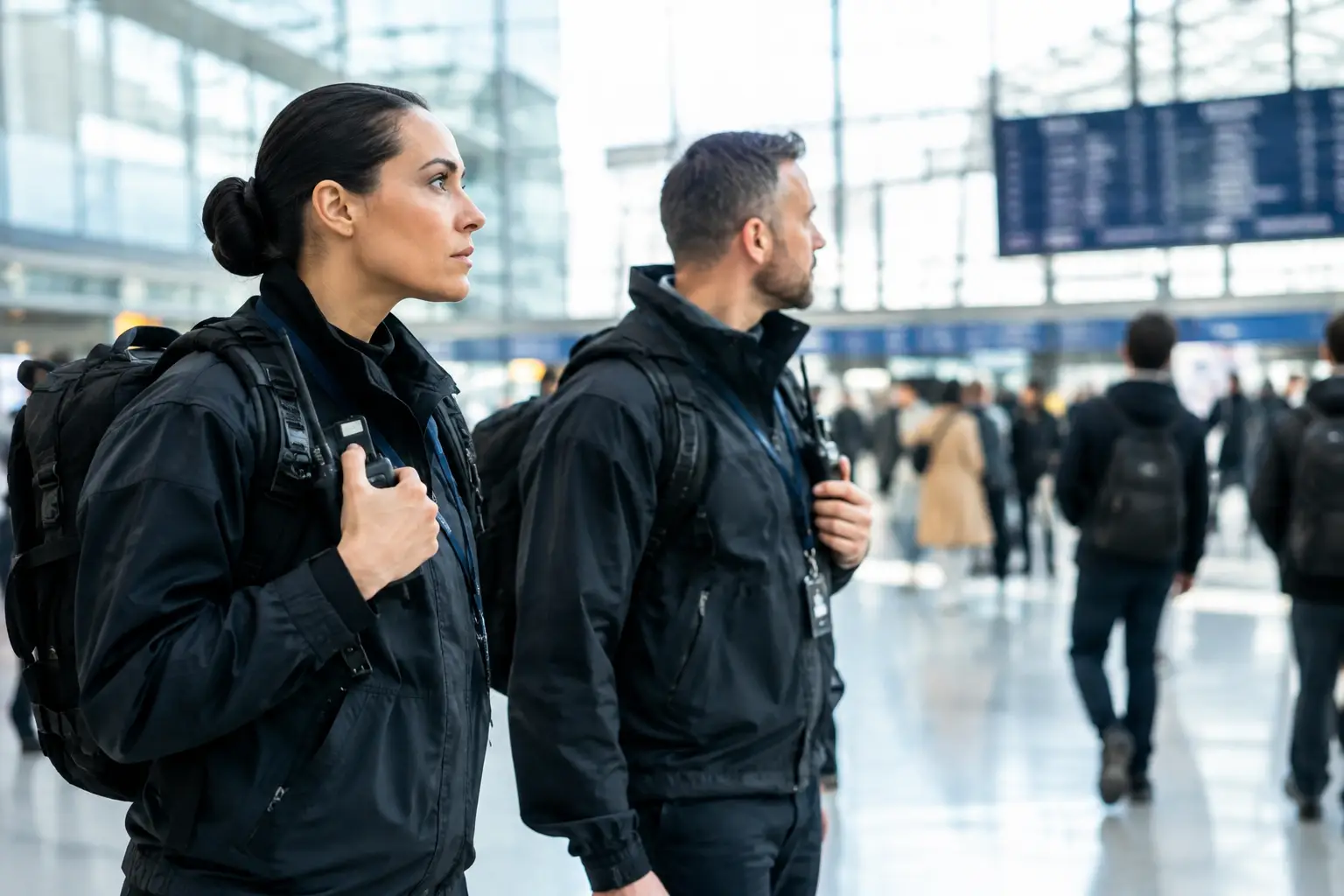
A missed cue rarely looks dramatic at the time. It is the unattended bag that did not fit the pattern, the agitated customer whose behaviour changed in seconds, the delivery request that arrived just outside routine and bypassed challenge because the team was busy. In security and operations, that is where the real question sits – how to improve situational awareness so people notice what matters early enough to act.
For most organisations, situational awareness is treated as a personal quality. Some people are switched on, others are not. That is too simplistic, and it leads to weak outcomes. Situational awareness is a capability. It can be trained, tested and improved. More importantly, it must be built in a way that works under pressure, because pressure is exactly when weak awareness collapses.
What situational awareness actually means
Situational awareness is not just noticing more. It is the ability to observe the environment, recognise what is normal, identify what is changing, and understand what that change might mean for safety, security or operational performance.
That matters because raw observation on its own can create noise. A vigilant team member who sees everything but cannot prioritise threat indicators is not yet operationally useful. Effective awareness combines attention, context and judgement. It answers three practical questions: what is happening, why does it matter, and what should happen next?
In a retail setting, that might mean distinguishing between normal customer frustration and pre-incident hostile reconnaissance. In hospitality, it may involve spotting a behavioural shift that suggests escalation before it becomes violence. In crowded venues, it can be the difference between seeing congestion and recognising a developing vulnerability.
How to improve situational awareness in practice
The fastest way to improve situational awareness is to stop teaching it as a vague concept and start breaking it into behaviours. People need clear standards for what to scan, what to question and what to report.
Build a baseline of normal
Teams cannot spot anomalies if they do not understand the baseline. That baseline includes people flow, delivery routines, staff movement, access control patterns, local peak periods, and the behaviours usually associated with the environment.
This is where many organisations underperform. They brief staff on threats, but they do not train them on normality. As a result, teams either overreact to harmless activity or miss low-visibility indicators because they have no mental reference point. The stronger the baseline, the faster an anomaly stands out.
A practical approach is to make baseline awareness role-specific. A front-of-house supervisor, a loading bay operative and a control room analyst do not need identical observational priorities. They need a shared operating picture, but each role should know which deviations matter most in their area.
Train observation without creating tunnel vision
People under pressure often narrow their focus. They fixate on one person, one task or one concern, and the wider environment disappears. That is not a discipline problem alone. It is a predictable human response.
Training should therefore improve scan patterns, not just ask staff to be more alert. Teach deliberate visual sweeps, timed checks of key areas, and periodic reassessment of what has changed in the last few minutes. Short, repeated practice is usually more effective than long awareness presentations.
There is a trade-off here. If teams are told to look for everything, they usually miss the important detail. If they are told to look only for one threat type, they become brittle. Good training gives people priority indicators while still preserving enough breadth to detect the unexpected.
Develop behavioural awareness, not just physical awareness
Threats rarely present as neat visual stereotypes. Behaviour often provides the earlier warning. Fixation, inappropriate interest in security measures, repeated circuiting, unusual loitering, evasive responses to engagement, visible stress outside normal context, and attempts to test boundaries can all matter.
Behavioural awareness does not mean guessing intent from appearance. It means observing patterns, context and change. That distinction matters operationally and legally. Teams must be trained to describe what they saw, what changed, and why it triggered concern, rather than falling back on instinctive labels.
For organisations preparing for elevated terrorism risk or compliance requirements under Martyn’s Law, this is especially important. Documentation may show a process exists. Capability is proven only when staff can identify pre-incident indicators and escalate appropriately.
Why awareness fails when pressure rises
Most awareness failures are not caused by ignorance. They come from overload, distraction, poor communication and bad assumptions.
Cognitive overload degrades judgement
Busy environments compete for attention. Radios, customer demands, technical alarms, staffing gaps and time pressure all reduce spare mental capacity. When that happens, people default to routine and become slower to recognise weak signals.
This is why situational awareness cannot sit outside operational design. If your team is expected to maintain awareness while carrying unrealistic task loading, performance will degrade. The answer is not simply to tell people to work harder. It may require better staffing logic, clearer escalation thresholds or simplified reporting routes.
Familiarity creates blind spots
Places that feel routine often become the least well observed. Teams who work in the same environment every day can stop actively reading it. They know the site, know the customers and know the rhythm. That confidence can become complacency.
One way to counter this is structured refresh. Rotate observational tasks, run brief anomaly spotting exercises, and ask supervisors to challenge assumptions during routine shifts. The aim is not to create paranoia. It is to keep the environment cognitively alive.
Poor information flow breaks the picture
Situational awareness is rarely held by one person alone. It is assembled across a team. One member of staff sees unusual interest in an entrance. Another notices a vehicle circling. A third receives an odd query by telephone. If those signals are not connected, the pattern is lost.
That makes communication discipline critical. Reporting must be fast, simple and usable. Staff need to know what merits escalation, who receives it, and what good reporting sounds like. Vague messages such as “something felt off” are difficult to act on. Concise reports grounded in behaviour, location, timing and direction of movement are far more valuable.
Improving team situational awareness, not just individual awareness
Individual attentiveness helps, but resilient organisations build shared awareness. That means teams operate from a common understanding of threat, vulnerability and intent.
Use short pre-briefs and sharper debriefs
A strong pre-brief focuses people on current conditions. It should cover what is different today, where pressure points are likely to develop, which indicators matter most, and what escalation route applies. This can be done quickly if the discipline already exists.
Debriefs matter just as much. They reveal whether staff noticed the same indicators, whether escalation was timely, and where assumptions distorted judgement. Over time, this turns awareness from a personal habit into an organisational standard.
Test the capability, not just the policy
Many organisations have procedures that look acceptable on paper but fail under real conditions. The only reliable way to know whether awareness is improving is to test it. That may involve scenario-based learning, behavioural simulations, tabletop exercises or capability diagnostics that expose how people actually perceive and interpret risk.
This is where operationally credible evaluation adds value. Mildot Group’s approach is built around measuring capability, not admiring process. That distinction is important because modern threats expose old security thinking very quickly.
Make supervisors active sensors
Supervisors shape the awareness culture more than any poster or annual module. If supervisors ask good questions, challenge weak assumptions and reinforce clean reporting, standards rise. If they are absorbed by administration and only react once a problem is obvious, standards drift.
The best supervisors continuously update the team picture. They connect weak signals, confirm what is known, identify what is missing, and direct attention without causing unnecessary alarm.
Tools and habits that make awareness stick
Technology can support situational awareness, but it cannot replace it. CCTV, access control, analytics and communications systems all help, yet they still depend on people noticing, interpreting and acting.
The most useful habits are often low-tech. Pause before entering a new area and read the environment. Check what has changed since the last pass. Look for behaviour that is out of place, not just objects. Confirm assumptions before acting on them. Report early rather than waiting for certainty.
It also helps to keep language disciplined. Teams that use a common vocabulary for suspicious behaviour, crowd conditions, access issues and escalation thresholds are less likely to lose time in ambiguity.
How to improve situational awareness, then, is not a mystery. Build a clear baseline. Train observation and behavioural recognition. Reduce overload where possible. Improve reporting. Test the capability under realistic conditions. Repeat until good awareness becomes routine rather than occasional.
The organisations that do this well are not simply more compliant. They are harder to surprise, quicker to decide and better able to protect people when the environment shifts without warning.
Useful Links;
.