A drone appears above a venue during a busy arrival period. The immediate question is rarely whether the aircraft is technically sophisticated. It is whether the people responsible know how to manage drone risks without creating a second, avoidable incident through poor judgement.
For most organisations, an unauthorised drone is first a problem of uncertainty. It may be careless use by a member of the public, commercial activity nearby, deliberate reconnaissance, an attempt to disrupt operations or something that cannot yet be explained. The response must protect people and maintain control while facts are gathered. Treating every sighting as an attack is unhelpful. Treating every sighting as harmless is worse.
Start with the site, not the technology
Drone risk is often discussed as a technology purchase. That is the wrong starting point. A detection system may have a role, but it cannot decide what activity matters, who owns the response or what staff should do when an alert arrives.
Begin by examining what makes the site attractive, exposed or vulnerable. A stadium, logistics hub, transport location, construction project and corporate headquarters present different consequences. The same is true within a single site. A drone over an outer car park does not necessarily create the same risk as one near a crowd, sensitive process, rooftop plant or controlled access point.
A useful assessment considers the activity taking place, the number and vulnerability of people present, the value of visible assets, the availability of concealment or launch locations nearby, and the operational impact of an interruption. It should also consider normal air activity. Some locations regularly see legitimate commercial drones, police aircraft, helicopters or neighbouring operators. If staff cannot distinguish ordinary activity from an exception, alerts will quickly lose value.
The aim is not to predict every possible use of a drone. It is to define credible scenarios and decide, in advance, what would change your response. That turns a vague concern into an operational decision.
Define what staff must recognise and report
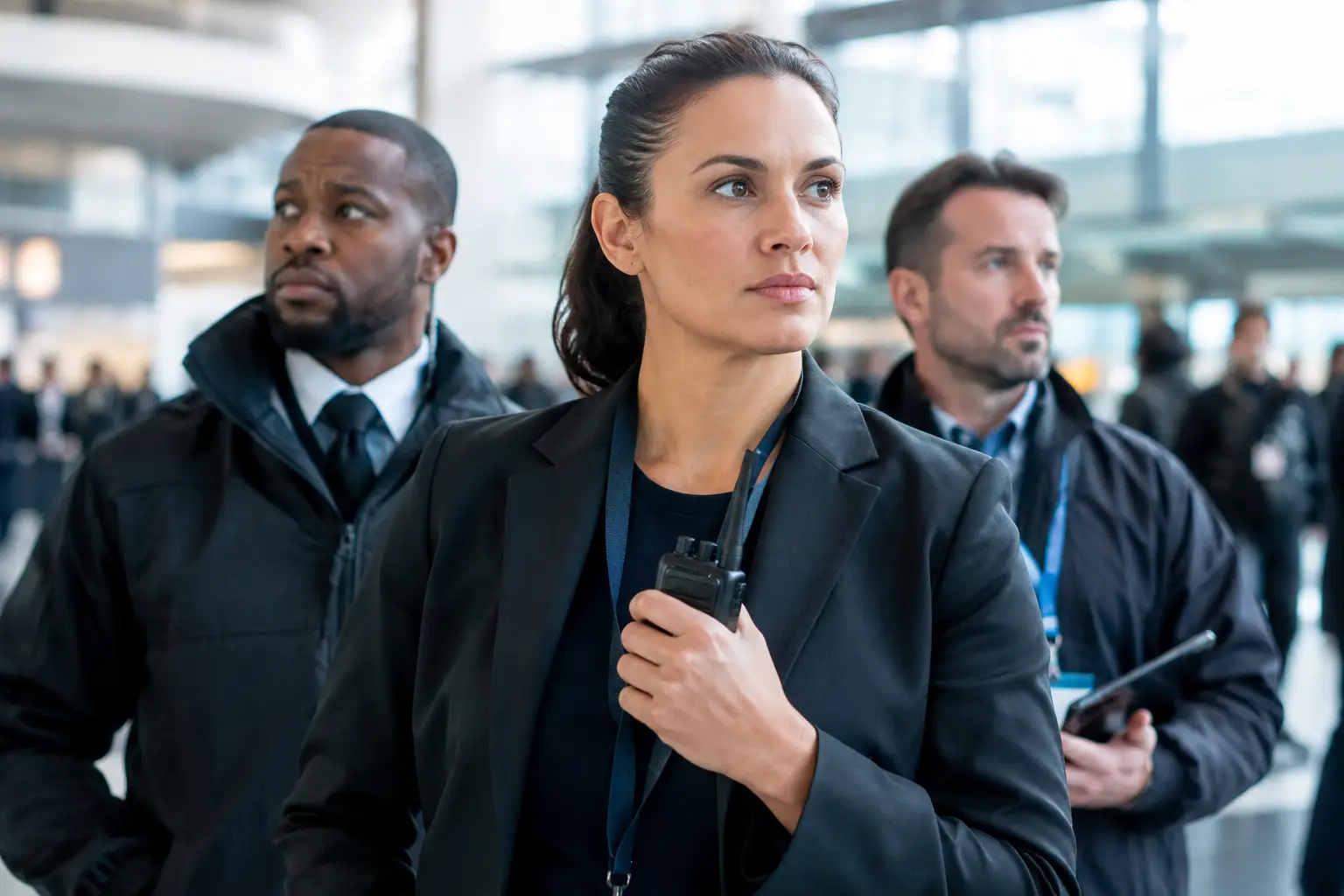
Front-line personnel do not need to become aviation specialists. They do need a clear reporting threshold and a disciplined way to pass useful information to the person coordinating the incident.
Reports such as “drone near the building” may be enough to initiate attention, but they are poor foundations for a decision. Staff should be able to describe where it was seen, approximate direction and height, movement, duration, proximity to people or sensitive areas, and whether they can see an operator. They should record the time and preserve relevant CCTV where possible.
This is a behavioural issue as much as a procedural one. Under pressure, people tend to fill gaps with assumption. A small aircraft can be misidentified, direction and distance are easily misjudged, and one witness account can influence everyone else. Encourage observation before interpretation. “A small quadcopter hovering above the south entrance” is useful. “It is spying on us” is not an established fact.
Staff also need permission to report early without fear of being criticised for getting it wrong. A culture that dismisses observations will receive information too late. A culture that rewards dramatic reporting creates noise. Good supervision sets the standard between those two failures.
Build a response that is proportionate
A drone incident plan should not sit separately from wider security, safety and business continuity arrangements. It should identify who receives the report, who assesses it, who can make operational decisions and how escalation works outside normal hours.
The initial response is usually about safety, visibility and information. Depending on the circumstances, this may involve monitoring the aircraft from a safe position, increasing observation of exposed areas, checking access points, protecting a particular activity or pausing work where there is an immediate safety concern. Decisions should reflect the actual situation, not an assumed worst case.
There are clear limits to what private security teams should attempt. Staff should not pursue an aircraft, climb to gain a better view, confront a suspected operator recklessly or attempt improvised interference. These actions can endanger the public, compromise evidence and create legal problems. Counter-drone measures can involve aviation, communications, privacy and public safety considerations. Their use requires lawful authority, competent management and clear governance.
Where police involvement is appropriate, organisations should be ready to give a concise, factual briefing: what has been observed, where and when, why the activity causes concern, what action has already been taken and how the site can support attendance. That preparation prevents an incident room becoming a discussion based on fragments of recollection.
Technology should answer a defined operational need
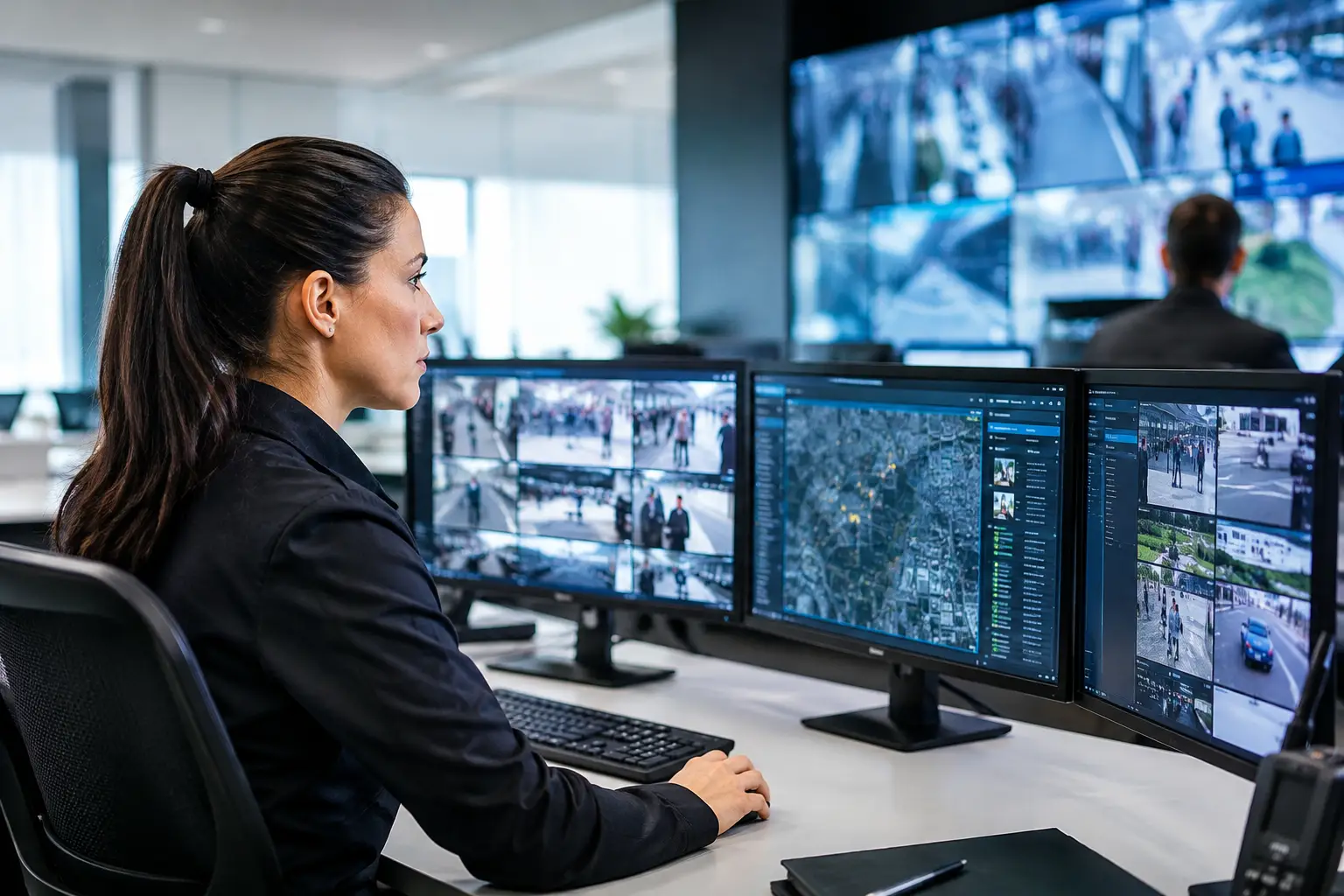
Detection, tracking and identification products can support protective security, particularly at sites with a sustained or elevated risk profile. They are not a substitute for situational awareness or command judgement.
Before procuring equipment, decision makers should ask what operational outcome they need. Is the priority early warning, evidence capture, wider situational awareness, protection of a defined area or support for a control room? Who will monitor the system? How will alarms be verified? What happens at 2am, during a power failure or when the system identifies activity beyond the boundary?
False alarms, maintenance requirements, environmental limitations and integration with existing security systems all affect value. A system that repeatedly produces alerts without a credible means of assessment can weaken response discipline rather than improve it. Equally, sophisticated equipment with no agreed action following an alert becomes an expensive dashboard.
Technical measures must be assessed alongside privacy, data handling and legal obligations. This is especially relevant where sensors may collect information beyond the organisation’s property. Procurement should involve security, operations, legal and data protection functions early, rather than treating those issues as a late approval exercise.
Test decisions, not just communications
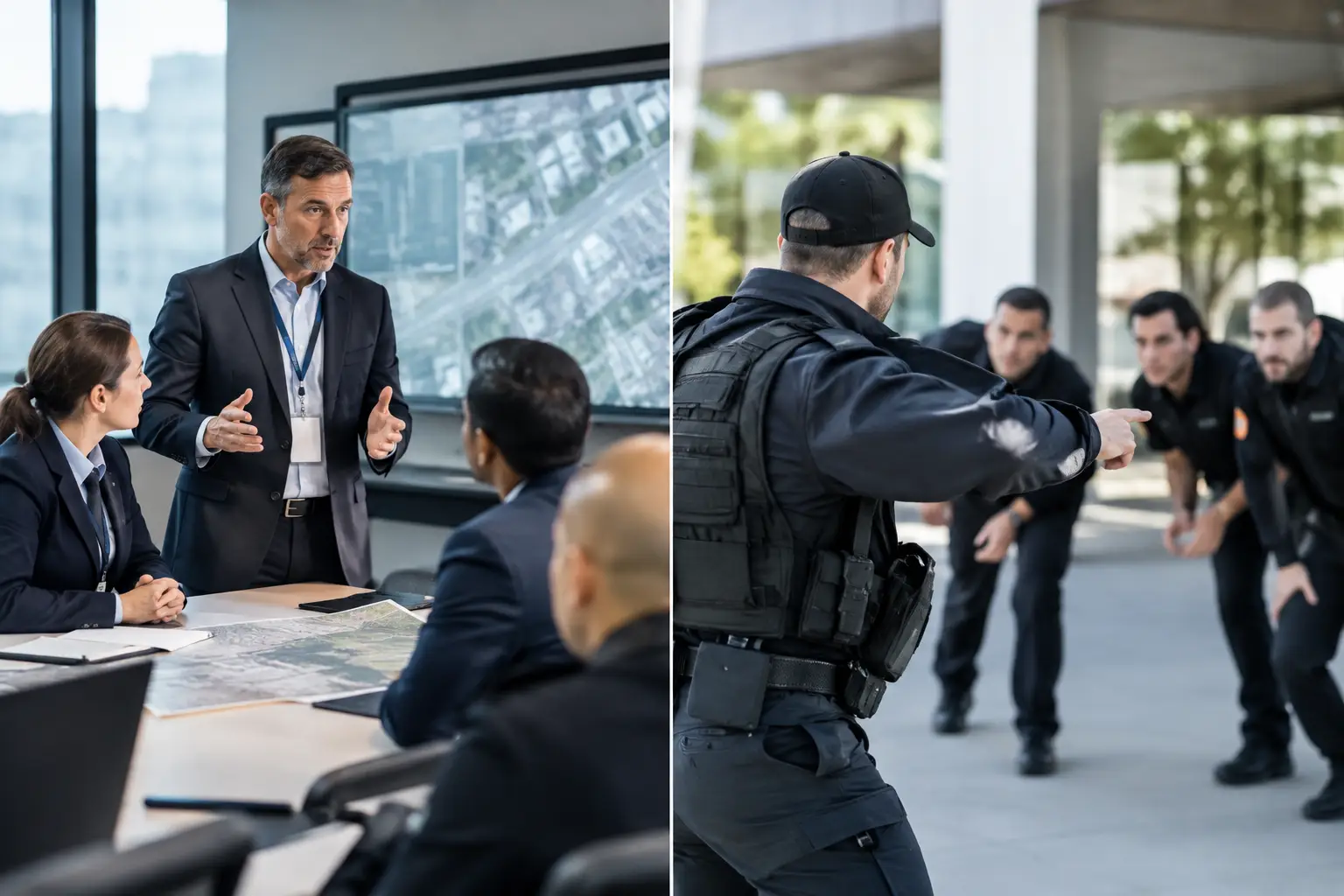
Many plans look adequate until the incident coordinator is unavailable, the control room is busy and three witnesses provide conflicting reports. This is why exercises should test decision-making rather than simply confirm that people can read a procedure.
Use plausible scenarios that reflect the site. A drone observed before an event opens raises different choices from a sighting over a construction lift, a distribution yard or a crowded hospitality area. Ask who has authority to alter operations, who contacts emergency services, who communicates with tenants or contractors, and how staff avoid creating public alarm.
The exercise should expose uncertainty. What if the aircraft is not visible by the time a supervisor arrives? What if a member of staff claims to have seen an operator but cannot describe them? What if an event manager wants to continue while the security lead recommends a pause? These are the points where capability matters.
Training should also include the staff most likely to receive the first report: reception, control room operators, stewards, facilities teams, contractors and supervisors. A senior security plan is of limited use if the person at the gate has no confidence in what to observe or who to call.
Treat the aftermath as part of risk management
Once the immediate activity has ended, organisations often return to normal too quickly. The review should establish what was known, what was assumed, which decisions were made and whether information reached the right people in time. It should not become a search for blame when staff acted reasonably on the information available.
Look for recurring weaknesses. Perhaps camera coverage did not support observation of a key approach, contact details were out of date, staff were unsure who held authority, or a contractor did not understand the site reporting process. These findings should lead to specific improvements, assigned ownership and retesting.
A drone event may also reveal wider protective security concerns. If an aircraft identified an exposed area, a weak perimeter or poor control room coordination, those weaknesses may exist regardless of whether another drone appears. The value of the review lies in improving the system, not merely closing an incident record.
How to manage drone risks as an ongoing capability
The strongest approach combines realistic assessment, trained people, clear authority and carefully selected technical support. It accepts that not every sighting will be malicious, while recognising that uncertainty itself can disrupt a site if it is not managed well.
For organisations preparing for public protection duties, including those considering the operational implications of Martyn’s Law, drone planning belongs within the wider question of readiness. Can your people recognise an unusual event, share reliable information, make proportionate decisions and recover control under pressure?
The answer will not be found in a policy alone. It is found in what your team can do when the aircraft is overhead, the facts are incomplete and the next decision is theirs to make.