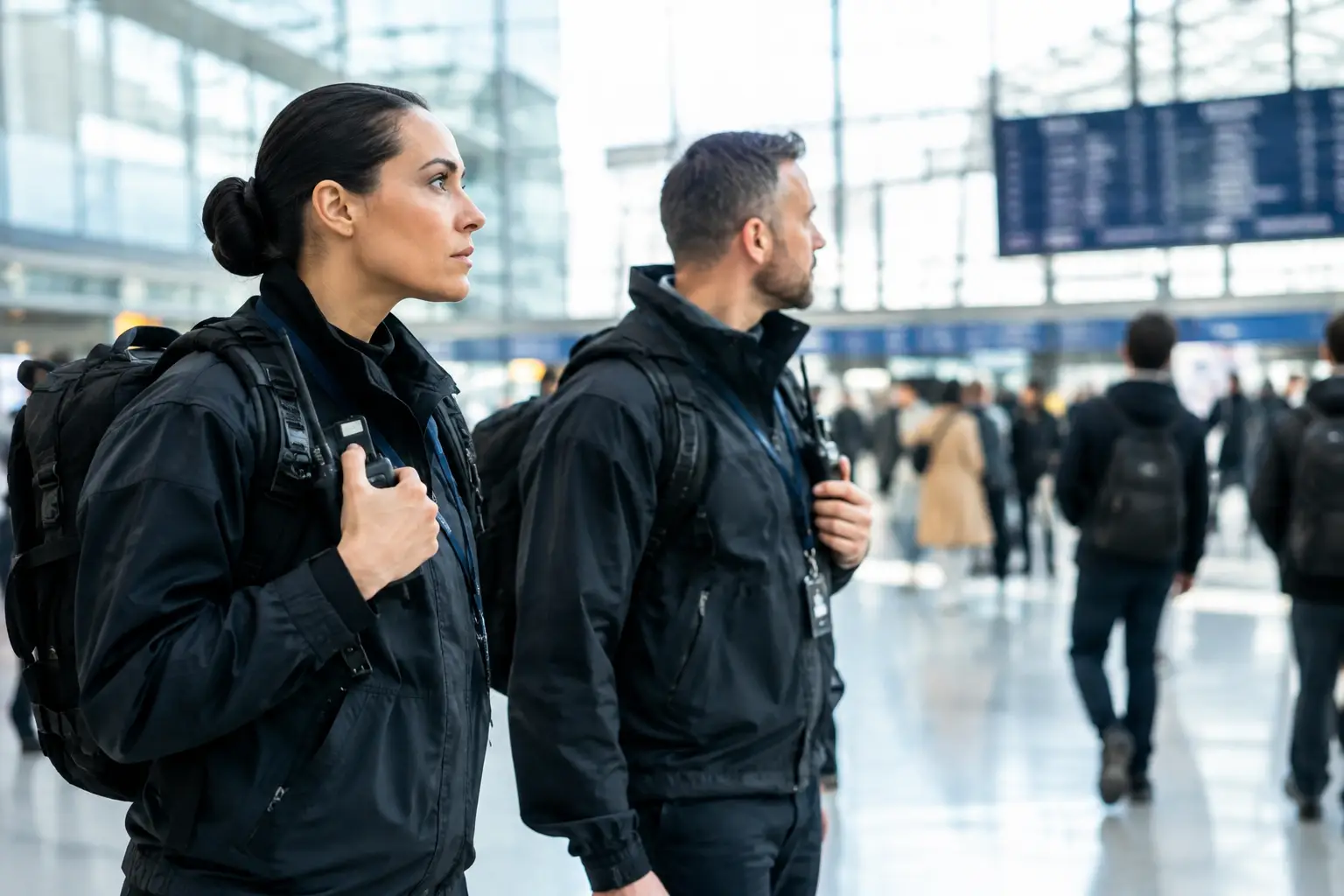
A senior executive steps off a train, takes the same route to the office, posts a photo from the board dinner, and assumes the risk sits with the security team. That is usually where the problem starts. Protective security for executives is not a badge, a vehicle, or a policy folder. It is a working system that reduces exposure, supports decision-making, and holds together when pressure rises.
For many organisations, executive protection is treated as a visible measure rather than an operational capability. The result is familiar – impressive paperwork, uneven implementation, and too much dependence on individual judgement at the point of friction. Modern threats expose old security thinking. Senior leaders are targeted not only because of who they are, but because of what they represent: access, influence, commercial leverage, political visibility, and public symbolism.
Why protective security for executives needs a wider lens
The threat picture has shifted. For some leaders, the issue is not a single high-profile attacker but a blend of hostile reconnaissance, grievance-fuelled behaviour, online fixation, protest activity, insider leakage, travel vulnerability, and poor routine discipline. That means protective security for executives cannot be built around one scenario.
An executive may face elevated exposure without ever entering what people would consider a classic high-risk environment. A contentious redundancy programme, a visible role in critical infrastructure, a major public-facing retail brand, or involvement in politically sensitive projects can all raise the risk profile quickly. Add social media visibility and predictable schedules, and the gap between ordinary business activity and personal vulnerability narrows fast.
This is where organisations often get caught out. They focus on physical presence at major events, but overlook the daily pattern of movement, the casual release of information, the quality of advance planning, or the executive’s own behavioural habits. In practice, those smaller factors often create the opening.
Good executive security starts before movement begins
Most failures in executive protection happen upstream. They begin with poor assumptions, weak threat assessment, or a lack of realism about how the executive actually works. If the protective plan does not match the person’s role, travel tempo, public profile, and tolerance for discipline, it will degrade quickly.
The first requirement is clarity. Who is exposed, why are they exposed, and in what context does that risk increase? A chief executive speaking at a conference has a different profile from a regional director visiting a distribution site after an industrial dispute. A family office principal travelling quietly may need tighter information control than a more public figure surrounded by established corporate infrastructure. Security that ignores context is security that wastes effort.
A credible baseline usually includes threat, vulnerability and risk assessment, but that phrase is often used too loosely. The useful version is specific and operational. It looks at routines, routes, venues, accommodation, transport, digital exposure, public visibility, support staff behaviour, emergency decision paths, and the executive’s own habits under stress. It should produce decisions, not just observations.
The executive is part of the security system
One of the least comfortable truths in this field is that senior people can be the weakest part of the arrangement. Not because they are careless by nature, but because convenience, confidence, and time pressure push them towards shortcuts.
An executive who changes plans without notice, rejects briefings, over-shares online, or treats security measures as optional creates avoidable risk for everyone around them. That is not a personality issue. It is a performance issue. Protective measures only work when the principal understands their role in them.
This is why briefing matters. Not generic awareness training, but concise, role-specific guidance that explains what matters, what to do differently, and why. The standard should be practical compliance, not theoretical understanding. If a leader knows how to vary routine, control information release, recognise pre-incident indicators, and respond to disruption without freezing the team, overall resilience improves immediately.
There is a trade-off here. Over-correct, and the executive may feel managed rather than supported. Under-correct, and bad habits remain untouched. The right answer depends on the threat picture, but the principle stays the same – security should improve executive freedom of action, not simply restrict it.
Travel, events and public exposure are where planning is tested
Travel remains one of the clearest points of vulnerability. Timetables, published appearances, standard routes, hotel routines, and unmanaged arrivals all create pattern and predictability. If the organisation only begins thinking about risk on the day of travel, it is already late.
Advance work matters because it reduces ambiguity. That includes route analysis, venue understanding, communications planning, local medical awareness, contingency options, and clarity about who makes decisions if conditions change. In higher-risk environments, the quality of the advance often matters more than the visibility of the protection posture.
Events create a different challenge. The executive is often expected to be accessible, visible, and commercially engaged at the same time the organisation needs control over movement, contact, and escalation. A clumsy approach damages the event. A weak approach leaves too much to chance. The answer is disciplined coordination between organisers, venue teams, corporate security, and anyone responsible for the executive’s movement and schedule.
This is also where many organisations confuse hospitality with security. A well-run front of house operation can support protective outcomes, but it cannot replace them. Friendly staff, clean branding, and smooth guest handling are useful. They are not a substitute for threat-informed planning and rehearsed response.
Behavioural risk is not a side issue
Protective security is often framed as a physical problem. In reality, behaviour sits at the centre of performance under pressure. The executive’s behaviour matters. So does the behaviour of assistants, drivers, event staff, reception teams, and managers who may have to make decisions in compressed time.
When people are uncertain, overloaded, or poorly briefed, they default to habit. That can mean releasing too much information, failing to challenge suspicious behaviour, hesitating during disruption, or escalating the wrong issue. Behavioural risk work closes that gap by improving judgement, communication, and response under realistic conditions.
This matters particularly for organisations preparing for terrorism-related obligations or operating in sectors where protest, activism, grievance, or hostile attention may converge. Capability is not proven by owning a plan. It is proven by how people think and act when routine breaks down.
Technology helps, but it does not compensate for weak practice
Technical systems have a place in protective security for executives. Access control, surveillance, secure communications, journey tracking, alarm integration, and information security measures all contribute. But technology is often expected to solve what are actually planning and behavioural problems.
A tracking platform does not fix poor movement discipline. A camera system does not compensate for unmanaged access to executive areas. A secure app does not help if sensitive details are still shared casually through the wrong channels. The question is never whether technology is available. The question is whether it supports a coherent operating model.
For that reason, technical advice should be tied to risk, not fashion. Buy capability that improves decision-making, visibility, and response. Avoid systems that create the appearance of control while leaving the underlying weakness untouched.
What strong executive protection looks like in practice
It is usually less dramatic than people expect. Good protective work is quiet, consistent, and well integrated into business reality. It aligns security planning with executive tempo. It gives support teams clarity. It identifies where exposure changes and puts proportionate measures in place.
That may mean revising travel patterns, tightening information handling, changing event procedures, improving briefing standards, stress-testing escalation routes, or training key staff to recognise concerning behaviour before it develops into a direct problem. Sometimes it means accepting that the threat does not justify heavy intervention. Sometimes it means recognising that a seemingly low-profile executive sits inside a much higher-risk context than the organisation has admitted.
The key is operational credibility. Security should be usable on a Tuesday morning, not just defensible in a board paper. That is where experienced consultancy and realistic capability development add value. Mildot Group’s approach is built around that standard – turning theory into action and reducing real-world risk through assessment, planning, behavioural improvement, and practical support.
The real measure is confidence under pressure
Executives do not need theatre. They need a protection model that allows them to work, travel, lead, and engage without creating unnecessary exposure for themselves or their organisation. That takes more than visible measures. It takes judgement, discipline, and systems that function when plans change.
If your current arrangements rely too heavily on routine, optimism, or the assumption that serious incidents happen elsewhere, it is worth taking a harder look. The best time to strengthen protective security for executives is before someone tests the weak points for you.
.
Useful Links
.