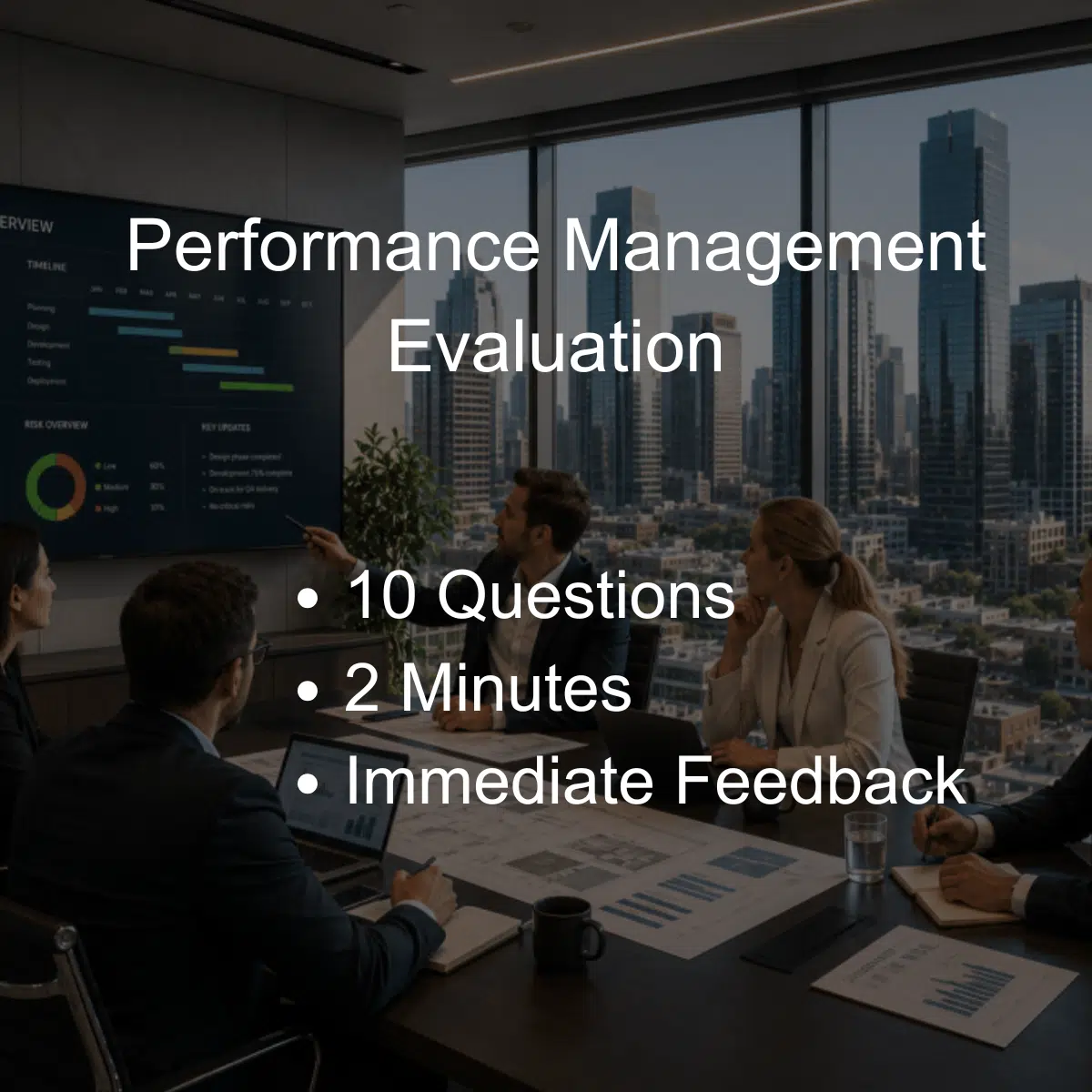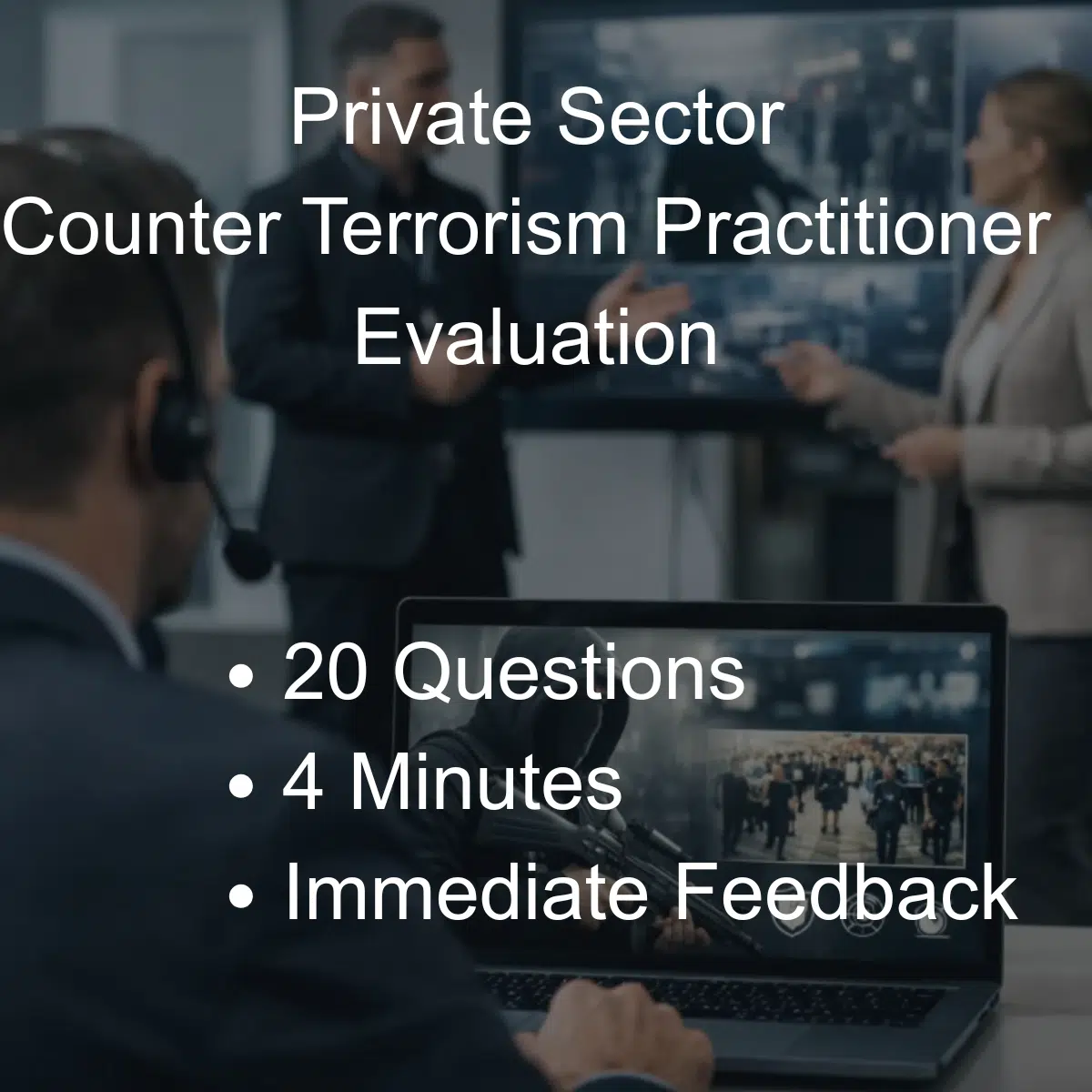
A practitioner can hold the right certificate, attend the right briefings and still underperform when pressure sharpens. That is the gap a counter terrorism practitioner capability evaluation with immediate feedback is designed to expose. It tests more than recall. It measures judgement, decision quality, situational understanding and the ability to apply protective security thinking in realistic operational conditions.
For organisations carrying genuine exposure, that distinction matters. Terrorist threats do not wait for annual appraisals, and they do not respect training records. What matters is whether a practitioner can interpret indicators, prioritise actions, advise stakeholders and make sound calls when time is short and information is incomplete.
Why capability evaluation matters more than course completion
Traditional training has value, but completion alone is a weak measure of readiness. A learner may absorb terminology and still struggle to translate it into action. In counter terrorism work, that weakness tends to surface at exactly the wrong moment – during planning for a live event, in a vulnerability review of a crowded site, or while advising senior leaders after a change in threat posture.
A serious capability evaluation closes that gap by moving beyond passively consumed learning. It challenges practitioners to interpret scenarios, spot weaknesses, rank priorities and justify their judgement. That process gives employers a clearer view of who can operate independently, who needs support and where development effort should be focused.
This is especially relevant for security managers, venue operators, event planners, critical infrastructure teams and businesses preparing for stronger protective security expectations under Martyn’s Law. Documentation still matters, but modern threats expose old security thinking. Written plans are only useful if the people responsible for them can apply them under pressure.
What a counter terrorism practitioner capability evaluation should actually test
If an evaluation only checks memory, it misses the point. Competence in this field sits at the intersection of knowledge, judgement and application. A credible assessment should test whether the practitioner understands threat methodologies, recognises hostile reconnaissance indicators, grasps physical and procedural vulnerabilities, and can recommend proportionate controls.
It should also examine how someone thinks. Can they distinguish between low-level noise and meaningful warning signs? Can they balance security, operations and customer impact without weakening protection? Can they communicate risk in a way that drives action rather than confusion? Those are practical questions, not academic ones.
The strongest evaluations also reveal where confidence is misplaced. Some practitioners perform well in familiar subjects but show poor reasoning when the scenario changes. Others may lack polished language yet make strong operational choices. An effective diagnostic identifies both patterns. That is more useful than a simple percentage score with no context.
The difference between knowledge checks and operational diagnostics
A knowledge check tells you whether someone remembers content. An operational diagnostic tells you whether they can use it. The difference is substantial.
In a knowledge check, the learner might identify the definition of hostile reconnaissance. In an operational diagnostic, they must identify suspicious behaviour across a realistic scenario, decide whether escalation is justified and select the most effective response. One confirms exposure to information. The other tests capability.
For organisations, the value of this distinction is direct. If you want a training report for a compliance file, a basic quiz may be enough. If you want stronger performance, fewer blind spots and better-informed security decisions, the evaluation needs to go further.
Why immediate feedback changes the value of the assessment
Immediate feedback is not just a convenience feature. It is one of the most important parts of the learning cycle. When practitioners receive feedback at the point of decision, they can compare their reasoning against the correct approach while the scenario is still fresh. That accelerates retention and sharpens judgement far faster than delayed reporting.
In practice, this means a practitioner can see where they misunderstood a threat indicator, where they overreacted, or where they failed to consider a control measure that would have reduced risk. Instead of waiting for an instructor review or a line manager discussion weeks later, the learning point lands straight away.
That speed matters in fast-moving operational environments. Teams do not always have the luxury of classroom time, extensive debriefs or lengthy coaching sessions. Immediate feedback turns assessment into development. It allows organisations to identify weaknesses quickly, direct support more precisely and improve capability without slowing the wider operation.
There is another advantage. Immediate feedback reduces ambiguity. Too many assessments tell people whether they passed without explaining why they underperformed. That creates false assurance in some cases and frustration in others. Clear, timely feedback gives practitioners something usable – a reasoned explanation of what good performance looked like and where their decision-making fell short.
Counter terrorism practitioner capability evaluation with immediate feedback in practice
Used properly, counter terrorism practitioner capability evaluation with immediate feedback becomes more than a training tool. It becomes a decision support asset for workforce development, role alignment and organisational assurance.
For an individual practitioner, it can identify whether they are ready for greater responsibility, whether they need targeted development in threat assessment, or whether they would benefit from more exposure to planning and advisory tasks. For a team leader, it can show patterns across a department. You may find strong awareness of suspicious behaviour but weaker understanding of layered mitigations, access control design or incident communication.
For the wider organisation, this kind of evaluation provides something many security programmes lack – evidence of practical capability. Not assumed capability. Not documented capability. Demonstrated capability.
That evidence is useful when reviewing readiness across venues, projects or high-footfall environments. It supports better decisions on recruitment, development spending, succession planning and operating model design. It also helps senior leaders ask a more meaningful question: are we getting better at reducing real-world risks, or are we simply producing more paperwork?
Where organisations often get it wrong
One common mistake is treating all practitioners as though they need the same development path. They do not. A site-based security lead, an event planner, a corporate risk manager and a counter terrorism adviser will face different decisions, different pressures and different expectations. Evaluations should reflect the realities of those roles.
Another mistake is focusing too heavily on final scores. Scores are useful, but patterns matter more. A practitioner who performs consistently well except in incident escalation may need a very different intervention from someone whose results are average across every category. Immediate feedback helps expose those patterns earlier.
There is also a tendency to confuse reassurance with readiness. If an assessment is too easy, everyone feels positive and nothing improves. Credible evaluation should be stretching enough to reveal gaps. That can feel uncomfortable, but it is far preferable to discovering those weaknesses during a live incident or a high-pressure planning cycle.
What good evaluation data allows you to do next
Assessment is only valuable if it drives action. Once capability data is available, organisations can map development against actual need. That might mean assigning targeted eLearning, adjusting responsibilities, introducing scenario-based workshops or strengthening supervision in specific areas.
It can also improve project and operational management. If evaluation data shows that practitioners struggle with translating threat information into venue-level controls, that points to a planning weakness, not just an individual one. If multiple team members misjudge suspicious behaviour thresholds, there may be a wider problem with escalation criteria or internal guidance.
This is where a well-designed platform earns its keep. It does not just expose gaps. It provides educational value at the point of diagnosis and helps convert results into measurable improvement. Mildot Group’s approach reflects that principle – using capability evaluation and immediate feedback to turn assessment into an operationally credible development process rather than a static test.
A better standard for readiness
Security leaders are under pressure to show preparedness, but preparedness is not a folder, a slide deck or a completed module. It is the ability of people to make sound decisions in imperfect conditions. That is why capability evaluation deserves more attention than it often receives.
For individual practitioners, the benefit is clear. You see where your judgement is strong, where it is weak and what needs work next. For organisations, the gain is broader. You build a clearer picture of operational competence, reduce false confidence and direct investment where it actually improves readiness.
If your security model depends on people making the right call when the pressure rises, then capability should be measured that way.
Useful LInks:
.