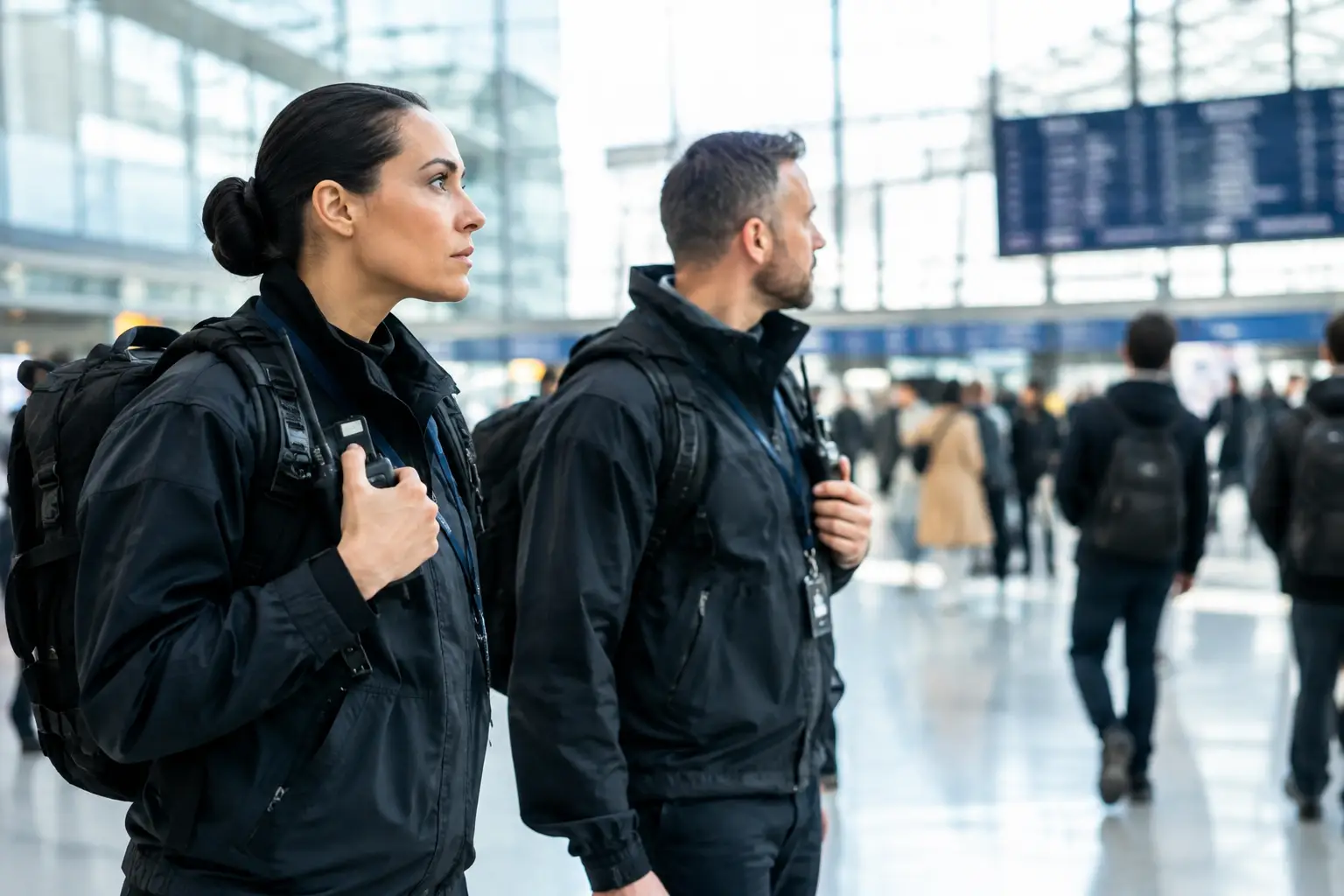
A person photographing loading bays, counting security patrols, or lingering near a staff entrance may look harmless. That is exactly why hostile reconnaissance matters. If you are asking what is hostile reconnaissance, the short answer is this: it is the deliberate collection of information about a target before an attack, intrusion, theft, protest action or other hostile act.
For security leaders, operations managers and venue teams, that definition needs to go further. Hostile reconnaissance is not just “someone looking around”. It is a planning activity. It helps an adversary identify weak points, routines, response times, access routes, crowd patterns, protective measures and human behaviour. In simple terms, it is how intent starts turning into action.
What is hostile reconnaissance in practice?
In practice, hostile reconnaissance is the phase where a hostile actor tests your environment without fully committing themselves. They want to know what they can see, where they can get close, how your people react, and whether they can operate without challenge.
Sometimes this is highly deliberate. A motivated attacker may visit a location several times, at different hours, to study shift changes, queue build-up, vehicle access, CCTV coverage and emergency exits. In other cases it is lighter touch. A person may ask unusually specific questions, seek access to non-public areas, or use social media and online tools to map a site before ever attending in person.
The important point is that reconnaissance is rarely random. It is purposeful information gathering linked to later decision-making. That later decision may involve terrorism, criminality, insider facilitation, sabotage, activist disruption or targeted violence. The threat type changes. The behaviour pattern often does not.
Why hostile reconnaissance is often missed
Most organisations do not fail because there was no information. They fail because the information did not look serious enough at the time.
Hostile reconnaissance often sits inside ordinary activity. People take photos. Contractors ask questions. Visitors walk around. Delivery drivers arrive early. Someone sits in a car outside for an hour. Each behaviour, taken alone, may have an innocent explanation. That is why a checklist-only approach to security can miss the point.
The real task is not to label every unusual act as malicious. It is to assess behaviour in context. Does it fit the environment? Is it repeated? Is it focused on protective measures, staff routines or access control? Does it stop when noticed? Does the person seem more interested in security arrangements than in the service or event itself?
This is where capable teams outperform compliant ones. Good security is not just written policy. It is observation, judgement and action under normal working pressure.
What hostile reconnaissance can look like
There is no single profile, and that matters. If your team expects reconnaissance to look suspicious in an obvious way, they will miss the more credible threat behaviours.
Physical reconnaissance may include repeated visits, unusual photography, sketching layouts, monitoring patrols, timing response, loitering near restricted areas, or attempts to access rooftops, plant rooms, back-of-house corridors or vehicle approaches. It can also involve dry runs, where someone rehearses a route or tests whether they can breach a control measure without consequence.
Verbal probing is another common feature. A person may ask when the building is quietest, who controls access after hours, whether bags are searched, where senior staff enter, or what happens during an evacuation. One question may be harmless. A pattern of detailed questions from someone without a clear need to know is different.
Digital reconnaissance now plays a larger role. Attackers can inspect your site online, review staff posts, identify delivery points, learn opening patterns, map nearby parking, and build a picture of your operation from fragments that were never intended to form one complete view. That does not replace physical reconnaissance. It makes it more efficient.
The difference between curiosity and threat
Not every unusual behaviour is hostile, and treating it that way can damage customer experience, staff confidence and reporting discipline. If teams are told that every mobile phone is a threat, they stop taking the issue seriously.
A better approach is to focus on indicators, not assumptions. Curiosity tends to be casual, proportionate and easy to explain. Hostile reconnaissance is more likely to be selective, repeated, security-focused or linked to concealment and testing. Someone with legitimate intent usually has a coherent reason for being there and behaves consistently with it. Someone conducting reconnaissance often shows friction between their cover story and their actual behaviour.
The judgement call is rarely made on one sign alone. It comes from clusters. A person attends multiple times, watches staff reactions, asks operational questions, and leaves when approached. That cluster deserves attention.
Why this matters under real operational pressure
By the time an attack or serious incident begins, options narrow quickly. The reconnaissance stage is different. It is one of the few points where hostile intent may still be disrupted early.
That is why hostile reconnaissance deserves attention beyond security departments. Front-of-house teams, supervisors, event staff, facilities personnel and line managers often have the earliest opportunity to spot it. They see what is normal. They notice when behaviour does not fit.
For organisations preparing under Martyn’s Law and wider protective security expectations, this is a capability issue, not just an awareness issue. Staff need to know what matters, what to record, who to tell, and what immediate action is proportionate. Training that stays abstract will not achieve that.
How to reduce the risk
The first step is to make your environment harder to study without being noticed. That means visible, alert and engaged staff presence, sensible access control, clear ownership of public and non-public space, and a reporting culture that treats observations seriously.
The second step is to improve behavioural awareness. Teams do not need to become investigators. They do need to understand what hostile reconnaissance looks like in their setting. A hotel, retail site, transport hub, energy facility and event venue will each present different opportunities to an adversary. Your briefing and training should reflect that reality.
The third step is to build escalation pathways that work at speed. If a staff member spots concerning behaviour, they need a simple route to report it, confidence that the information will be assessed, and clarity on what to do while waiting for guidance. Delayed or unclear escalation is one of the most common operational weaknesses.
The fourth step is to use records properly. Reconnaissance is often only recognised after two or three low-level incidents are connected. If reports are poor, inconsistent or trapped in separate departments, that pattern is lost. Good reporting is not bureaucracy. It is how weak signals become usable intelligence.
What managers should be asking
If you are responsible for a site, venue or wider operation, the useful question is not whether your team has heard the term. It is whether they could identify hostile reconnaissance in your environment and respond in a way that reduces real-world risks.
Ask yourself whether your staff know the vulnerable points an adversary would study first. Do they understand what unusual interest in access, routines, security measures or evacuation arrangements looks like? Would they challenge appropriately? Would they preserve the detail needed for follow-up? Would your supervisors know when to escalate to senior security leads or police?
If the answer is uncertain, the issue is capability, not awareness. That distinction matters.
What a mature response looks like
A mature response to hostile reconnaissance is calm, structured and proportionate. It does not rely on instinct alone. It combines trained observation, confident staff engagement, accurate reporting, supervisory oversight and a security posture that is credible enough to deter casual probing.
It also accepts trade-offs. High-visibility intervention may deter one actor but alert another that they have been noticed. Quiet monitoring may gather useful information but carry more short-term risk. The right choice depends on the environment, the threat picture and the competence of the team making the call.
This is why practical exercises, scenario-based learning and operationally credible assessments matter. They show whether people can recognise behaviour, make decisions and communicate effectively when there is uncertainty. Mildot Group’s approach is built around that principle – turning theory into action so organisations improve readiness rather than simply producing paperwork.
Ask yourself – whats the point of a £100k+ CCTV system if the people monitoring it have no behavioural observation skills – thats called working right of bang – Your goal must be working left of bang.
A better way to think about the problem
If you treat hostile reconnaissance as a specialist issue for security professionals alone, you will miss opportunities to detect it. If you treat every odd behaviour as hostile, you will create noise and fatigue. The stronger position sits in the middle: trained people, clear thresholds, good judgement and disciplined reporting.
So, what is hostile reconnaissance really? It is an early warning opportunity. It is the moment when hostile intent may still be visible in fragments, before it becomes an incident that your organisation has to absorb. The organisations that perform best are not the ones with the thickest plans. They are the ones whose people can spot the signal, trust their process, and act before the threat gets closer.
Useful Links:
.