A counter terrorism plan that looks tidy in a folder can still fail in the first ten minutes of a real incident. That is why organisational terrorism capability evaluation matters. It tests whether your organisation can detect, decide, communicate and act under pressure, rather than simply claim readiness on paper.
For security managers, operations directors and risk leaders, the issue is rarely a total absence of controls. More often, the problem is false confidence. A site has CCTV, an evacuation plan, some staff training and a reporting process, so leadership assumes the basics are covered. Modern threats expose old security thinking. Capability is not the same as policy presence, and compliance is not the same as operational performance.
What organisational terrorism capability evaluation actually measures
At its core, organisational counter terrorism capability evaluation asks a direct question: if the threat moved from hypothetical to immediate, what would your people do next, and how well would they do it?
That sounds simple, but it forces a more honest assessment than many organisations are used to. A meaningful evaluation does not stop at whether procedures exist. It examines whether staff understand threat indicators, whether supervisors can make time-critical decisions, whether communication lines work when information is incomplete, and whether protective measures hold up in a live environment.
It also looks at leadership behaviour. Under pressure, weak assumptions surface quickly. Teams may wait too long to escalate. Managers may over-control decisions that should be delegated. Frontline personnel may know the rule book but struggle to apply it to an ambiguous situation. Evaluation should expose those gaps early, when they can still be fixed.
Why paperwork alone does not reduce terrorism risk
There is a persistent tendency in security planning to treat documentation as proof of preparedness. It is understandable. Policies are visible, auditable and easier to present to boards, regulators and insurers than judgement, confidence or team coordination. But terrorism risk does not respect neat governance packs.
The practical question is whether your protective security measures translate into action. If a hostile reconnaissance concern is spotted, does the report reach the right person quickly enough to matter? If access control is challenged during a busy event period, do staff hold the line or default to convenience? If emergency messaging is needed, can you deliver clear instructions without causing harmful confusion?
This is where capability evaluation earns its value. It shifts the conversation from what has been written to what can be done. That distinction is especially relevant for organisations preparing for stronger counter terrorism duties, including those affected by Martyn’s Law. Legal compliance matters, but law does not replace operational competence.
The components of a credible capability picture
A serious evaluation should build a picture across people, process, leadership and environment. Looking at one area in isolation gives a partial answer at best.
People come first because capability is ultimately delivered by human performance. Staff need enough awareness to recognise suspicious behaviour, enough confidence to report it, and enough clarity to act without waiting for perfect information. For specialist practitioners, the bar is higher. They need to understand threat methodology, site vulnerabilities, incident dynamics and the practical use of protective measures.
Process matters because good people still fail inside weak systems. Reporting thresholds, escalation routes, command structures and incident actions must be usable under stress. If they are too complex, too slow or too dependent on one individual, they are fragile.
Leadership is often the decisive factor. Strong leaders create decision speed without creating panic. They know when to escalate, when to pause, and how to maintain control when the situation is changing fast. An evaluation that ignores leadership behaviour will miss one of the biggest drivers of performance.
The operating environment also needs scrutiny. A city centre retail estate, a hospitality venue, a transport-linked site and a corporate headquarters all face different exposure, pace and access challenges. A capability model must be proportionate to the environment. Over-engineering wastes effort. Under-preparing creates avoidable risk.
How organisational counter terrorism capability evaluation should be conducted
The best evaluations are structured, evidence-based and operationally realistic. They do not rely on broad self-assurance statements such as “we would handle it”. They ask for proof in the form of decision logic, role clarity, exercised processes and demonstrated understanding.
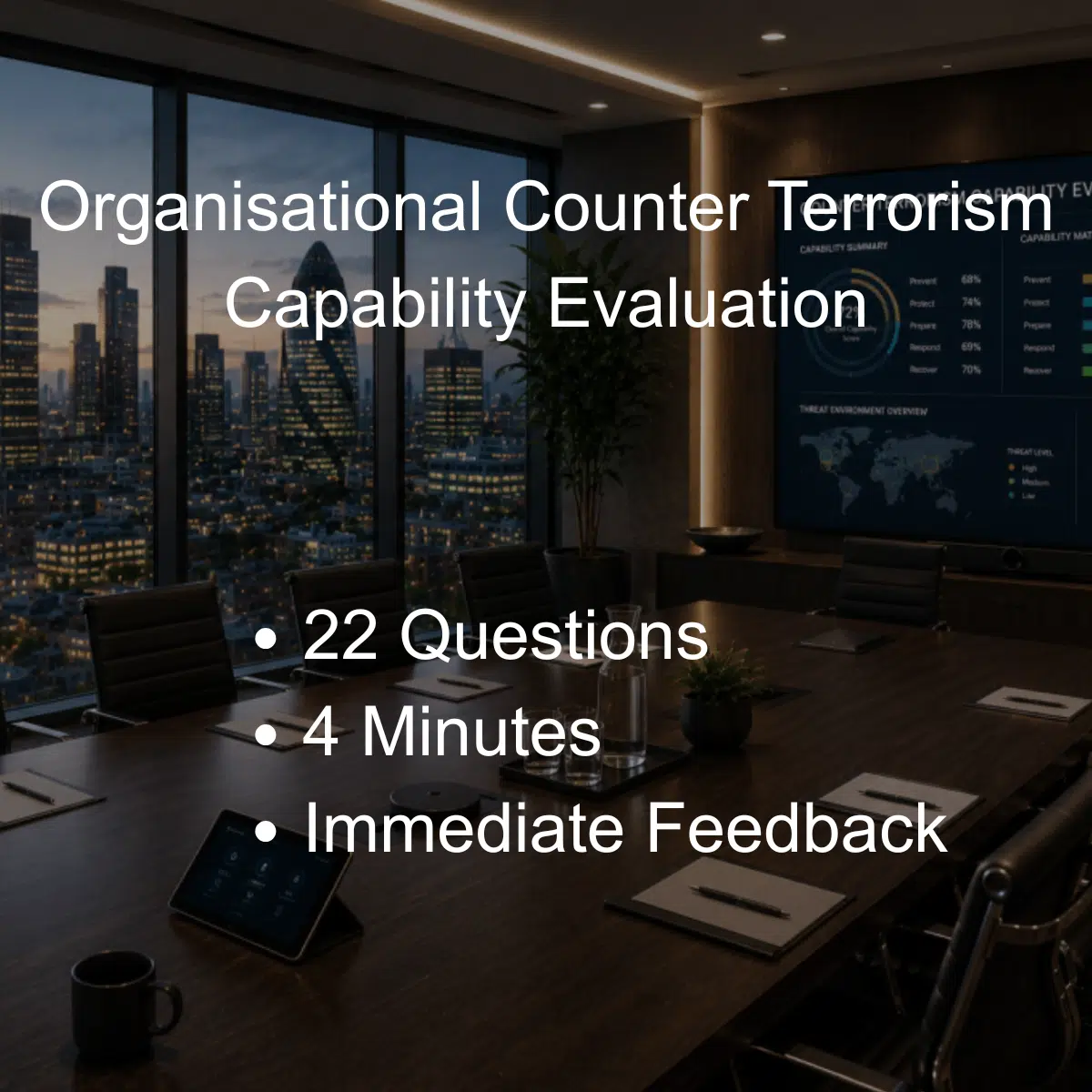
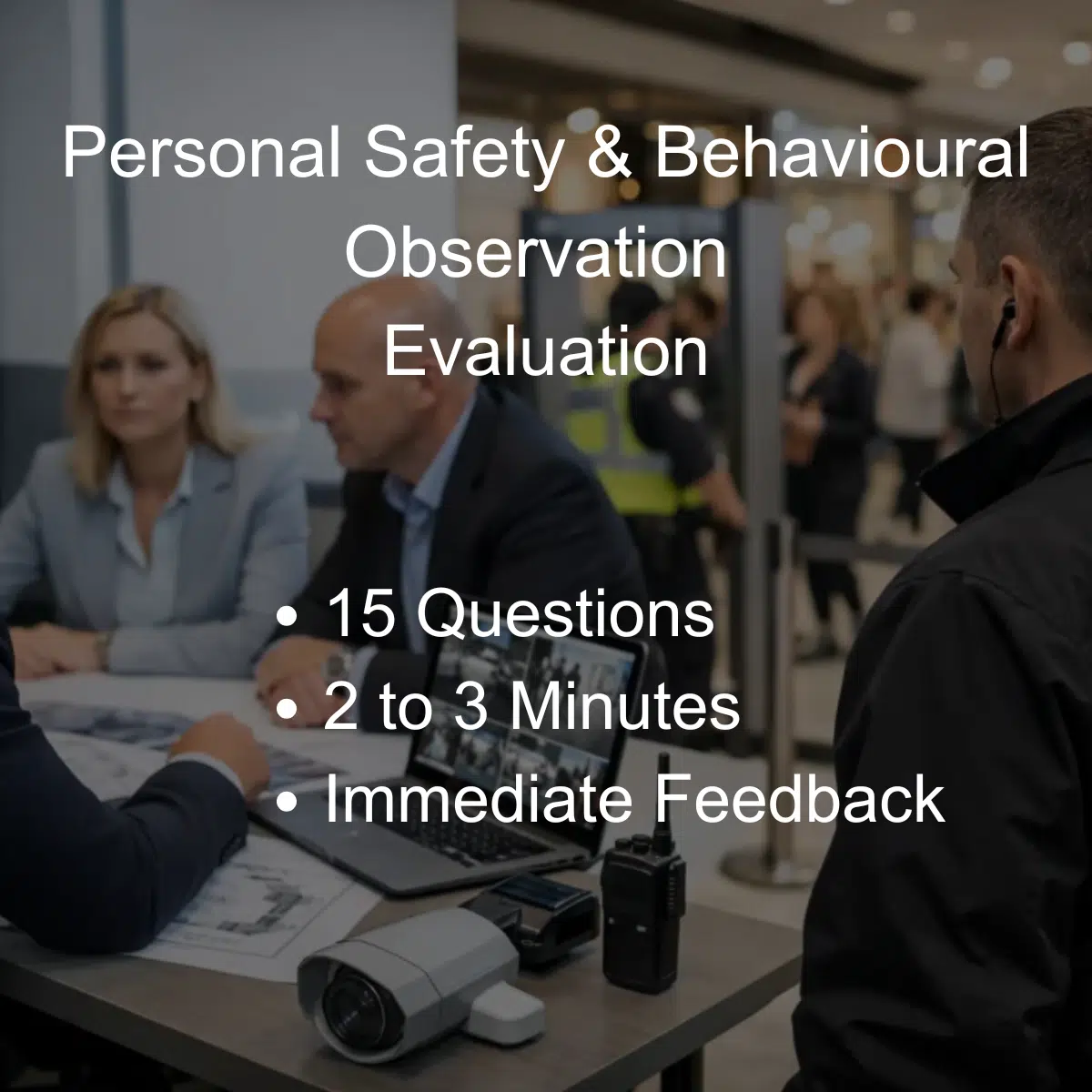
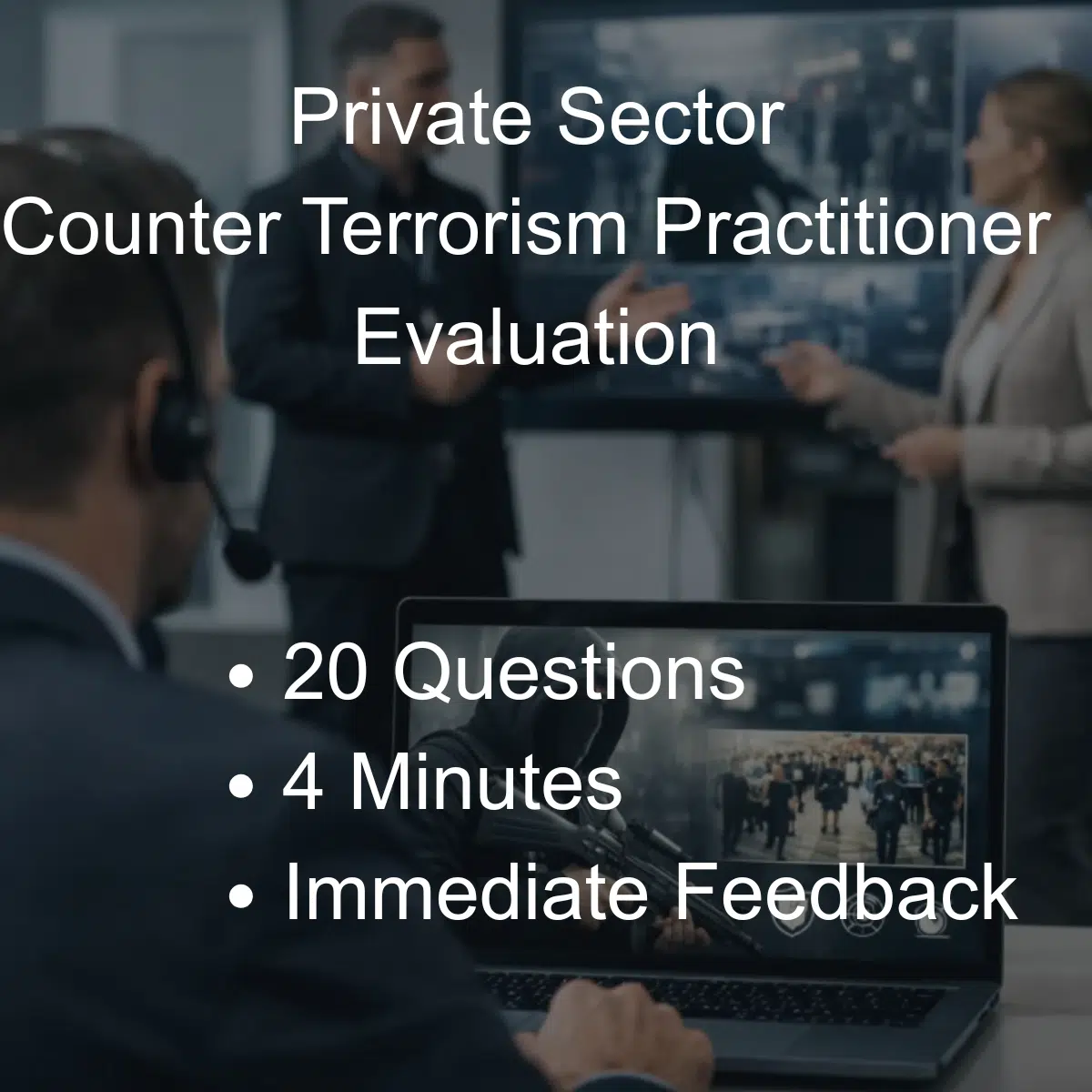
That usually means combining several methods. Interviews with key personnel reveal assumptions and leadership confidence. Scenario-based questioning tests judgement. Document review establishes whether plans and responsibilities are coherent. Digital on demand assessments provide immediate diagnostic feedback at scale, which is especially useful where capability differs across regions, departments or levels of seniority. Any of the management team can take the evaluation. The Mildot Group Evaluation delivers immendaite feedback
Exercises are valuable, but only when designed properly. A poor exercise becomes theatre. People say what they think they should say, the scenario is too scripted, and no one is pushed beyond familiar routines. A useful exercise introduces ambiguity, competing pressures and imperfect information. That is where genuine capability – or genuine weakness – shows itself.
There is also a trade-off between breadth and depth. A board-level review may expose strategic gaps across the organisation, while a practitioner-level assessment may uncover detailed competence issues in threat recognition, reporting or incident management. Most organisations need both over time. The right starting point depends on exposure, maturity and current priorities.
Where organisations usually fall short
Most weaknesses are not dramatic. They are cumulative. On their own, each gap looks manageable. Together, they slow recognition, distort decisions and degrade response.
A common issue is uneven competence. Senior leaders may have approved plans, but supervisors and frontline teams do not share the same understanding. Another is over-reliance on a small number of capable individuals. If your response depends on one experienced security lead being available, you do not have resilient capability – you have a single point of failure.
Communication is another recurring fault line. In many organisations, reporting channels are technically in place but culturally weak. Staff worry about overreacting. Managers screen out concerns to avoid disruption. Intelligence is not fused into a useful picture. By the time information reaches the correct decision-maker, momentum has been lost.
Training quality also varies widely. Awareness briefings may satisfy an internal requirement but leave people unable to interpret behaviour, prioritise actions or apply protective principles in their own setting. That is why capability evaluation should not be treated as an administrative task. It is a diagnostic process for performance.
What good looks like after the evaluation
A strong outcome is not a glossy scorecard with no friction points. It is a clear, defensible view of current capability and a practical route to improvement.
That route should be prioritised. Not every gap carries the same operational consequence. Some deficiencies can be accepted temporarily. Others need urgent attention because they directly affect life safety, decision speed or protective control effectiveness. Good evaluation helps leaders separate signal from noise.
Improvement measures should also be realistic. If recommendations require budgets, structures or staffing models the organisation will never approve, they will sit unread. Better to set a phased plan that raises capability in meaningful steps. That may involve targeted practitioner development, revised reporting thresholds, leadership decision drills, or digital assessment tools that benchmark progress over time.
This is where specialist support has real value. Mildot Group focuses on turning security theory into action, combining consultancy insight with online counter terrorism capability evaluation tools that provide immediate feedback and practical educational value. For organisations that need to move quickly from uncertainty to a credible improvement plan, that blend is useful because it supports both diagnosis and development.
Organisational counter terrorism capability evaluation as a leadership decision
Security leaders sometimes frame evaluation as a technical exercise. It is not. It is a leadership decision about how honestly the organisation wants to test itself.
A serious evaluation may uncover uncomfortable truths. Your plans may be too optimistic. Your teams may not be as confident as managers assume. Your command arrangements may look clear until pressure, fatigue and fragmented information hit at once. That discomfort is not failure. It is the point.
The organisations that improve fastest are usually the ones willing to replace reassurance with evidence. They accept that readiness is not declared. It is demonstrated, challenged and built over time.
If your current position is based mainly on policy documents, annual training records or general confidence, you do not yet have a reliable picture. You have a starting assumption. A proper evaluation turns that assumption into something useful – an operational view of what your people can actually do when it counts most.
That is where resilience begins: not with the promise that a plan exists, but with the proof that your organisation can perform when pressure strips everything back to capability.
Useful Links:
.