A practitioner can hold the right title, sit through the right training and still freeze when a live incident starts to unfold. That void is exactly why protective security practitioner development matters. For organisations facing terrorism risk, hostile reconnaissance, behavioural threat indicators or complex site vulnerabilities, capability is not measured by paperwork. It is measured by what people can recognise, decide and do under pressure.
Why protective security practitioner development matters
Modern threats expose old security thinking. Many organisations still treat security development as a compliance exercise – a course completed, a policy signed, a plan filed away until the next audit. That approach creates familiarity, not readiness.
Protective security work is applied work. Practitioners are expected to interpret risk, advise decision-makers, understand hostile attack methods, assess vulnerabilities, challenge weak assumptions and support proportionate controls. In higher-risk sectors such as retail, events, hospitality, critical infrastructure and corporate environments with public access, that means making decisions where speed, judgement and credibility matter.
The issue is not usually a total lack of training. It is fragmented development. Someone may understand physical security, but not threat methodology. Another may know compliance requirements, but struggle to turn them into practical site measures. A third may be operationally experienced, but weak in structured assessment, stakeholder influence or post-incident learning. Development has to close those gaps in a deliberate way.
What good practitioner development actually builds
Strong protective security practitioner development builds far more than technical knowledge. It develops judgement. That is the difference between a practitioner who can repeat guidance and one who can apply it in a crowded venue, a transport hub, a mixed-use estate or a board-level planning discussion.
Technical understanding is only one part
A credible practitioner needs to understand threat types, attack pathways, hostile reconnaissance, vulnerability assessment, physical measures, personnel factors, information handling and incident response. Counter terrorism awareness is central, but awareness alone is not enough. People also need to know how those threats show up in real operating environments.
That means understanding access control weaknesses, queue management risks, hostile vehicle considerations, suspicious behaviour indicators, emergency communications and the practical limits of technology. It also means recognising where a site looks secure on paper but performs poorly in reality.
Decision-making under pressure matters more than theory
Protective security is full of imperfect information. Practitioners rarely work with certainty. They work with indicators, time pressure, incomplete reports and competing operational priorities. Development should reflect that reality.
The strongest programmes use scenario-based learning, diagnostic assessment and applied decision-making. They test whether a practitioner can spot the problem early, prioritise correctly and recommend action that is realistic for the organisation. This is where many generic courses fall short. They explain principles but do not test performance.
Communication is a security skill
A practitioner may be technically sound and still fail if they cannot influence others. Security advice is often delivered to operations leaders, facilities teams, venue managers, HR, senior executives or external partners. If the message is too vague, too theoretical or too disconnected from business reality, it will not land.
Good development strengthens communication as an operational skill. Practitioners need to write clearly, brief decisively and explain risk in a way that supports action rather than delay. They also need the confidence to challenge weak controls and unrealistic assumptions without creating unnecessary friction.
The problem with compliance-led development
Compliance has a place. Legal duties, sector guidance and internal standards all matter. But development built only around compliance tends to produce a narrow type of practitioner – someone who can reference requirements but struggles to improve capability.
That becomes a serious weakness in the context of counter terrorism preparedness, particularly as organisations review their responsibilities under Martyn’s Law and broader duty of care expectations. A compliant organisation is not automatically a prepared one. If teams cannot identify vulnerabilities, adapt plans to changing threats or coordinate effectively during disruption, compliance will not protect them.
There is also a commercial risk. Senior leaders increasingly want evidence that security investment improves resilience, not just audit outcomes. Development therefore needs to produce visible gains in competence, planning quality, operational confidence and decision speed.
How to approach protective security practitioner development properly
The starting point is honest diagnosis. Before assigning more training, organisations need to understand what their practitioners can already do, where they are exposed and which roles need which level of capability.
A site security lead at a public-facing venue does not need the same development pathway as a strategic adviser supporting multi-site risk governance. Likewise, an experienced operator moving into a corporate role may need support with reporting, risk frameworks and executive communication, while a compliance-focused manager may need stronger operational grounding.
Start with capability, not course catalogues
Too many development plans begin with available products rather than actual need. The better approach is to identify the role, the threat environment and the performance standard required. Only then should learning, mentoring, evaluation and practical testing be selected.
That may include structured eLearning for foundational knowledge, capability diagnostics to identify weak areas, practical exercises to test decision-making and targeted advisory support to embed learning into live operations. The right blend depends on the maturity of the organisation and the experience of the individual.
Use assessment to expose blind spots
Self-confidence is not evidence of competence. Nor is attendance. Assessment matters because it reveals blind spots that normal training often misses. A practitioner may overestimate their grasp of hostile reconnaissance, misunderstand proportionality in security planning or fail to connect behavioural indicators with wider threat patterns.
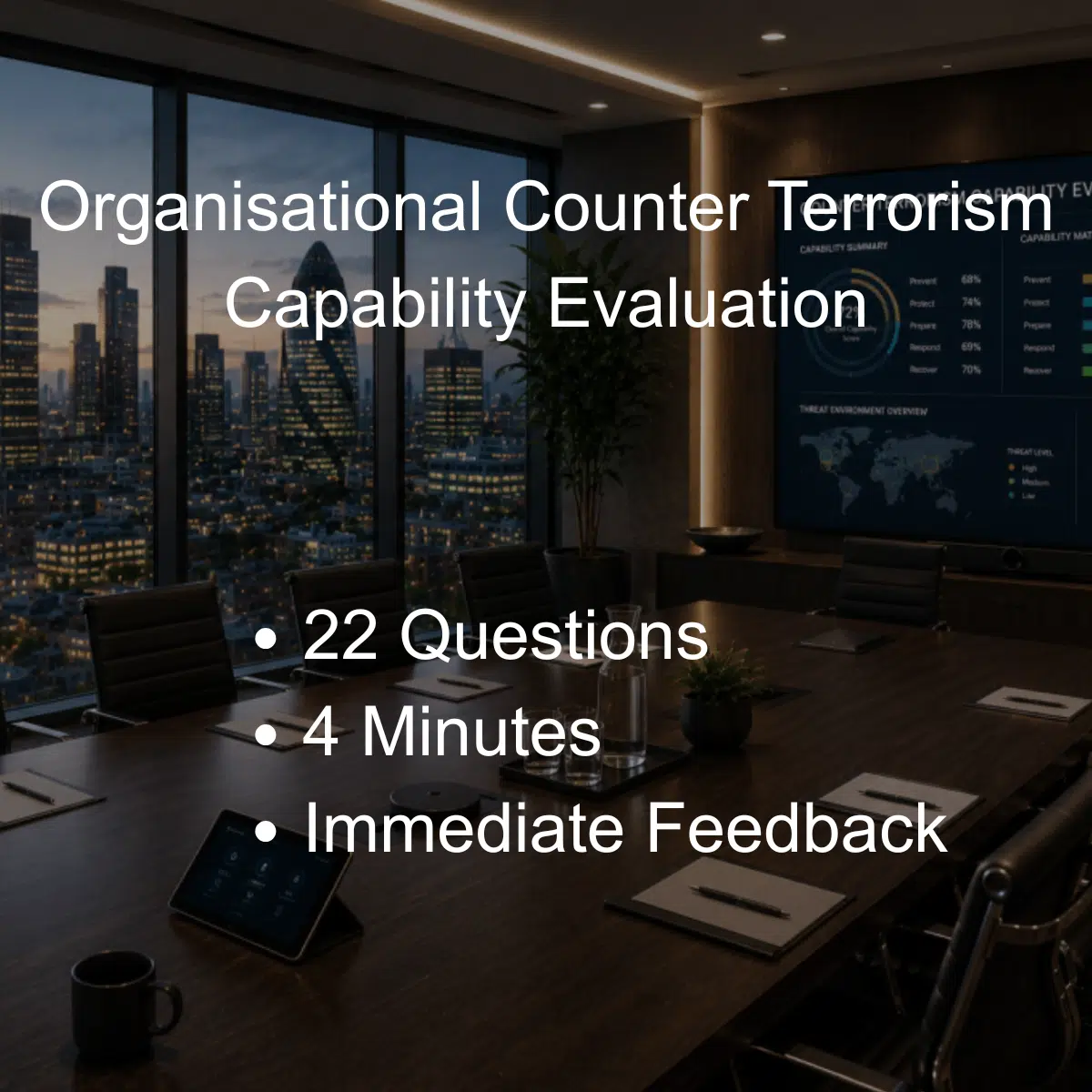
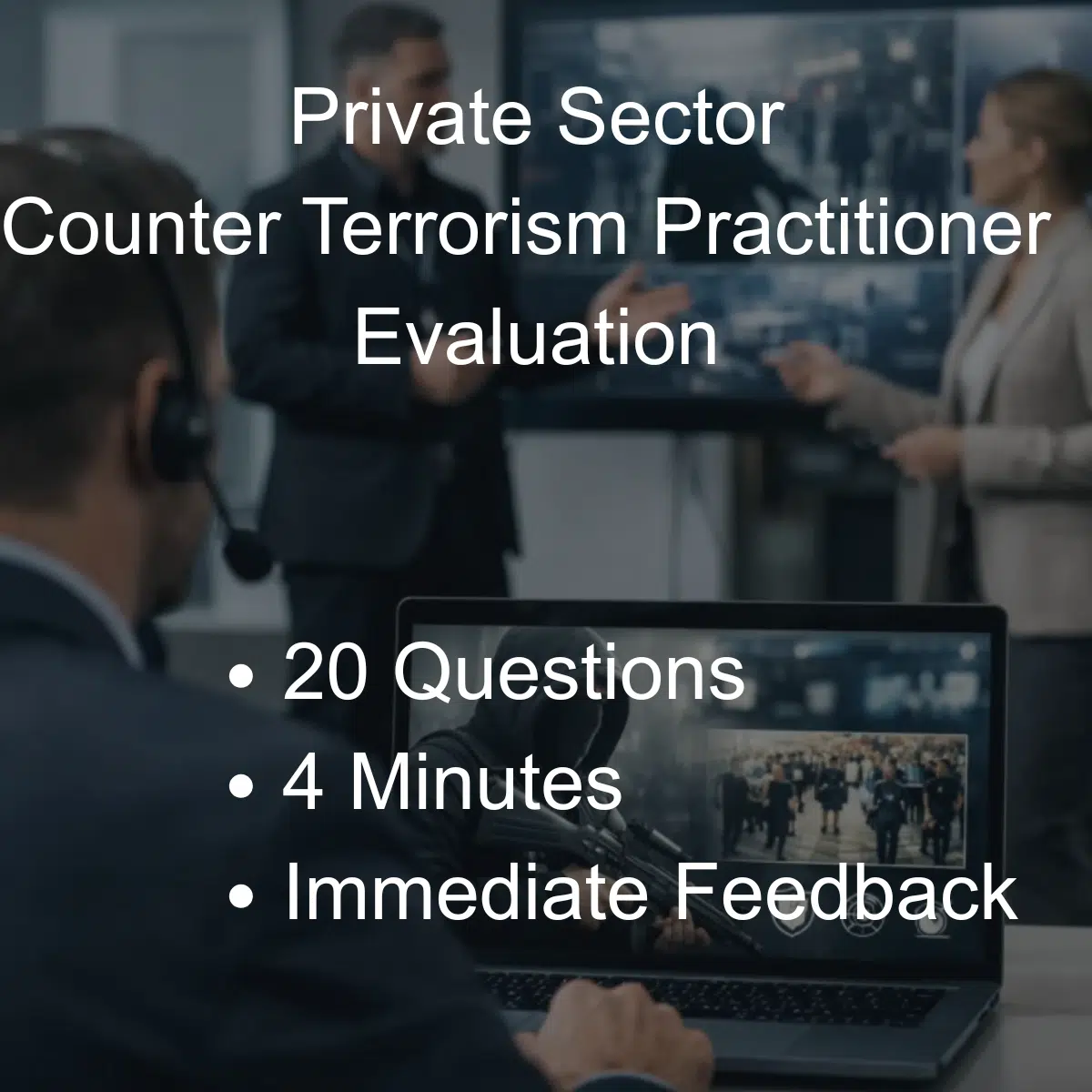
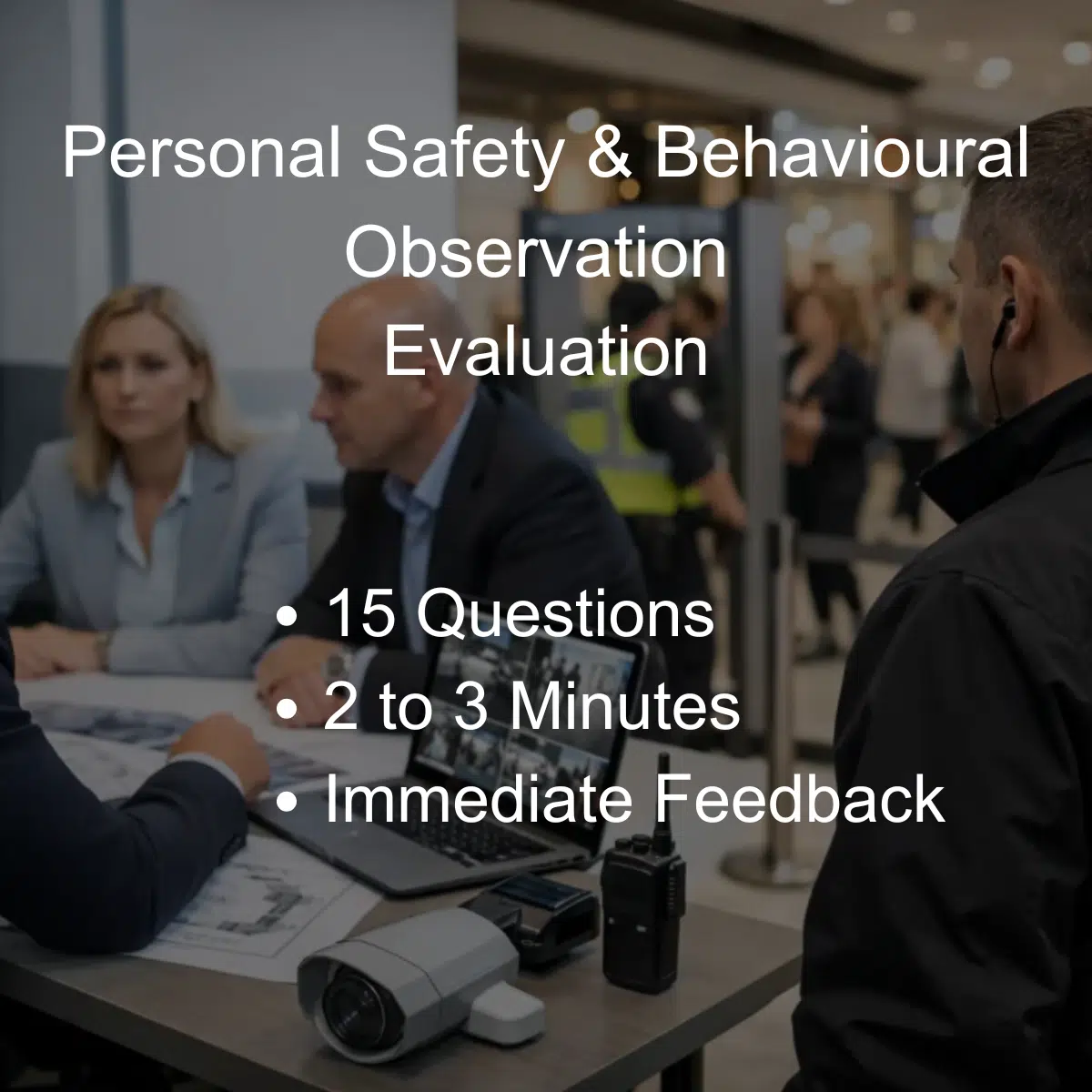
Capability evaluation tools can be particularly valuable here because they provide immediate feedback and create a baseline for improvement. Used properly, they help organisations move from assumption to evidence. That changes the development conversation from generic learning to specific uplift.
Build learning into operational rhythm
Development cannot be treated as an annual event. Threats evolve, sites change, staff turnover happens and incidents reveal weaknesses that no classroom session predicted. The most effective organisations make practitioner development part of business rhythm.
That includes post-exercise reviews, post-incident learning, periodic reassessment, scenario refreshers and updates tied to changing threat profiles. It also includes exposing practitioners to cross-functional decision-making so they understand how security measures affect operations, customer experience and crisis leadership.
What strong development looks like in practice
In practical terms, effective protective security practitioner development is focused, measurable and tied to operational outcomes. It produces practitioners who can assess a site with discipline, identify meaningful vulnerabilities, support proportionate control measures and communicate clearly with decision-makers.
It should also improve confidence without creating complacency. That balance matters. Overconfident practitioners can become rigid, dismissive of uncertainty or too reliant on familiar controls. Well-developed practitioners are usually more alert to complexity, not less. They know what they know, what they need to check and where escalation is sensible.
For organisations under pressure to strengthen counter terrorism readiness, this can mean using accredited digital learning to establish consistent baseline knowledge, then adding scenario-based review, structured evaluation and expert advisory input. Mildot Group operates strongly in this space because the emphasis stays on capability that works in the field, not theory that sounds good in a document.
Development is also a retention issue
There is another side to this that is often missed. Serious practitioners want serious development. If an organisation expects high-quality judgement in a high-risk environment but offers only generic compliance content, capable people will disengage.
A defined development pathway signals standards. It tells practitioners that security is a profession within the business, not an afterthought. That helps attract stronger people, improves consistency across teams and supports succession where experienced security leaders need to build the next layer of capability.
For sectors with multiple sites or dispersed operational teams, this matters even more. Without a common development standard, practice drifts. One site becomes strong because of individual experience, another remains weak because no one has tested the assumptions. Structured practitioner development reduces that inconsistency.
The standard to aim for
The goal is not to create people who simply know more. The goal is to create practitioners who perform better. Better at recognising risk, better at advising leaders, better at testing weak points, better at responding when conditions change.
That is what protective security practitioner development should deliver – sharper judgement, stronger operational credibility and measurable readiness against threats that do not wait for organisations to catch up.
If you are responsible for security capability, the useful question is not whether your people have completed training. It is whether they would recognise the problem early, make the right call and help others act when it counts.
Useful Links:
.