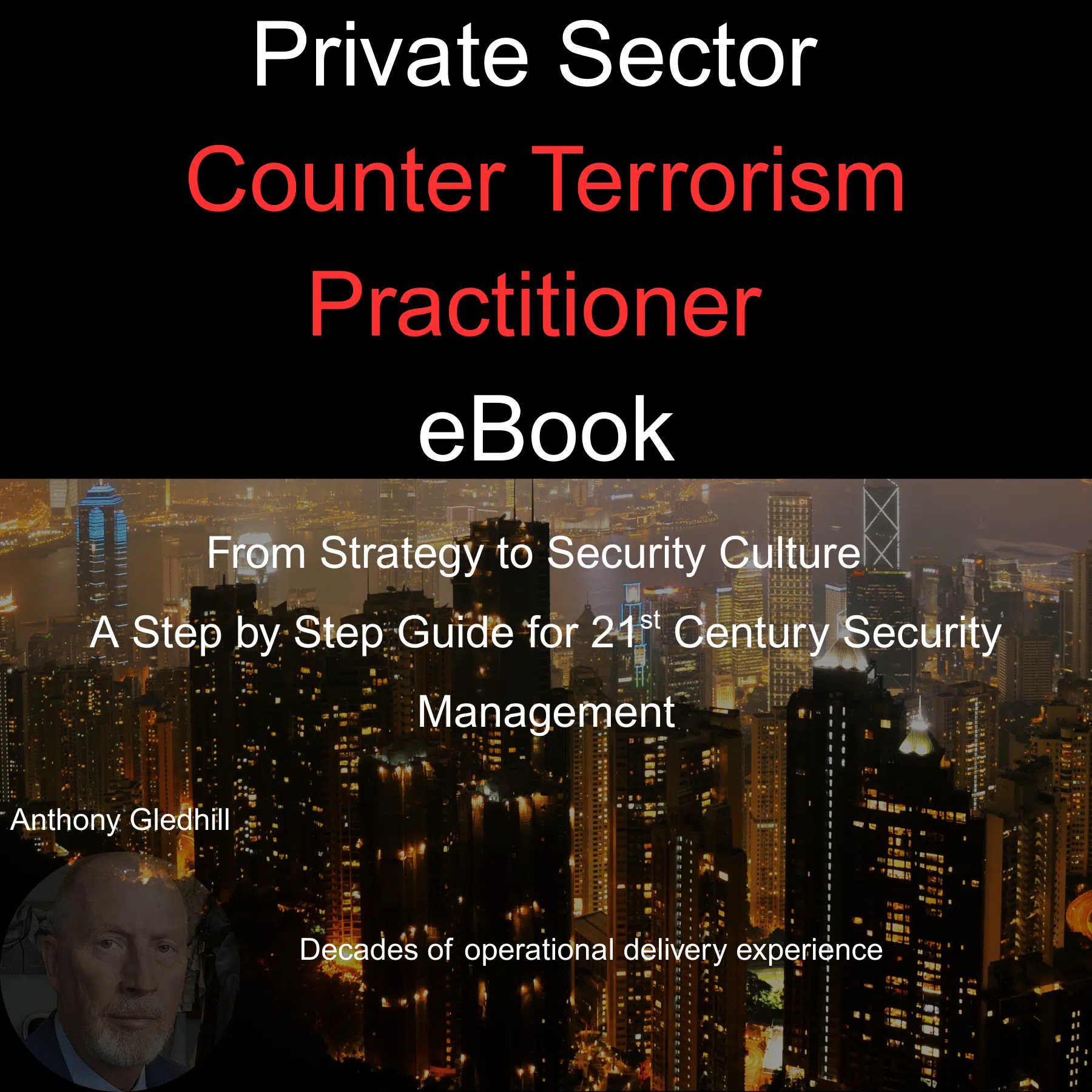
A security manager facing Martyn’s Law duties does not need another shelf full of theory that never survives contact with reality. The best protective security books & eBooks are the ones that improve judgement, sharpen planning, and help teams perform under pressure when conditions are messy, ambiguous and time-critical.
That means a good reading list should do more than explain threats. It should help you think clearly about hostile reconnaissance, physical protection, insider risk, crisis decision-making, behavioural indicators, and the uncomfortable gap between a written plan and an effective response. Some books are technical. Some are strategic. A few change how you assess people, places and intent. Those are the ones worth your time.
What makes the best protective security books worth reading?
Protective security is a practical discipline. It sits at the point where intelligence, operations, design, behaviour and leadership meet. So the strongest books tend to share three traits.
First, they improve decision quality rather than simply adding information. A practitioner who understands how attackers plan, how people behave under stress, and where systems usually fail is more useful than one who can recite policy language.
Second, they translate across environments. A book that only works for one niche audience has limited value. Security leaders in retail, hospitality, critical infrastructure, events, education and corporate settings need ideas they can adapt to their own threat picture.
Third, they respect trade-offs. Real protective security is rarely about perfect protection. It is about proportionality, deterrence, detection, delay, response and recovery, all within budget, operational and reputational constraints.
10 best protective security books for real-world capability
1. The Complete Guide to Physical Security by Paul R. Viollis
This is one of the more useful starting points for readers who need a broad operational frame. It covers core physical security concepts clearly and without disappearing into jargon. For newer managers, it helps organise thinking around risk, design, procedures and layered protection.
Its strength is accessibility. Its limitation is that broad coverage can only go so deep. If you are already running mature programmes, you may find some sections introductory. Even so, it remains a solid baseline text for building shared understanding across teams.
2. Security Risk Assessment by John M. White
Good protective security begins with disciplined assessment, not assumption. This book earns its place because it focuses on the logic behind identifying threats, vulnerabilities and consequences. That matters for anyone responsible for justifying investment, prioritising controls or explaining why one site needs more attention than another.
It is particularly helpful for practitioners trying to move beyond checklist culture. The writing is methodical rather than dramatic, but that is the point. Sound assessment is rarely glamorous, yet weak assessment produces expensive blind spots.
3. Introduction to International Disaster Management by Damon P. Coppola
At first glance, this may seem outside a list of the best protective security books. It is not. Protective security does not stop at prevention. Organisations also need continuity, crisis structures and recovery thinking. This book is valuable because it broadens the reader’s view from site protection to organisational resilience.
It works well for security leaders who need to coordinate with operations, facilities, executive teams and emergency planning functions. If your role includes consequence management, this wider perspective is useful.
4. Left of Bang by Patrick Van Horne and Jason A. Riley
This book is frequently discussed for good reason. Its focus on behavioural cues, baseline analysis and anomaly detection is directly relevant to frontline personnel and supervisors. If your teams need to identify suspicious behaviour before an incident develops, this is practical reading.
There is a caveat. Behavioural assessment is not magic, and poor training can lead to overconfidence or biased interpretation. Read properly, though, the book strengthens observation and pre-incident awareness – both central to protective security.
5. The Gift of Fear by Gavin de Becker
This is less a technical security manual and more a study in intuition, warning signs and human behaviour. It remains highly relevant because security failures often begin with dismissed concerns, rationalised anomalies or a reluctance to act on discomfort.
For corporate settings, the value lies in recognising threatening behaviour early and taking it seriously. It is especially useful for those responsible for executive protection, workplace safety and safeguarding interfaces. Some examples are US-centric, but the behavioural principles travel well.
6. On Combat by Dave Grossman
Not every protective security professional will need this book, but leaders responsible for response capability should understand what stress does to perception, memory, motor skills and decision-making. On Combat examines the physiological and psychological effects of high-stress incidents in a way that is directly relevant to preparedness.
It is strongest when used to inform training design, rehearsals and expectations of human performance. It is not a substitute for doctrine or formal instruction, but it can correct unrealistic assumptions about how people will function in crisis.
7. Managing the Risks of Organisational Accidents by James Reason
This is essential reading for those who want to understand failure properly. Reason’s work explains how incidents emerge from layered weaknesses, latent conditions and flawed systems rather than a single obvious mistake. That matters in protective security because breaches and attacks often expose long-standing weaknesses that were tolerated until consequences arrived.
It is more conceptual than some titles here, but the payoff is significant. If you lead assurance, governance or programme design, this book helps you see beyond immediate fixes.
8. The 5 Levels of Leadership by John C. Maxwell
This may look like an unusual inclusion, but protective security depends heavily on leadership. Plans fail when leaders cannot influence, communicate intent, enforce standards or build confidence under pressure. For that reason, leadership reading belongs on a serious practitioner’s shelf.
This title is approachable and practical. It is not security-specific, and some readers will prefer a harder-edged leadership style, yet it offers a useful framework for developing authority that is based on competence and trust rather than title alone.
9. Extreme Ownership by Jocko Willink and Leif Babin
For teams operating in high-consequence environments, accountability is not optional. This book resonates with security professionals because it is direct about ownership, clarity and execution. Where protective security programmes drift, it is often because responsibility is diffused and standards are not enforced.
It is best read as a leadership and culture text, not as a technical guide. Some readers may find the style forceful, but the operational message is hard to ignore: capability improves when leaders own outcomes.
10. Practical Threat Intelligence and Data-Driven Threat Hunting by Valentina Costa-Gazcón
Modern protective security increasingly overlaps with cyber, information environments and hybrid threat activity. For many organisations, especially those exposed to hostile reconnaissance and coordinated disruption, understanding threat intelligence thinking is no longer optional.
This book helps bridge that gap. It is more technical than others on this list, but useful for readers who need to connect physical security with broader intelligence-led decision-making. If your role is purely site-based, it may feel specialist. If you manage enterprise risk, it is highly relevant.
How to choose the right protective security book for your role
A head of security should not read in the same way as a frontline supervisor. The first needs range – risk assessment, leadership, crisis management, behavioural risk and systems thinking. The second may need more on observation, response, situational awareness and practical procedure.
If you are building a programme from scratch, start with physical security and risk assessment. If your organisation already has mature controls but struggles with execution, leadership, behavioural detection and human performance under stress will probably give better returns. If you are dealing with complex estates or regulated environments, books on organisational failure and resilience become more valuable.
The right choice also depends on your current weakness. Many organisations do not need more policy interpretation. They need stronger judgement on the ground, better interdepartmental coordination and more honest testing of assumptions.
Best protective security books are only useful if applied
Reading alone does not reduce risk. Application does. A book becomes valuable when it changes how you brief a team, structure a vulnerability assessment, position a control room, question a supplier, test a lockdown plan, or train staff to recognise hostile intent.
That is where many reading lists fall short. They celebrate knowledge accumulation rather than capability development. A stronger approach is to read with a live operational question in mind. What is the threat problem you are trying to solve? Where does your current security model rely on optimism? Which assumptions have you never properly tested?
One practical method is to pair each book with a review task. After reading a chapter on behavioural detection, revisit your reporting thresholds. After reading on stress effects, redesign an exercise so decision-makers must operate with partial information. After reading on risk assessment, challenge whether your current priorities are evidence-led or simply inherited.
For organisations preparing for higher counter terrorism expectations, this matters even more. Compliance may get attention at board level, but capability is what protects people. Mildot Group’s approach has long been that theory must convert into action, because modern threats expose old security thinking very quickly.
A good book will not give you a finished operating model. It will give you sharper questions, better instincts and a clearer way to develop people who can think and act under pressure. That is usually where protective security moves from paperwork to performance – and where the reading starts to pay for itself.
Useful Links:
.